vrijdag 1 januari 2016

From Walter Rodney to African origins

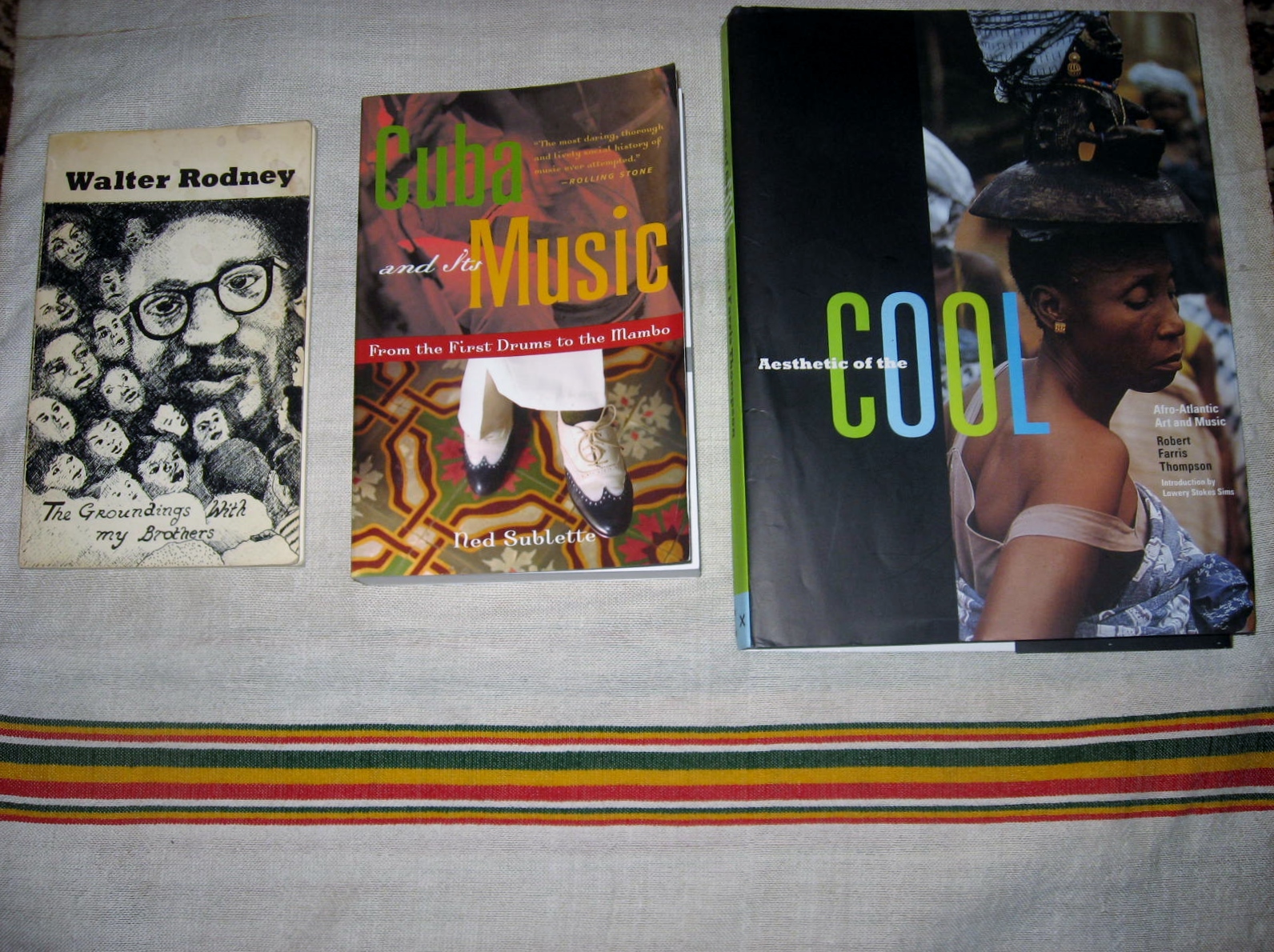
‘The groundings with my brothers’ (1969) is an insightful book by Walter Rodney, that I enjoyed to read. For several reasons. Walter Rodney was a Black Power activist from Guyana, also a scholar, and known as Left-wing/Marxist. Besides that the book, dealing with Walter Rodney’s views in relation to Jamaica (and the wider Caribbean) in and around the 1960s, is in itself in my sphere of interest, actually reading it, it engaged me even more. The book itself was originally written in 1969.

First of all, Rodney’s analyses of broader world politics and White dominance, colonial history and neo-colonial present, at the detriment of the Black and other coloured peoples of the world, are eloquent as well as intelligent. He associates this de facto White Power with Capitalism, which shows his ideological stance, perhaps. In the same vein he applauds Cuba, describing Cuba since 1959 as a place where White Power has been defeated. While there are some arguments to be placed against this, most other analyses by Rodney in the work seemed to me correct, well-informed, and realistic. I also liked his way of expressing and writing. I never felt I was reading a one-sided, ideological hardliner with a vindictive, narrow mind – even common among some self-proclaimed Left-wing or “humanitarian” activists –, but rather a rebellious yet open-minded, intelligent, sensible, and emphatic thinker, with a good sense of humour, making his writings very readable. Rodney is also a good writer in the literary sense; he knows how to conjure images well, for instance.

He points at contacts with Rastafari adherents in Jamaica in this book, respecting them as representative of suffering and rebellious Jamaican Black people, oppressed historically by White Power, and now by Black leaders and politicians also essentially serving this global White Power structure. He points at censored “Black Power” books in Jamaica. Several works were forbidden in Jamaica, not just Malcolm X’s Autobiography.. the same applied to works by Stokeley Carmichael or Eldridge Cleaver. This ban was oddly ordered by the government of a Black prime-minister, Hugh Shearer. Walter Rodney himself, incidentally, was also forbidden entry into Jamaica when he returned to Jamaica (he worked at the University of the West Indies in Kingston, Jamaica), after a trip to Canada, also for spreading such unwelcome Black Power ideas. He refers to his ban to return in this work as well.

WITHIN AFRICA

An insightful and recommendable book, therefore, ‘The groundings with my brothers’. Besides this, parts of the book surprised me pleasantly. Strictly speaking parts of the book can be deemed “departures”, although they remain relevant to the overall theme of Black consciousness and pride of African descent. In one chapter, chapter 4: ‘African history and culture’, Rodney seeks to contradict European claims of Africa as uncivilized as opposed to Europe, as part of a pro-White propaganda, and therefore elaborates on historical evidence of developed civilizations on the African continent, before slavery and Europeans. He relates the history and characteristics of ancient civilizations in Africa: Ethiopian Christianity, Kush, Egypt, but also other ones. This I found interesting, and in a sense original. Not totally original, but quite, and appropriate, I think. Walter Rodney was focussed on both Africa and the Americas, and - before him - Marcus Garvey already connected mentally the parts of the world strongly, Africa being of course the motherland/the roots of Black people in the Americas.

This sometimes took the form, though, of abstract – albeit positive – symbols of the African roots, with not always very detailed studies of different African regions, countries, cultures, and internal differences developed over time, landscapes or other aspects. Even among some Black nationalists such knowledge stayed behind of knowledge of other regions of the world, though this is not always their fault. In a British colony as Jamaican much was taught about Britain and Europe, and less about Africa. Many Black people also often tend to know more about the geography of the place where they actually live (e.g. Jamaica, USA), which to a degree is understandable.

I myself have by now studied and read many scholarly works on Caribbean history, specifically also on people of African descent in the Caribbean, social development etcetera. I have read a lot about slavery and other historical aspects in the Caribbean, also to a lesser degree quite a lot about the same topics in Brazil, Latin America, or the US. I found and find this an interesting theme, and I learned a lot.

There was, however, one “elephant in the room”, as the expression goes, that went not totally unnoticed, but still was ignored too often, I think. I am referring to the African origins. The situation in Africa as it developed before enslaved Africans ended up in the West: not just generally or abstract, but more detailed. Walter Rodney’s more detailed attention to the long history of Africa, and differences within – and similarities throughout - Africa, was therefore refreshing. I found it educational and insightful. Not all was new to me, but some things certainly were, or explained better than what I read/heard before. For instance the difference between the savannah or semi-arid “Western Sudan” regions between Senegambia, through Mali, Guinea, and northern parts of Ghana, Ivory Coast and Nigeria on the one hand, and on the other: the area with tropical rainforests more to the South of this, notably on the coasts of Ghana, Benin (Dahomey), Nigeria, Cameroun, as well as the large Congo region. In these latter dense forest areas, distinct, more isolated and small-scale societies developed, quite logically, than in the more accessible parts. The latter, more Northern-lying parts had more cosmopolitan societies, with more travelling (by horse) and contact possibilities over longer distances, including with Northern Africa. Islam penetrated this part also much more than the more South-lying “forest” parts, like Congo or southern Nigeria for instance. This fact, while logical in a sense, still intrigued me. Mainly because I know – and learned - that enslaved Africans to the West came from both these areas – or border areas between them.

To put it shortly, after having read about and studied what science has up to now found out about the numbers of slaves forcibly brought to the West, their region of origin or at least embarkation in Africa, relative differences etcetera, I think it is time for me now to know more about those regions within Africa beyond this. More specifically, in its relations with surviving African culture in the Americas, a theme which continues to hold my interest as well.

Walter Rodney discusses this African history primarily to point out that Africans should not be ashamed of their roots, as they were not less-civilized than the boastful European colonizers claiming this. ‘The groundings with my brothers’ is not a very extensive work, and is partly a manifesto, so it should be placed in that context.

ORIGINS

I have read other works, though, that have more detailed, and very insightful elaborations on the different parts of Africa where enslaved Africans came from: slaves came from different parts of Africa, depending on time period, colonizer (British, Portuguese, French, Spanish, Dutch etcetera), and even specific colonies or region within these. Portugal had “access” to Angola for instance, colonizing it prior to the development of Brazil. That many of the slaves going to Brazil came from the Angola region, thus comes as no surprise, but also in Brazil African slaves came from a variety of regions. The English, Dutch, French, Spanish, Portuguese and others got their slaves from different parts of Africa. Sometimes slaves from specific African regionsconcentrated in specific areas in the Americas, or time periods.

Rodney for instance mentions famous, influential – if relatively unknown – African kingdoms in both the Western Sudan and coastal regions (Mali, Benin, Kongo, Buganda, as already mentioned Axum/Ethiopia, Egypt a.o.), yet he also states (I cite from the book):

“However the majority of Africans lived in small societies and these must also be seriously studied. Sometimes, it is felt that only in large political states one can find civilisation and culture, but this is wrong, and in the great political states of Europe and America today many human values have been destroyed; while even the smallest African village was a place for the development and the protection of the individual. Certain things were outstanding in the African way of life, whether in a small or large society. These distinctive things in the African way of life amount to African culture. Among the principles of African culture the following are to be noted : hospitality, respect (especially to elders), importance of the woman (especially in cases of inheritance), humane treatment of law-breakers, spiritual reflection, common use of the land, constant employment of music (especially drums) and bright colours”. (Rodney, ‘’The groundings with my brothers’, p. 36/37).

Quite a lengthy citation, but I find it crucial and interesting for this essay. I really recommend to read the entire work by Rodney. Written in 1969, these statements were quite ahead of their time, at a time when many Black people in the West knew little about Africa.

CUBAN MUSIC AND NED SUBLETTE

I also quote it to point to one African cultural aspect, studied in another, more recent book I would like to discuss: music. Specifically Cuban music and its African origins. I mean the book ‘Cuba and its music : from the first drums to the Mambo’ (2004), written by Ned Sublette (himself a musician).

I have mentioned this book already on my blog here and there, but here I focus on the attention Sublette gives to ancient African culture before it came with slaves to the West. He places the emphasis on enslaved Africans ending up in Cuba, but compares with other places in the Americas. Moreover, he describes African cultures, including the differences per region within Africa (Western Sudan versus “forest” Africa) Walter Rodney also alluded to. Sublette focuses here on music, which is one of my passions too, and I found it an insightful and good read.

Notably, Sublette (who is from the US) compares (historical) Afro-Cuban music with African-American (Black US) music, noting differences. He explains this partly because of different colonial policies. Drum use was more strictly forbidden for African slaves in Protestant (US, British) slave regimes – seeing it as a way to communicate rebellious messages (justly), while authorities in Cuba were a bit more lenient about continued drum use (in specified organizations and under conditions): drum music could therefore continue and live on in Cuba more, leaving traditional percussive African music relatively more intact among the different African ethnic groups in Cuba (Yoruba, Congo, Calabar a.o.).

This ban on drums is only a part of the explanation of musical differences, Sublette stresses. He also indicates that the region of origins of enslaved Africans ending up in different parts of the Americas played a cultural role. He argues that to what is now the US relatively more slaves came from Western Sudan Africa, what he also calls “griot Africa”, more Islam-influenced, stretching from around Senegambia, through present-day Southern Mali to Northern Nigeria, whereas slaves in Cuba came relatively more from “forest” Africa, the area from around Yorubaland (now Southwest Nigeria and Benin) to Cameroun and further to Bantu-speaking areas, such as the Congo area, down to Angola and Mozambique. According to slave trade figures, he has a point, but simplifies or generalizes it a bit: there were parts of the southern US where quite some slaves came from the “forest” Congo or Igbo (SE Nigeria) areas, but on a general level he seems partly right.

There is an interesting irony here. The Spaniards were shortly before engaging in colonialism - spurred by Columbus’ “discovery” - for a period Islam-influenced and even Islamized (not all, but many local Spaniards converted to Islam in that period). Spanish culture remained Islam-influenced after this (the Christian reconquest), even if outwardly fanatically Catholic. Spanish authorities at one point, however, for religious reasons sought to avoid importing too many slaves “raised with Moors” as it was formulated – i.e. too Islam-influenced (like those from the Mali and Senegambia areas)- , preferring those from “forest” areas further South (present-day South Nigeria, Benin, Congo, Angola). This policy was not always maintained – and of course religious zeal was a cover-up for economic, colonial goals for these Spaniards, as it was for other European colonizers. Nevertheless, it caused that the more percussive “forest African” cultures of the Yoruba, Congo and others – with a bigger emphasis on drums musically/culturally – entered Cuba more, whereas Africans in the US came more from Islam-influenced cultures, with less drums, or polyrhythms, and more string instruments. Like the griots used.

Also this is partly true, but again a bit too simplistic, I opine: looking at musical structures the different parts of Africa still share musical values (revolving around rhythm itself, for instance) – as well as other connected spiritual values – that are found less outside of Africa. In other words: musical principles are shared between the whole of sub-Saharan Africa, in a region as wide as from Southern Mali to Angola and Southern Africa - part of a broader, shared African aesthetic – that neither the Islam nor European colonialism or Christianity could fully replace. Nor slavery, for that matter. Walter Rodney also referred in general terms to these shared African values throughout the continent.

There were different influences within Africa though. Broadly speaking, though, it seems to explain well why some differences exist between more percussive Afro-Cuban music (genres like Son and Rumba) - giving the world well-known, now globalized African-based drum instruments like the Conga and Bongos – and US Black music, such as the Blues, more based on string instruments (and with the Black US folk use of the Banjo and the fiddle). String instruments in Cuba tend to be more often associated with Spain or Moorish culture. Beyond instruments, also the structure differs: Cuban music is based on the “clave” (old Spanish for “key”) as a way to connect several simultaneous rhythms. US music – like in the Western Sudan area – is less polyrhythmic, depending more on “swing”. “Swing” is of course, simply said, playing around the beat and bars, which in a way is also a polyrhythmic tendency. Such “swing” is originally absent in Cuban genres as rumba or blues, now only found in US-influenced mixed styles. Perhaps Afro-Cubans had enough in their music itself to be polyrhythmic (basic rhythm, several “answering” rhythms etcetera) and needed not to “play around” the beats/rhythmically with each instrument. That is also a way you can look at it.

Another aspect Sublette’s distinction seemingly fails to take into account is that drum music in the form of common Djembe’s (goblet-shaped, goat-skinned drums) combined with two-sided large bass drums called “Dunduns”, as well as other less known drums, can be found in this Western Sudan region as well. These tend to be played with more polyrhythmic patterns, and exist besides the “string” and other instruments associated more with the Griot caste (the Djembe tends not to be), in the same region. The Djembe’s origins are associated with the Mali Empire region, stretching from Senegambia to Guinea and South Mali. In an earlier blog post on the Ashiko, I noted that there seems to be no evidence (that I found, at least) of Djembe-like drums (with that shape) transported to the Americas, while other traditional African drums have variants in the Americas (even if under different names). I still wonder why, though it can depend on several historical factors surrounding enslavement, or the Djembe’s own history.

Interesting to read, Sublette’s book, though I find Sublette exaggerates his point at times a bit, and is regarding some aspects deficient. His writings in this 2004 book are however overall definitely interesting, especially also regarding the musical and cultural (and spiritual) differences between main African ethnic groups in Cuba: the Yoruba, the Fon/Dahomey (the Fon also had a large influence of Haitian Vodou, by the way), the Congo, the Calabar and others, which he sketches insightfully. These cultures helped to shape Afro-Cuban music genres, along with Spanish (and a few French) influences. Interesting facts I thus learned (assuming Sublette had good sources), and did not know yet: “Congo” slaves in Cuba more often came from more Northern-lying parts of the Congo region (e.g. what is now D.R. Congo), when compared to those in Brazil (more from what is now Angola). To be sure, Angolan slaves also went to Cuba, historical evidence shows, only apparently relatively less. Also the fact that Yoruba slaves in Cuba, tended to come (mostly) from other parts in Yorubaland than those ending up in Brazil was new for me.
ROBERT FARRIS THOMPSON

A third work I can mention is also one that I referred to already in other blog posts: ‘The aesthetic of the cool : Afro-Atlantic art and music’ (2011), by Robert Farris Thompson, actually a collection of several of Farris Thompson’s writings on African culture and its continuity in Afro-American cultures. He focuses more on the shared characteristics throughout Africa and a shared African aesthetic, part of which he describes as “mystic coolness” as a crucial concept: combining contradictions through transcendence, simply put.

In light of this specific post, it is relevant to note that while Sublette emphasizes the differences between, say, Blues from the US, and Cuban genres like the Rumba and Son, Farris Thompson emphasizes their deeper, cultural similarity. At the same time, however, Farris Thompson pays more attention to what Sublette termed “forest Africa”, especially from the Congo region, also as being foundational for Afro-American cultures, more – he argues – than cultures from e.g. the Western Sudan (Mende-speaking for instance). So he makes a distinction in a way too. Overall, he points at shared characteristics throughout African music, which I think makes sense. Even the most Islamicized ethnic groups or regions in the Western Sudan region (Senegal, and the Hausa for instance) never fully abandoned underlying African cultural principles, tending to develop an own “Africanized” variant of Islam, such as the Marabout (e.g. Baye Fall) movements in the Senegambia and other regions. On the other hand, to be topical, the recent extremist Boko Haram terror in the Hausa area of Northern Nigeria, however points in another, more “Arabophile” or politicized variant of Islamic fundamentalism, away from African values.

Justly, Farris Thompson describes the entire sub-Saharan African musical culture as “percussive”. Also the Ethiopian Orthodox Christian tradition includes drums and rhythm, for example. Non-drum or –percussion instruments, like string or other instruments, tend to be played rhythmically as well in sub-Saharan Africa, differentiating it from European musical cultures (more based on harmony and chords), or Asian musical cultures, according to some more centered on “melody”. A perhaps useful, yet partly simplistic distinction: music from all cultures know the three basic elements of harmony, melody, and rhythm..it is a just matter of relative emphasis.

Walter Rodney pointed out in general terms, in the earlier citation, that “the constant employment of music (especially drums)” is important in both larger and smaller African societies. Interestingly, Farris Thompson, from arguably another entry point (he is a White scholar, with no explicit social or activist agenda), elaborates on what this importance of music in Africa in detail consists of, what values are behind it. Sublette, more a musician than a scholar, is more detailed in a geographical sense, in the said book, focussing on Cuban musical history, with some wider comparisons.

These three people thus all write (or: wrote) on Africa and its culture, from different perspectives. All three are not necessarily always right in every single fact or analysis, though seem overall correct and seem to have studied what they make public, and checked the veracity. Such mistakes in Walter Rodney’s manifesto can be forgiven more easily, in my opinion, than works presented as scholarly by White, privileged scholars assuming authority. This is the irony: that someone shows he is really intelligent when he admits ignorance on certain matters, and acknowledges a need to learn more.

JAMAICA

Finally, I return to Jamaica, also central in Walter Rodney’s ‘The groundings with my brothers’. Rodney describes the Jamaican situation in and prior to 1969 mainly sociopolitically – of course. The same applies to the Rastafari movement he mentions: this movement stems certainly from Black Power ideas, and from Marcus Garvey’s ideas on Black pride and resistance, social aspects Walter Rodney relates to. Rastafari, however, also has spiritual and cultural aspects that cannot be caught by political ideologies or “isms”, commonly eschewed by most Rastas.

This, and the studies I mentioned before this in this post, begs the following question: is Afro-Jamaican culture more influenced by “griot/Western Sudan” Africa, or more by “forest” Africa? Several historical aspects must be analyzed when answering this question. Jamaica was a British colony, and drums tended to be banned more strictly by the British, when compared to e.g. the Spanish in Cuba. Overall, historical evidence generally confirms this, although also among Jamaican planters there were some differences or exceptional cases of leniency where drums were (under conditions) allowed to be played by slaves in certain periods.

Another aspect is the African origin of the slaves in Jamaica. An interesting theme in and by itself. Historical records show that about 40% (estimates differ a bit per historian) probably came from the Gold Coast area (now Ghana) speaking mostly Akan or related languages. About 25% probably from the Igbo area around what is now Southeastern Nigeria. Many slaves in Jamaica spoke Igbo. Also about 25% came from the Congo region, speaking Bantu languages like Kikongo, Benguela and other. The remaining (about) 15% came from other areas, such as the Senegambia, or Dahomey region. Yoruba were present in Jamaica too, but relatively less than what is known for Cuba.

In conclusion, most enslaved Africans in Jamaica came from what Sublette called “forest Africa”, though parts of Ghana are a border area with the Western Sudan. Most of Ghana was however never Islamicized, even if the Akan and Ashanti at times adopted some aspects from Islamic cultures to the North (yet not the religious complex). Present-day Ghana is nominally mostly Christian, with a minority of about 17% Muslims, mostly living in the North of Ghana (North of Akan-/Twi-speakers).

Polyrhythmic traditions, one can thus conclude from this, these Africans from forest areas mostly brought to Jamaica. Yet the British colonial authorities and most planters in Jamaica forbade using drums. Polyrhythmic drumming could however live on secretly in cases, and among the Maroon settlements of free, escaped slaves in remote areas, as well as among other groups, such as indentured Africans after formal slavery.

This influenced spiritual/religious music in Jamaica, like Kumina, Burru, Pocamania, also outside the Maroon areas. It partly also shaped popular music, even those genres that developed under Black US influences in urban areas: the genres Ska (appearing around 1960), and Rocksteady, and Reggae. The latter two in turn partly derived from Ska in the later 1960s. Common knowledge holds that Ska was a Jamaicanized version of R&B (especially the New Orleans variant) Jamaicans heard on radios and in sound systems. This “Jamaicanization” includes own folk, percussive traditions, naturally, making it thus more polyrhythmic. The Africa-centered Rastafari movement later would influence Jamaican popular music toward a more African musical aesthetic, including in percussive patterns. Kete and other drums used in Rastafari drumming and chanting gatherings - called Nyabinghi - influenced Reggae music in its drumming and rhythm. Rastafari (a social and spiritual movement) and Reggae (a “secular” Afro-Jamaican popular music genre) remain separate things, but keep influencing each other.

Finally, in its formative stages around 1960, Ska was shaped by several musicians before this playing jazz, Mento or other Jamaican folk styles, as well as Cuban-influenced music. Some of these early Ska musicians (of the Skatalites band) were even born in Cuba, such as Laurel Aitken, Roland Alphonso and Rico Rodriguez, mostly born from Jamaican parents (or at least one of them) migrating to Cuba for work in a period. These Afro-Cuban influences added in some way also to a developing polyrhythmic feel in Jamaican popular music since the 1960s, or to the more rural Mento genre, found more in rural Jamaica before this.

If there is any sense to Ned Sublette’s distinction (a bit too sharp in my opinion, I already said) in his book, it can be concluded that Jamaica is, musically, somewhere “in-between” the griot/Western Sudan” tradition, like the Blues culture of the Black US, and the “forest African”, more polyrhythmic and percussive tradition, also found in Afro-Cuban genres. Perhaps the same "in-betweenness" applies to other parts of the Caribbean region as well.

Most significant, however, beyond all these relative differences, is that this shows that a broader African culture and identity has survived in the Americas, in spite of deracination, attempts of cultural annihilation, dehumanization, oppression, and extreme hardships. Of course this is also rebellion and resistance.

woensdag 2 december 2015

Black emancipatory movements : documentaries

Recently (27 November 2015) I saw the documentary ‘The Black Panthers: vanguard of the revolution’, as part of the International Documentary Festival Amsterdam (IDFA) of 2015.

The documentary in itself was good. I found it informative in a broad way. Good documentaries, I find, ultimately answer questions while at the same time raising them. Perhaps it is better to say “arouse interest”, because there is not much use in raising questions if you do not answer them.

HISTORY

The Black Panther Party was founded by Huey Newton and Bobby Seale in 1966 in Oakland, California, and represented one of the several groups and movements in the US, part of Black Power: resisting against White structural racism, oppression and racial inequality. These movements came especially to the fore in the 1960s, although Marcus Garvey’s movement and large organization, the U.N.I.A. (Universal Negro Improvement Association), set up in the US since 1917, pioneered Black Power much earlier already.

The specific aims of the Black Panther Party were quite practical. There were connections of the founding members with other Black movements, and founding members were inspired by Malcolm X. Yet, at first the Black Panther Party used the “right to bear arms” in US law to defend themselves, and specifically to patrol against police brutality against Blacks in Oakland. In time, of course, this goal broadened to addressing all social injustices and oppression with armed response, underpinned by a socialist, Marxist philosophy of anti-capitalism. Overthrowing the US capitalist government became one of its stated goals. The Black Panther Party functioned and existed from 1966 to 1982. During this time there came more and more internal conflicts, and not least the harsh repression by the FBI and US government (and police forces). Edgar B. Hoover of the FBI had a cynical role in this, as he had toward other Black Power movements (including earlier in Garvey’s).

The documentary portrayed this turbulent history well, including interesting images and historical film fragments, and interviews with members in this period. I personally got more insight in the Black Panthers’ history; I knew much less about the Black Panthers than about Marcus Garvey and his movement – which I studied much more -, but also less than about the civil rights movement, or the Nation of Islam. A welcome addition to my knowledge, you can say. As racially motivated police brutality in the US persists today and has become more of an issue recently – i.e. reached more media – the said origins of the Black Panther party is relevant again.

The documentary stayed superficial in certain regards, perhaps inevitably, but still a pity. The very core was explained very good though, and especially the repression by the US government and FBI was worked out well. Other parts less. What inspired the founders (e.g. other Black leaders and ideas) got scant attention, as did the aftermath (what and who the Black Panthers eventually themselves inspired).

The Black Panthers were not religiously inspired, looking mainly at social conditions. They were also more activist than “cultural”, you might say. They were, however, ideologically inspired by Marxism in their goal of revolution. Black upliftment was, beyond this, their main goal, though it intertwined with Marxist, anti-capitalist goals. Of course “race” and “class” intersect, and it can be reasonably argued that the Western capitalist system is by definition oppressive and exploitative of Black people. Still, as Marcus Garvey already noted, the mixing of race and class interests can obfuscate deeper race-based inequalities.

OTHER BLACK POWER MOVEMENTS

I note that a main difference between the Black Panthers and other Black movements, is the Black Panthers’ lack of focus on either the cultural and spiritual aspects of Black people. The Nation of Islam is of course more religious, though the choice of the Islam as source of Black/African identity can be deemed inappropriate from a historical point of view. Long an Arab-led religion, Islam for a long time discriminated against Black Africans, and enslaved them over time in great numbers. It came from outside of Africa, did not develop organically within it. To this day, lighter, Arab looks (as the ones who brought the Islam) are more favoured in countries like Egypt and Sudan, whereas African traits are often culturally despised.

On the other hand, Martin Luther King’s Protestant branch of Christianity was likewise non-African in essence (though Christianity in itself was longer present in Ethiopia than in Europe).

The Nation of Islam (NOI) took in fact a distance from Africa, the ancestral continent of Black people, among other things by abandoning the goal of repatriation to the motherland, unlike the earlier Marcus Garvey movement. Like the Black Panthers, the NOI chose to focus on US conditions and contexts, whereas Garvey kept thinking international and geopolitical: with the African continent as crucial for both identity and upliftment.

RASTAFARI

It is this last aspect that continues in the largely Marcus Garvey-inspired Rastafari movement, which arose in Jamaica (where Garvey was from), since the 1930s. Jamaican poet and intellectual Mutabaruka described the Rastafari movement as a “Black Power movement with a theological nucleus”. That “nucleus” being the worshipping and adhering of Haile Selassie, former Emperor of Ethiopia, following Garvey’s prophecies of a redeeming African King that would be crowned. Rastafari developed along with this also other, own spiritual ideas, that – like other spiritual ideas – gave people meaning and support in their lives.

Some atheists, nonbelievers – or believers in other faiths - criticize such spiritual/theological ideas as irrational or escapist. This is what I call “opportunist arguments”. Why are such ideas more irrational than supernatural ideas like those of a higher being – God - somewhere in the sky (apart from man kind), the notion of – or rather: “belief in” - a heaven after death, the Bible as true and holy, the Pope as God’s representative on Earth, or the worship of Jesus as son of God (with little “hard evidence” of his actual existence as historic figure)?

Besides this, they miss the point. The interesting thing about Rastafari in relation to other spiritual/religious movements - but also in relation to other Black Power movements - is that it centers on and upholds Africa in hailing and worshipping Haile Selassie, and by upholding Marcus Garvey. Also, by still clinging to the goal of, if often eventual, repatriation to the motherland Africa. The Nation of Islam does not do this as much, focussing on the US context, though it recognizes the African origins of Black Americans. Also other movements, focussed more on local events, combined often with for instance localized (Black US) forms of Christianity.

Yet, the local and practical is real life, you might say. Indeed, in the documentary it became clear that the Black Panthers were not really “culturally nationalist”, nor spiritual, in that sense, but were involved in (effective) social work and aid for Black people, including improved housing, employment, economic improvement, getting out of poverty etcetera, as part of its programme. Certainly recommendable and praiseworthy. Its focus on Marxism, and Black Power, however, made achieving such goals impossible in the White, Capitalist-dominated US. Hence the repression as detailed in the documentary.

It can be argued that Communism is also foreign to Black people. Marcus Garvey called Communism (something along the lines of) “a White man’s solution to problems created by the White man”. He seemed to favour capitalist methods. Later “anti-capitalism” as it came to the fore in Rastafari did not take the form of Communism, but rather of natural living and self-sufficiency on a small scale (Garvey pleaded for self-sufficiency, but on a large scale).

AFRICA’S ROLE

It seems to me sensible that “racial pride”, and self-respect and self-love of Black people, cannot be separated by the continent of origins, Africa. It is the most appropriate source of identity. Certainly, throughout the Americas, African-derived religions like Vodou, Santería, Winti, and Candomblé celebrate the African heritage culturally, but not in a broader political or socially critical way. While members of Vodou-like groups tend to mutually aid one another, it is not a broader, comprehensive social, activist response to social depravation and poverty of Black people in societies and nations. They tend to be solely spiritual, which of course is valuable and supportive for people in and by themselves.

I find it therefore unfortunate that when such comprehensive, more activist Black Power movements did develop, notably in the US, the African cultural heritage was more or less abandoned, especially after Garvey. It is true, that individually many African-Americans focussed culturally on Africa, retraced their origins, adopted traditional African clothing, food ways, or other African cultural customs (wearing the dashiki, African drums), especially also in music. This is however mostly fragmented and not concerted. The geographical focus remains on the US or the Americas.

Marcus Garvey said that “a tree without good roots cannot bear good fruit”, as well as “if you don’t know your past, you don’t know your future”. He promoted self-love and love for the Black people’s race and African origins. Rastafari’s distinction among other Black Power movements pays homage to that philosophy, by focussing on Africa. Crucially: not just as something of the past, but also of the present and future.

Rastafari hereby remains a source to draw on, harassed by “Babylon system” (as Rastas call Western oppressive forces), but loose enough to avoid being “squashed” by it. That’s in a sense the power of spirituality that purely materialist (capitalist, Marxist) or activist movements ultimately lack.

BLACK PANTHERS AND CUBA

Back to the Black Panthers: Wikipedia and other sources had much more detailed information on Black Panther founders Huey Newton, Bobby Seale, and later prominent member Eldridge Cleaver, when compared to the documentary. Both Newton and Cleaver found in certain periods exile in Castro’s Communist Cuba. Also Malcolm X showed in words respect for Fidel Castro.

My own study of and experience in Cuba (where I also have been several times between 2001 and 2006) taught me that there were policies in Cuba under Fidel Castro that advanced large parts of the Afro-Cubans. This limited racial inequalities in some ways, and improved – albeit with differing degrees of success - food security for poor Cubans (to which most Afro-Cubans belonged), as well as housing. That is in itself positive. At the same time, like all Cubans, Afro-Cubans were kept very “dependent” in the Communist police state, with a dictatorship, censorship, and moreover, a subtle racial inequality favouring white Cubans, that still persisted, and persists to this day. The Castro brothers look phenotypically White (and are mainly of Spanish – Galician/Canarian descent), and many others in high Party circles are still disproportionately White as well. So racism and discrimination against Afro-Cubans persists in present-day Communist Cuba, also in specific (“egalitarian”?) Communist activities as such.

CARLOS MOORE

A writer who gave much attention to this continuing racism in Communist Cuba since the 1959 Revolution in Cuba, and in the course of Castro’s reign, is the Cuban-born Carlos Moore. He is Black and his parents were migrants from the British Caribbean (Jamaica a.o.), but he was born in Camaguey, Cuba in 1942.

As happened more often, he first sympathized with what the Revolution promised to improve for poor and Black people, yet during his participation he noted that racism and discrimination against Afro-Cubans persisted. He even argued that this was supported by Castro’s “integrationist” policies. After incarceration, he fled to France in the 1960s, and later settled in Brazil. In his book ‘Castro, the Blacks, and Africa’, from 1988, Moore elaborates his critique of Fidel Castro’s use of the “race” issue in his foreign policy. Mostly, he regards this pro-Black stance of Castro more as co-optation and opportunistic powerplay, rather than as a totally sincere commitment. This is a serious accusation, of course, going against the grain of the idolizing of Fidel Castro by many of the “fashionable Left”, even some Black people. Moore spoke with Malcolm X, and even the latter said that he sadly did realize that even in Communist Cuba White Cubans did not let Black Cubans get to the top. Yet, Malcolm X despite this still thought strategically about how to use Castro’s stated policies and aid, such as in Africa, truly in the favour of Africans and Blacks. Use Castro before he uses us as Blacks, so to speak..

On the exile of Black Panther leaders Elridge Cleaver and Huey Newton in Cuba, Moore gives some attention in the mentioned book, though not much. He points out that Cleaver also objected to the racism in Cuba when he lived there (he settled there in late 1968), and like Newton he over time fell out of favour with the Castro regime (official reason: ties with the CIA though Black Panther members), and went to another country after that (Cleaver went to Algeria). Politics is a vicious game.

Apparently the “white man’s solution” Communism can be as oppressive and exclusionary toward Blacks as Capitalist systems.

BURKINA FASO

Another documentary I saw during the International Documentary Festival Amsterdam (IDFA) of 2015 related to one specific African country, Burkina Faso. It was called “The siren of Faso Fani‘ (2014), and was set in the city of Koudougou in western Burkina Faso, where a locally maintained textile company was a period successful, resulting in wealth in Koudougou (the third city in size of the country), and economic improvement. All that was based on local products and skills. One must realize the political context, then. Thomas Sankara, the progressive, Marxist-inspired president from 1983 to 1987, set in motion policies independent from former colonizer France, the IMF, and the World Bank (the Western Capitalist world, so to speak), by nationalizing industries. Koudougou, with the large Faso Fani factory, became the textile capital of Burkina Faso.

How this industry waned in Koudougou was the subject of the documentary. After the coup against Sankara, and his murder in 1987 - he had local middle-class and foreign interests as enemies - the country in time came in a recession. In this context the IMF and World Bank supplied their well-known (notorious) “aid/loans under conditions”, to release Burkina Faso from a debt. Even a European country, like Greece, knows this burden now, like many developing countries did and do. The textile factory in Faso Fani came also under foreign control and was “modernized”: most workers in it suddenly lost their job. Many among these were in an advanced age, and became poor and in insecure conditions. Several went back to rural towns. What came across well in the documentary, I thought, was the sensed importance of “job security” for the workers. United workers of Faso Fani even offered to work under lower wages just to keep their job. The bosses however already had decided, and did not need the workers, as they could produce more cheaply with modern machines. They did not care about the future of these workers.

The example of self-sufficiency by Faso Fani (before it all changed) admittedly bore a Marxist mark, yet the textile factory then seemed to function and provided income and security in Koudougou. Sankara imitated some practices from Cuba, but I do not know whether the rigid Communist “low maximum wages” (as in Cuba) was also adopted, or that workers could earn more money. Sankara can either way be praised for several beneficial developments in Burkina Faso he set in motion, even if not long in power, regarding women’s emancipation and equality, for instance. Yet, as said, the IMF, dominated by Western Capitalist countries “took over”, and changed the course, benefitting their own interests.

This historically grown worldwide inequality is likewise a result from the colonial history, and European (later also US) colonial dominance. This hampers the self-sufficiency of developing countries, and hinders a true independence that also Marcus Garvey promoted for Africa.

Other documentaries at the IDFA had as topic (as documentaries in other years) “other” types of African dependence on Europe and the West, namely through foreign aid and international cooperation (poverty alleviation). While seemingly less “interested” or egocentric than the IMF and such, it is argued that such foreign aid also keeps Africa dependent.

All this shows the significance of an international Black Power perspective (like Garvey’s and Rastafari’s) in fighting race-based inequalities, preferable over a too limited, local one, as the Black Panther Party had (especially in its early stage). The local should on the other hand not be ignored entirely, of course.

BLACKFACE

Another documentary that I very recently saw also deals with race and, well, Black people. It was not as part of some festival, and one did not need to buy a ticket. It was a short documentary made public on the website of CNN (cnn.com) since Monday, the 30th of November of 2015. It is called ‘Blackface’, and is made by African American filmmaker Roger Ross Williams. The documentary is about a Dutch holiday tradition known as Sinterklaas, a “carnivalesque”, bishop-type figure giving presents to children each 5th of December. This festivity includes a dressed-up “Blackface” figure called Zwarte Piet (“Black Pete”), being “helpers” (servants) of this Sinterklaas.

This Blackface portrayal of Black people is stereotypical and racist. The connotations with slavery are evident. As Blackface (minstrel) theatre stereotyping Black people, have been discredited in other countries like the US and Britain (though such racist “minstrel” shows were still on TV only some decades ago in Britain), the maker Williams was shocked to still find such blatant racism in a country he thought to be relatively progressive. Williams investigates this further in this documentary, speaking with people against it and defending it.

See it here: http://edition.cnn.com/videos/tv/2015/11/25/digital-shorts-blackface-dutch-holiday-roger-ross-williams-orig.cnn/video/playlists/digital-short-films-t1-for-specials-page/

As I live in the Netherlands, this was hardly new to me. The critique against this racist caricature has been formulated before by Black Dutch activists like Quincy Gario and others, in recent years also through the larger Dutch mass media. What is new is the international perspective by Williams (who lives in the Netherlands with a Dutch man, by the way), in English, and on the CNN website. Maybe this international exposure brings about change.

In the context of this essay of mine, it can be seen as an objection against a local practice of racism, like the Black Panthers objected against police brutality and profiling in at first Oakland, California. It deals however more with “image” and culture, in this case a specific holiday tradition. In comparison to worldwide racial inequality, actual brutality and violence, and racist power structures, it may seem a bit trivial.

Yet.. what is trivial? When one looks at what this tradition represents and symbolizes, it is in fact quite serious. Essentially, such stereotypes degrade and “dehumanize” Black people, portraying them as half-witted slaves. This is a remnant of the likewise “dehumanizing” colonial past, including slavery. Also the Netherlands was of course as a colonial power once involved in slavery of Africans. The Netherlands further has quite some “Black” inhabitants, that understandably feel offended by this tradition of Blackface, and even in a sense excluded from the Dutch nation, which apparently is only defined as White. The “Black Pete” figures at least seem to confirm this, not aided by the fact that this tradition is hardly adapted, even after Black protests. The fact that Black people, including children, were and are teased (better: “bullied”) by some Dutch people calling them “Black Pete”, shows that the tradition is not that innocent. It furthermore, as said, alludes to stereotypes of Black people from the slavery era.

This same history of slavery kept Black people back up to this day, and which - along with wider colonialism - perpetuates in the racial inequality we find in the present-day world: Africa for instance still being economically largely dependent on the West, as the example of Burkina Faso showed. Perpetuating such stereotypes is therefore lamentable, especially as part of a party for children. At the very least, it is insensitive. In this sense, this local issue surely relates to international racial inequality and racism.

CONCLUSION

All these movements I discussed in the above text – either social, activist, cultural, or spiritual - are responses. Much human behaviour is of course, but in these cases they consist of responses of Black people to (historical and present) “dehumanization” and discrimination. The goals being emancipation, justice, and redemption. Goals consist further of regaining humanity, equality, and self-love, in order to achieve mental well-being, essentially, through (regaining) confidence in self. In this, identity, spirituality, ideals, and psychology somehow come together, as part of a very human quest for both meaning and harmony. Also, the need to belong to a larger group of like-minded people is all too human.

Some of these movements over time received increasingly (sincere) sympathy or even support from non-Black people. Perhaps inevitable in today’s world of globalized culture and media. The Black Panthers, in its time, also got some liberal White professed sympathizers who considered their cause to be just, for instance.

This understandably met and meets with mistrust among some Black people in these movements. Especially, because it is not always clear whether it is just that, sincere sympathy and support (beyond race), or whether it is rather “co-optation” by more powerful groups in society, otherwise in a position to “switch” back at any time to their more privileged, comfortable lives. If the latter is not the case, and e.g. White people sincerely feel empathy and also find meaning in their lives by joining or supporting such movements.. if they, as part of this, truly try to connect with and understand these Black people and Black (and African!) history, I think it only can be seen as positive.

zondag 1 november 2015

Reggae in "andere" talen, waaronder Nederlands

Reggae is uiteraard “gone international” sinds lange tijd. Dit geschiedde met name sinds de internationale populariteit van Bob Marley & the Wailers sinds de jaren 70 van de 20ste eeuw. Deze populariteit was wereldwijd, en bereikte ook plekken waar de taalbarrière – of taalkloof - een rol kan spelen. Die speelde ook een rol, maar niet overal waar je dat zou denken. Ik heb begrepen dat het optreden van Bob Marley met het grootste publiek ooit, Bob’s concert was in het grote stadion San Siro in Milaan, Italië was: 27 Juni, 1980. Meer dan 100.000 mensen (!) waren aanwezig. Milaan is in een modern, welvarend deel van Italië, maar toen met per gemiddelde inwoner veel minder kennis van het Engels dan bijvoorbeeld Nederland of Duitsland.

VERSCHILLENDE TALEN

Ook in Frankrijk raakte reggae snel populair, ondanks een taalbarrière. Er ontstond ook relatief snel Franstalige reggae om die taalkloof te dichten. Alpha Blondy is uiteraard een bekend voorbeeld, hoewel deze zijn songteksten heeft in afwisselend het Frans, Engels, Afrikaanse talen van zijn achtergrond in Ivoorkust (met name Dioula, een Mande taal), of andere talen zoals Herbreeuws/Ivriet in zijn bekende song ‘Jeruzalem’. Alpha Blondy trok overigens ooit naar de VS om beter Engels te leren, maar dat terzijde. Tiken Jah Fakoly (ook oorspronkelijk uit Ivoorkust, tegenwoordig woonachtig in Zuid-Mali) is wat exclusiever Franstalige reggae, en ook populair in Franstalige gebieden. Dat men de songteksten verstaat, vergroot toch de relatieve populariteit. Het is wellicht niet bij iedereen bekend dat de meeste “francofone” mensen in de wereld tegenwoordig in Afrika wonen.

In Spaanstalige gebieden leek Bob Marley in eerste instantie wat minder massaal populair te zijn, hoewel verschillend per land. De taalkloof speelde hier beslist een rol, alsmede economische en culturele omstandigheden. Ook politieke omstandigheden vaak: in dictaturen met censuur kwam buitenlandse, Engelstalige cultuur – vooral als deze wat alternatief en rebels was, en met marijuana geassocieerd werd – wat moeilijker bij het volk terecht. Dit dus naast de taalkloof. In Spaanstalige gebieden, en ook Portugeestalige gebieden als Brazilië (hier zelfs wat eerder), werd reggae uiteindelijk ook populair. Er ontstond toen ook aardig wat Spaanstalige reggae.

Ik kan nog wel even zo doorgaan, maar anno 2015 bestaat er reggae (zowel Roots Reggae als Dancehall) in vele verschillende talen. Inmiddels ook langzaam toenemend in grote/bekende talen als het Chinees, Japans, Arabisch, Hebreeuws, Hindi, Russisch, Indonesisch, of ook talen als het Fins (een artiest als Jukka Poika – hij heeft een fijne zangstem, maar ik versta uiteraard niets van zijn Fins), Zweeds, Pools, Servokroatisch, Roemeens e.a. Dat talen hier wellicht ontbreken (een zoektocht naar reggae in het Iraans/Farsi zal bijvoorbeeld vermoedelijk niet veel zin hebben, maar ook dat is niet onmogelijk) heeft met culturele en politieke belemmeringen te maken. Als het er is, kan het ook heel “underground” aanwezig zijn.

Ook in de taal het Amhaars in Ethiopië – het heilige moederland van de Rastafari – bestaat er al een tijd reggae. De niet lang geleden (Augustus, 2013) helaas op 37-jarige leeftijd overleden Eyob Mekonen was een beroemde artiest, met goede, catchy songs in het Amhaars, die door de taalbarrière heen aanspreken. Ik ken meerdere nummers, met name in Afrikaanse reggae, die ik leuk vind, maar niet of nauwelijks versta (hoogstens een enkele zin), meerdere nummers van Alpha Blondy in het Dioula, bijvoorbeeld. Goede songs gaan uiteraard door de taalbarrière heen.

Reggae is verder heel populair in sub-Saharaans Afrika, en er zijn veel Afrikaanse reggae-artiesten, die echter toch vaak in het Engels (of dus Frans) – of het Jamaicaanse Creools (van Engels afgeleid) - zingen, vaak is het Engels een officiële taal uiteraard in voormalige Britse koloniën als Nigeria, Ghana, Gambia, of Kenia.

NEDERLANDSTALIG?

Ik wil me in dit bericht echter vooral richten op het land waar ik woon: Nederland. Dit lijkt mij om een aantal redenen interessant. Dit vooral bij het vergelijken met andere landen.

Om het maar meteen duidelijk te stellen: er bestaat anno 2015 weinig Nederlandstalige reggae. De meeste reggae-artiesten in Nederland hebben hun teksten in het Engels, of (deels) Jamaicaans Patois, en volgen in die zin de Jamaicaanse modellen. Denk aan de wat bekendere artiesten als Maikal X (ex-Postmen), Joggo, of Ziggi Recado. Recentelijk kwam Kenny B. met Nederlandstige reggae, en kreeg ook een hit. Hij sprong dus in het gat in de markt. Doe Maar – volgens reggae-puristen niet eens echte reggae – maakte de originele move door reggae(-achtige) muziek in het Nederlands te zingen, in de jaren 80 van de 20ste eeuw. Dat sprak toen aan. Nederlandstalige reggae kwam echter daarna niet echt tot bloei.

Dat de gemiddelde Nederlander veel beter Engels verstaat dan Franstalige of Spaanstalige mensen – en dus het vertalen voor het begrip veel minder nodig is – is ongetwijfeld een deel van de verklaring. Dat er ook gewoon een grotere markt is voor Franstalige en Spaanstalige muziek, dan voor het Nederlands, is weer een ander deel van de verklaring. Commerciële redenen spelen vast een rol: je weet nooit of je een hit krijgt buiten Nederland. Zo houd je de markt breed, uiteraard. Gentleman zou het ook minder hebben gedaan internationaal als hij in het Duits zong, of Alborosie in het Italiaans.

Daarnaast denk ik dat het ook een soort culturele code van respect is, van enigszins puristische aard: reggae komt uit Jamaica en blijft ook het echtst als het in het Jamaicaans Engels is. Anders wordt het al snel te nep, is een (soms terechte) mening. Aan de andere kant wordt er ook betoogd dat juist in het Jamaicaans Engels zingen, als Nederlandstig iemand die geen Jamaicaan is, nep is, en minder authentiek. Het ligt eraan hoe het gedaan wordt, denk ik zelf. Zoveel mensen leren nieuwe talen, immers.

Daarnaast is er ook de mening dat het Nederlands gewoon te “lelijk” klinkt voor teksten in Reggae.

VERGELIJKING MET HIP-HOP

Toch.. het zijn verschillende genres, maar een vergelijking met hip-hop wijst op duidelijke verschillen in dezen. Ook onder Nederlandse “vroege” rappers werd in de vroege jaren 80 eerst gedacht dat om echte Rap te maken, je in het Engels moest rappen, liefst met een accent zoals zwarte mensen in de VS (vooral New York) hadden. Dat was een soort norm. Het leidde tot internationaal succes, zoals de nummer 1 positie in 32 landen (ik herhaal 32 landen!) van de ‘Holiday Rap’ (1986) van de Nederlanders Miker G & DJ Sven. Iets wat ik overigens nog steeds niet begrijp, zeker vanuit muzikaal perspectief. De rap-vocalen van het tweetal “vloeiden” naar mijn idee niet echt lekker, en waren af en toe zelfs uit de maat. Het was grappig, maar niet veel meer dan dat. Het werd echter een wereldwijde hit.

Dit succes ten spijt, en ook ondanks kritiek dat het Nederlands niet zou passen/te lelijk zou zijn om in te rappen, ontstond uiteindelijk toch veel Nederlandstalige hip-hop en werd de term “Nederhop” al in de vroege jaren 90 een begrip. Vertalingen naar het Nederlands spraken al snel aan en zorgden voor succes van bands als Osdorp Posse, Spookrijders, Extince, Brainpower, Lange Frans, Raymzter, en weer later Flinke Namen, Opgezwolle, de Jeugd van Tegenwoordig, Fresku, Rico (hoewel sommigen van deze artiesten ook door reggae beïnvloed zijn), Typhoon, Gers Pardoel, Kempi, en vele andere rappers en formaties die enigszins bekender zijn geworden, of zelfs heel bekend, zoals Ali B.. Nederlandstalige hip-hop is in die zin doorgebroken bij een breed publiek in Nederland, en deels België.

Voor reggae geldt dat na Doe Maar niet. Er verschijnt – naast Nederhop met reggae-invloeden, zoals van Rico recentelijk - wel wat Nederlandstalige reggae, bands die zich er een beetje in specialiseren, soms sommige nummers op albums met verder Engelstalige tracks. Reggae-artiesten van Surinaamse afkomst wisselen soms songteksten in het (Jamaicaans) Engels en Sranan Tongo af met een Nederlandse tekst. Het blijven uitstapjes of een soort experimentele, grappige projecten. Denk aan Jah6, dat reggae-covers van André Hazes-songs brengt. Een band als Luie Hond maakt dan Nederlandstalige reggae (-achtige) muziek, maar probeert soms wel heel erg Doe Maar na te doen, zelfs in de zangstijl en songteksten.

Serieuze, maatschappijkritische reggae – of zelfs door Rastafari geïnspireerde reggae – is er zeer weinig in het Nederlands. Toen Kenny B in het Nederlandstalige reggae-gat sprong, was dat met een soort luchtige “Doe Maar” dan wel “zomerhit” vibe, waarbij maatschappijkritiek naar de achtergrond verdween. Vrolijke liefdesliedjes dus.

Ikzelf versta prima Engels en zelfs Jamaicaans Patois tot op grote hoogte, en ik ken meerdere goede Engelstalige nummers van Nederlandse reggae-artiesten als Ziggi Recado, Joggo, van wat minder bekende artiesten als Rass Motivated, Heights Meditation, Barka Moeri, Priti Pangi, of andere artiesten, die ook gewoon Nederlands kunnen praten. Ik zie dat niet als bezwaarlijk op zich, en zie een Nederlandstalige reggae-tekst soms ook als een gimmick (ligt eraan).. weer zo’n grappig uitstapje, leuk als experiment. Ik heb niet per se een heel sterke behoefte aan Nederlandstalige Reggae, wil ik maar zeggen, hoewel het leuk kan zijn.

Het valt me alleen op dat Neder-Reggae – naar analogie van Nederhop – nooit is ontstaan, ondanks de populariteit van Doe Maar in de jaren 80. Dat wijst erop dat hip-hop commerciëler is dan reggae, als genre. Hip-hop bereikt ook in Nederland een veel groter publiek, en Nederlandstalige hip-hip werkt dan ook in commerciële zin goed: artiesten als Lange Frans, Extince en Ali B verdienen goed met hun muziek.

FRANSTALIG EN SPAANSTALIG

Een vergelijking met Franstalige gebieden en ook met Spaanstalige gebieden is hierbij denk ik ook interessant. Alpha Blondy, Tiken Jah Fakoly e.a. maken serieuze reggae met veelal serieuze, kritische en beschouwende teksten – in het Frans -, deels door Rastafari beïnvloed (hoewel Tiken Jah Fakoly nominaal nog steeds ook Moslim is).

De Spaanstalige en Portugeestalige wereld is hierbij ook wel interessant. Waarschijnlijk vanwege de veel beperktere kennis van het Engels is voor de meeste reggae-artiesten in Spaanstalige landen het Spaans de hoofdtaal van hun teksten: soms met een uitstapje naar het Engels, met tweetalige Engels/Spaanse songs, of Engelse of Jamaicaanse termen/zinnen tussen het Spaans. Gondwana, uit Chili, of los Cafres, uit Argentinië, zijn wat bekendere reggae-bands uit Latijns-America, alsook bijvoorbeeld Cultura Profética uit Puerto Rico.

Overigens, om politieke redenen – en ook wel economische – is reggae in het raciaal en cultureel – vergeleken met Puerto Rico - “zwartere” Cuba wel aanwezig, maar vooral alternatief en “underground” gebleven. “Echte” Jamaicaanse reggae bereikt het nabij gelegen Cuba wel degelijk.. zo hoorde ik, in 2006, opeens in een volkswijk van Santiago de Cuba een nummer van de Jamaicaanse artiest Richie Spice uit een gebouw komen. Daarvoor hoorde ik vooral varianten van lokale Salsa en Son, andere Cubaanse muziek, Latin pop a la Ricky Martin en Enrique Iglesias, en hip-hip of reggaeton-achtige muziek in verschillende delen van de stad. Daarom verbaasde het me dat ik echte Roots Reggae, en specifiek Richie Spice, hoorde in Santiago de Cuba, in 2006 dus. Ik weet zelfs nog welk nummer van Richie Spice op dat moment dat wij langs kwamen speelde: ‘Folly Living’ (aka Blood Again).

In Spanje is er inmiddels ook aardig wat Spaanstalige, serieuze reggae, met maatschappijkritische teksten, met ook een aantal enigszins bekende artiesten die al een tijd bezig zijn, zoals Morodo, Ras Nattoh, Ras Kuko, Little Pepe, Cañamán e.a., vaak autochtone Spanjaarden die zich serieus lijken te identificeren met Rastafari. Uit sommige songteksten blijkt wel degelijk een verdieping in Rastafari, en dat ze niet slechts “fashion dreads” zijn die graag weed roken en reggae (en verwante symbolen) cool vinden. Het sterke ‘Revelación’(2004) - wat “openbaring” betekent in het Spaans - van de Madrileense toaster (soms rapper) Morodo is daar een voorbeeld van. Ik versta Spaans, ook vanwege mijn achtergrond (ik ben half-Spaans van mijn moeders kant), en ik kan de songtekst dus volgen. De tekst gaat erover dat niemand van het oordeel van Jah kan vluchten, de zondaars die stelen, vermoordden, verkrachtten en slaven hielden, kunnen niet tegen de wijsheid van Jah op. Een militante Rasta-tekst dus, een beetje in de lijn van artiesten als Sizzla en Capleton, waarvan de laatste ook qua vocalen Morodo lijkt te hebben beïnvloed. Andere songteksten van Morodo zijn iets minder militant (of gaan over marijuana), maar maatschappijkritiek en Rastafari zijn terugkerend in zijn lyrics.

Andere wat minder bekende reggae-artiesten in Spanje hebben ook serieuze of filosofische songteksten in het Spaans, met - net als Morodo - Rastafari begrippen (al dan niet vertaald) die ook in Jamaicaanse Roots Reggae gangbaar zijn. Vaak ook fijne, positieve filosofische teksten in recente Spaanse reggae, die mogelijk aanspreken in Spanje, dat op dit moment naar verhouding veel meer (jeugd)werkeloosheid en armoede kent dan Nederland. Hoe je het ook wendt of keert: reggae is ontstaan als muziek van Jamaicaanse “sufferers” in arme wijken.

Welnu, in Nederland heb je dat minder, hoewel de opkomende artiest Dutch Natty – met serieuze, spirituele Rasta-teksten in het Nederlands, in een laid-back stijl – nog wel te noemen is, evenals enkele Nederlandse songteksten van nummers van andere artiesten. In Vlaanderen heb je een reggae-artiest als Campina Reggae, die met zijn songteksten vaak wel dieper gaat.

Meestal is Nederlandstalige reggae echter wat oppervlakkiger, poppy Doe Maar-achtig, met veelal vrolijke liefdesliedjes.

NEDERHOP WEER

Toegegeven, veel Nederhop heeft ook dat soort songteksten, maar inmiddels kent ook Nederlandstalige hip-hop veel kritische, diepere teksten over de maatschappij, zoals racisme, vanuit bepaalde invalshoeken. De interessante raptekst ‘Zo Doe Je Dat’ van Fresku is daarvan een voorbeeld, nummers van Typhoon ook wel, en Rico is tekstueel ook interessant..

Daarnaast heb je de nodige egotripperij, misdaad-verheerlijking en agressieve stoere mannen-taal, zoals je die helaas ook in een deel van de Engelstalige hip-hop hebt. Sommige artiesten hebben ook weer teveel seksistische of seksuele innuendo’s van een matig, flauw niveau in hun lyrics, of praten gewoon onzin. Ik herinner me een matig – zeg maar: slecht – concert van Lange Frans dat ik ooit bijwoonde (Uitmarkt in Amsterdam, meen ik), dat mij om muzikaal/ritmische redenen niet aansprak (ik voelde de flow niet), maar ook wat vervelende en onzinnige pornografische “grappige” teksten had (over “blowjobs”, dacht ik). Onzin dus. Lange Frans is redelijk populair in Nederland.

Er zijn echter ook genoeg andere geluiden en diepere songteksten binnen de Nederhop. Het verschilt per Nederhop-artiest.

Voor Reggae uit Nederland geldt dat dus minder. Des te verwonderlijker omdat er aardig wat “kruisbestuivingen” zijn tussen deze twee zwarte muziekgenres. De “overlap” in fans van beide genres is redelijk groot, hoewel niet vanzelfsprekend. Het zijn toch ook verschillende scènes met deels verschillende code’s (en enkele raakvlakken). Vooral met de opkomst van Gangster Rap boorde hip-hop nieuwe groepen fans aan die je bij reggae wat minder vond.. bij de Dancehall variant van Reggae weliswaar wat meer. Al met al bereikte hip-hop ook wat meer media, en werd eenvoudigweg commerciëler dan reggae. Dus ook meer publiek en fans.

De songteksten van Nederhop hadden ook veel invloed, temeer omdat je daar geen goede kennis van het Engels voor nodig had. Onzinnige en negatieve teksten, die bijvoorbeeld haat of criminaliteit promoten, zijn er zoals gezegd ook in de Nederhop.

Ik ben bang dat vooral jonge, beïnvloedbare pubers zich door Gangster Rap laten beïnvloeden (als ze wat Engels verstaan), of anders door onzinnige Nederlandse teksten. Veel VMBO-dropouts van Marokkaanse afkomst, bijvoorbeeld, zoeken dan een legitimering voor hun cynische keuzes of gedrag in muziek die criminaliteit verheerlijkt, zonder vaak overigens meer kennis van de geschiedenis van zwarten in de VS, de Crips en Bloods etcetera. Het blijft hun keuze en verantwoordelijkheid, maar het doet ze wel naar die muziek luisteren. Overigens ben ik van mening dat veel meer nog dan Gangster Rap gewelddadige Hollywood-films of ook de films van Quentin Tarantino criminaliteit bevorderen. Mensen uit een etnische minderheid associëren zich echter mogelijk sneller met “coole” zwarten in de VS.

Verder, veel reggae-fans houden ook van hip-hop, en ook experimenteren meerdere artiesten met beide. Veel hip hop-liefhebbers zijn zich wel degelijk bewust van een van de wortels van rap in het Jamaicaanse “toasten” sinds de jaren 70. Brainpower maakte daar wat songs over, en ook het album van Rico genaamd Irie heeft heel wat “old-school” reggae-invloeden. In de muziek en verwijzingen in songteksten. Deze rappers bleven echter vooral “rappen” in plaats van “toasten/chatten”. (Er is immers een verschil in hoe in de Jamaicaanse muziek “ritmisch gepraat” wordt over muziek (vroeger Toasting genoemd, nu Deejay-ing of Chatting), en het “rappen” zoals we dat uit de hip-hop uit de VS kennen sinds de jaren 80. Maar dat is een ander, zij het interessant, onderwerp.

Al met al is dat dus een duidelijk verschil: er bestaan weinig Nederlandstalige reggae en veel Nederlandstalige hip-hop. Is dat echt onmisbaar, Nederlandstalige, echtere Reggae? Veel mensen kunnen Engels volgen en daarmee ook de teksten van in Nederland gevestigde artiesten als Ziggi Recado, Joggo, Rapha Pico etcetera. Veel van deze artiesten hebben ook een (familie)band met het Caraïbisch gebied of een deels verwante taal en cultuur aan Jamaica (zoals de Creools Surinaamse), en zingen in het Jamaicaans staat dus dan niet eens zo ver van ze af. Blanke Nederlanders die in het Engels zingen is voorts in andere genres (Rock etc.) even gangbaar en als deze blanken in het Jamaicaans zingen kan dat raar zijn, maar dan volgen ze gewoon een culturele norm.

Mogelijk is er bij veel Nederlandse reggae-fans niet echt behoefte aan specifiek Nederlandstalige reggae.

Aan de andere kant.. ik vind het wel jammer dat mensen, zoals jongeren, die veel beter Nederlands dan Engels verstaan, niet wat meer diepgaande songteksten van reggae-songs horen… over de maatschappij, wat Rastafari voor mensen betekent, racisme, armoede, zwarte geschiedenis, Haile Selassie en Marcus Garvey etcetera.. Hoe plezierig de tekstueel opgeroepen sferen van zonnige feestjes, palmbomen, marijuana, of (nieuwe) liefdesrelaties ook kunnen zijn..

Dit ook als tegenwicht tegen het onzinnige en negatieve deel van de Nederhop songteksten, vaak ook populairder dan de diepgaandere of kritische, zoals vaker voorkomt. Het vervelende van dit soort dingen is soms dat het bevestigen van stereotypen commercieel rendabeler lijkt: het stereotype van de gewelddadige, criminele donkere mensen zoals met Gangster Rap verspreid werd (en later versimpeld). Aan de andere kant het zonnige, Caraïbische, vrolijke en zorgeloze stereotype, zonder teveel diepgang of echte maatschappijkritiek (dus niet nep-maatschappijkritiek zoals van criminelen..die zijn namelijk welbeschouwd deel van het systeem).

donderdag 1 oktober 2015

Ashiko-like /// Similar al Ashiko

(The following text interchanges English and the Spanish translation of the same text..so scroll on if necessary ///
El siguiente texto intercambia inglés y la traducción en español del mismo texto..así que "scroll" adelante si es necesario)

///

The “ashiko” is a type of drum – of African origin – that is relatively lesser known than the drum known as Djembe. It also is lesser known than the Conga or Bongos, two drums that were mainly dispersed from Cuba and come from the Afro-Cuban tradition, with also an - albeit more indirect - African origin. Also, the Ashiko has a long history in Africa, just like the Djembe or other African drums.

///

El "ashiko" es un tipo de tambor - de origen africano - que es relativamente menos conocido que el tambor conocido como Djembe. También es menos conocido que la Tumbadora o el Bongó, dos tambores que fueron dispersadas principalmente desde Cuba y provienen de la tradición afrocubana, con también - aunque de manera más indirecta – origen africano. Además, el Ashiko tiene una larga historia en África, al igual que el Djembe u otros tambores africanos.

///

SHAPE

The Ashiko is said to originate in the Yoruba region in West Africa, mainly the Southwestern part of Nigeria and a part of neighbouring Benin. This is known as Yorubaland. The shape of the Ashiko drum can be described as a “truncated cone” or as “conical”, which is something that of course distinguishes it from other drums in Africa and the Americas. Many drums are cylindrically shaped – like the Akete drums in Ghana to give but one example, other have round and curved shell forms (the Conga and African precusors for example, or the even rounder Kpanlogo drums from Ghana.. the Ewe people in Ghana and Togo also know traditionally many “round” drums), whereas the Djembe is known for its “goblet” shape. Some relate this goblet shape to it being derived from mortars used in households, others relate this goblet shape to influences from Islamic areas, explaining perhaps the rarity of such a drum shape further to the south in Africa (while the Djembe originates from the Mali-Guinee region).

All this is of course relevant beyond the purely decorative. Naturally it influences the sound it produces and is in that sense musically functional. Along with the used drum head (goat, antilope, cow or otherwise), and its tuning, also the wood/material (or “shell”), size, and shape of the drum influence the sound that can be made. It has to do with resonance. More cultural and traditional are furthermore the playing methods (like hand use) associated with specific hand drums in Africa, though that can have practical aspects – adaptive to the drum type - as well.

Playing now different types of drums, I noticed that the Ashiko I bought and began to play some years ago, was relatively unknown. At first to a point even for me. I noticed that in African drum classes and circles in Europe and US the Djembe has obtained a firm and widespread presence, making it in this day and age perhaps the best known “African drum” worldwide (I am not including Cuban but African-derived drums like the Conga or Bongos). Likewise, on Google or Youtube you can find a lot about the Djembe: history, development, lessons, examples, concerts, and in comparison much less about the Ashiko. There was up to recently not even a proper (up-to-par) Wikipedia article on the Ashiko drum.

Its origins in Yorubaland might explain why some hint at – and also in the present-day Wikipedia article, to which I contributed - that Ashiko-type drums are found in parts of the Americas, as a result of the slave trade. Remarkably, Djembe-like drums did not transport with the slaves, or there is no evidence of it found. Historically, this can be explained by the slave trade affecting some parts of Africa more than others (Yorubaland more than Mali), though slaves from the Guinea and Senegambia region were also transported to the West, albeit relatively less than from the areas between what is now Ghana and Cameroun.

///

FORMA

El Ashiko se dice que se originó en la región yoruba en África occidental, sobre todo la parte del sudoeste de Nigeria y una parte de la vecina Benin. Esto se conoce como Yorubaland (País Yoruba). La forma del tambor Ashiko puede ser descrito como un "tronco de cono" o como "cónica", que es algo que, por supuesto, lo distingue de otros tambores de África y las Américas. Muchos tambores tienen forma cilíndrica - como los tambores Akete en Ghana para dar sólo un ejemplo, otros tienen formas redondas y conchas curvas (la Tumbadora y precursores africanos, por ejemplo, o los tambores aún más redondos llamado Kpanlogo de Ghana .. el pueblo Ewe de Ghana y Togo también tiene tradicionalmente muchos tambores "redondos"), mientras que el Djembe es conocido por su forma de "copa" o “cáliz”. Algunos relacionan esta forma de copa a su posible derivación de los morteros utilizados en los hogares, otros la relacionan a las influencias de las zonas islámicas, explicando quizás la rareza de un tambor de tal forma más al sur en África (mientras el Djembe se origina en la región de Malí / Guinea).

Todo esto es, por supuesto, relevante más allá de lo puramente decorativo. Naturalmente esto influye en el sonido que produce y es en ese sentido musicalmente funcional. Junto con el tipo de cuero usado para el parche/membrano del tambor (de cabra, antílope,vaca o diferente), y su puesta a punto/sintonización, también la madera / material (o "caja"), el tamaño, y la forma del tambor influyen en el sonido que se puede hacer. Tiene que ver con la resonancia. Más cultural y tradicional son, además, los métodos de tocar (como el uso de la mano) asociados con tambores específicos en África, a pesar de que puede tener aspectos prácticos - adaptación al tipo de tambor - también.

Tocando ahora diferentes tipos de tambores, me di cuenta de que el Ashiko que me compré y comenzé a tocar hace unos años, era relativamente desconocido. En primer instante, en cierta medida, incluso para mí. Me di cuenta de que en las clases de tambores africanos y círculos en Europa y Estados Unidos, el Djembe ha obtenido una presencia firme y generalizada, lo que hoy en día tal vez le hará el "tambor africano" más conocido en todo el mundo (no estoy incluyendo tambores cubanos, sino de origen africanos como la Tumbadora o el Bongó). Del mismo modo, en Google o Youtube podrás encontrar mucho sobre el Djembe: historia, desarrollo, clases, ejemplos, conciertos, y en comparación mucho menos sobre el Ashiko. No había hasta hace poco ni siquiera un artículo adecuado de Wikipedia sobre el tambor Ashiko.

Sus orígenes en tierra Yoruba podrían explicar por qué algunos insinúan - y también en el artículo de Wikipedia actual, a la que contribuyé - que los tambores de tipo Ashiko se encuentran en algunas partes de las Américas, como resultado de la trata de esclavos. Sorprendentemente, tambores parecidos al Djembe no transportan con los esclavos africanos, o no hay evidencia encontrada. Históricamente, esto se explica por la trata de esclavos que afectaba a algunas partes de África más que a otras (la Tierra de Yorubas más que Malí), aunque esclavos de Guinea y la región de Senegambia también fueron transportados al Occidente, siempre relativamente menos que de las áreas entre lo que es ahora Ghana y Camerún.

///


(The photo above I took in 2001 in Trinidad (Central Cuba). It is an altar for a Congo-based Afro-Cuban religion, including in this case cylindrical traditional drums.///La foto arriba tomé en Trinidad, en Cuba Central. Es un altar para una religión afrocubana, con orígenes en Congo, incluyendo tambores tradicionales, en este caso cilíndricos.)

///

RAGING FIRE

From experience I knew that the Ashiko sounds different from a Djembe. Self-evident, but better to be experienced by oneself, “hands on” (literally). The rounder, “goblet” shape of the Djembe, makes it sound also “rounder” and especialy the bass tone clearer. Some of course like this sound. The Ashiko, some say, has more “middle” tones, somewhat less round and with a bass tone that's deeper (in a subtle way), but further with variation. I even note pleasant "singing bowl"-like characteristics when playing the Ashiko. I myself further like to compare it with the sound of a “raging fire”: this sets it apart from the rounder Djembe sounds (more like a tropical rain?), or the lower, deeper, or "dry" Conga sounds (also related to the cow skin used for Congas of course). It differs also from other, cylindrical drums that sound “sharper”, somehow, for instance the Bongos or Akete drums. This is even the case when a same type of skin is used for the head (let’s say goatskin). The shape of the drum shell also influences whether it sounds sharper, "dry", or rounder etcetera..

An extra aspect that I find interesting, is that drums in Western cultures historically and now tend to be cylindrical, while conical drums are rare and in that sense more uniquely “African” as are rounder, Conga-like drums. The open bottom/end of the Ashiko and other drums (from Congo for instance) are also typically African, and historically not really found in European type drums.

I find these sometimes subtle differences interesting, and inspiring as part of creating musical pallets. The “raging fire” sound I associate with Ashiko drums (especially goat-skinned ones) has thereby its own unique touch and contribution, alongside how other drums sound. It renders thus variation. This also considering African musical traditions, with the importance of drum rhythms that “respond” to or “interlock” with other (drum) rhythms in one piece. Polyrhythmic pieces using only a set of similar drums (exactly similar is uncommon, mostly drums differ in size or playing style), can still be interesting musically. The Yoruba Batá drums (also found in survived Afro-Cuban Yoruba-based traditions) are for instance similarly shaped, two-headed drums, but with varying size, functions, and playing method. Different shapes (and not just different sizes) are yet another way to add variety.

///

FUEGO ARDIENTE

Por experiencia sabía que el Ashiko suena diferente de un Djembe. Auto-evidente, pero es mejor ser experimentado por sí mismo. La forma más redonda, en forma de "copa", del Djembe, hace que suena también "redondo" y especialmente su tono bajo más claro cuando tocado. Algunos, por supuesto, aprecian este sonido. El Ashiko, algunos dicen, tiene más tonos "medias", algo menos redondos y con un tono bajo que es más profundo (de manera sútil), pero con variación por lo demas. Hasta noto características similares al "tazón cantador" agradables, tocando el Ashiko. A mi mismo me gusta además compararlo con el sonido de un "fuego ardiente": esto lo diferencia de los sonidos “redondos” del Djembe redondos (más como una lluvia tropical?), o el sonido más bajo, "seco" y profundo de la Tumbadora. Se diferencia también de otros, tambores cilíndricos que suenan más “agudos", de alguna manera, como por ejemplo el Bongó o los tambores Akete. Esto es aún el caso si un mismo tipo de cuero se utiliza para el parche (digamos de piel de cabro/a). La forma de su caja influye si el tambor suena más agudo, más apagado o más redondo etcétera ..

Un aspecto adicional que me parece interesante, es que los tambores en las culturas occidentales históricamente y ahora tienden a ser cilíndrica, mientras tambores cónicos son raros y en ese sentido más unicamente "africano", igual que los que son más redondo, como los Tumbadoras o similares. El fondo abierto del Ashiko y otros tambores (de Congo, por ejemplo) también es típicamente africana, e históricamente en realidad no se encuentra en tambores de tipo europeo.

Me parece que estas diferencias a veces sutiles son interesantes e inspiradoras, como parte de la creación de paletas musicales. El sonido de "fuego ardiente" que asocio con tambores Ashiko (especialmente los con piel de cabra) tiene así su propio toque único y contribución, junto con la forma de otros tambores, de sonido. Añade por tanto variación. Esto también teniendo en cuenta las tradiciones musicales africanas, con la importancia de los ritmos de tambor que "responden" a o "entremezclan" con otros ritmos (de tambor) en una sola pieza. Piezas polirrítmicas utilizando sólo un tipo de tambores similares (exactamente igual es raro, sobre todo tambores difieren en el tamaño o el estilo de toque), todavía pueden ser interesante musicalmente. Los tambores Batá de los Yoruba (que también se encuentran en las tradiciones afrocubanos de origen Yoruba sobrevividos) son, por ejemplo, tambores de forma similar, de doble-membrano/cueros, pero con diferentes tamaños, funciones, y maneras de tocar. Diferentes formas de las cajas (y no sólo diferentes tamaños) son otra manera de agregar variedad.

///

BOCÚ

One of the drums that some describe as Ashiko-like is the “Bocú” (or: Bokú), used in Eastern Cuba, such as during Carnival in the city of Santiago de Cuba: as part of parades known as Conga’s. Hereby many instruments combine, playing while parading. Among these, Bocú drums tend to be common. In shape it is indeed similar to the Ashiko (conical, open-ended), while often also in head use (goatskin use is common, just like for the Ashiko). I found some sources on Google relating/comparing the Ashiko to this Bocú.

What surprises me is that the sources I found, including some academic ones, did not relate this to a Yoruba heritage, even though a similarity with the (Yoruba!) Ashiko is acknowledged. In fact, sources differ from each other and lack a consistent explanation. Ned Sublette (in the work ‘Cuba and its music : from the first drums to the Mambo’, 2004) talks of a Afro-Haitian influence, to explain the presence of the Bocú in Santiago: indeed there have been strong Afro-Haitian influences in Eastern Cuba, so it is quite possible. Yet I could not find (yet) other authors supporting this. Others connect it to a Congo heritage. Indeed, there have been strong influences from that part of Africa (Congo/Angola, Bantu-speaking) in Eastern Cuba, while in other parts of Cuba, Yoruba and other influences are stronger. The very name Conga (meaning “from Congo”, “Congolese”, with Spanish grammar rules) for the musical Carnival parade in Santiago de Cuba refers to that heritage. The other secular drum known as “Conga” in many world languages, by the way, is known in Cuba as Tumbadora: the medium-sized Tumbadoras are the ones that are called Congas.

///

BOCÚ

Uno de los tambores que algunos describen como similar al Ashiko es el "Bocú" (o: Bokú), utilizado en el oriente de Cuba, por ejemplo, durante el Carnaval en la ciudad de Santiago de Cuba: como parte de desfiles conocidos como Congas. Por la presente se combinan muchos instrumentos, tocando mientras desfilando. Entre estos tambores, Bocúes suelen ser comunes. En forma es de hecho similar al Ashiko (cónica, abierta por debajo), y a menudo también en el uso del cuero para el parche (el uso de piel de cabra es común, al igual que para el Ashiko). He encontrado algunos fuentes en Google relacionando / comparando el Ashiko a este Bocú.

Lo que me sorprende es que las fuentes que he encontrado, incluyendo algunos académicos, no refieren a un origen Yoruba, a pesar de que se reconoce una similitud con el Ashiko (Yoruba!). De hecho, las fuentes difieren entre sí y carecen de una explicación coherente. Ned Sublette (en la obra ‘Cuba and its music : from the first drums to the Mambo’', 2004) habla de una influencia afro-haitiana, para explicar la presencia del Bocú en Santiago: de hecho han habido influencias afro-haitianos fuertes en el oriente de Cuba, por lo que es muy posible. Sin embargo, no pude encontrar (todavía) otros autores que apoyen esto. Otros los conectan con un origen del Congo. De hecho, ha habido fuertes influencias de esa parte de África (Congo / Angola, de habla bantú) en el oriente de Cuba, mientras que en otras partes de Cuba, yoruba y otras influencias son más fuertes. El mismo nombre Conga (que significa "de Congo", "congolés") para el desfile de Carnaval musical en Santiago de Cuba se refiere a ese origen. El otro tambor secular conocido como "Conga" en muchos idiomas del mundo, por cierto, se conoce en Cuba como Tumbadora: el tamaño medio Tumbadoras son los que se llaman Congas.

///

BONKÓ ENCHEMIYÁ

Another Afro-Cuban drum compared to the Ashiko, though less frequently related to it than the Bocú, is the Bonkó Enchemiyá, found in the male secret (mutual aid) society known as “Abakuá”, with origins in the Calabar region (the coastal Cross River region, between Nigeria and Cameroun) in Africa. Secret societies according to gender were long common in this part of Africa (also of solely women, by the way), and one of these survived in the West, apparently, in Cuba. As part of the cultural complex, including a “secret/mystery”, initiation, rituals, masquerade, a certain language, also music by drums is important in Abakuá. It consists of several drums. Some small, cylindrical ones that mainly keep basic rhythms and timing, and one bigger, soloing drum that “talks”. This drum is called the Bonkó Enchemiyá. Essentially the latter interacts with a dancer and the dance moves during Abakuá meetings. It is this big, longer solo drum – called the Bonkó, for short (not to be confused with the secular Bongó drum of two connected smaller drums) - that some compare to the Ashiko. Indeed it is more conical than cylindrical (the diameter gets smaller closer to the open bottom..about a third), and traditionally ram goat skin is used for the head, just like the Ashiko traditionally is generally made of goatskin. The rope tuning (abandoned for the Bocú, now using similar metal peg tuning as the Congas or Bongos) makes it perhaps closer to the Ashiko (often also still rope-tuned, though modern variants use peg tuning).

The Abakuá society was more centered in Western parts of Cuba (Havana and Matanzas), unlike the Bocú, by the way.

///

BONKÓ ENCHEMIYÁ

Otra tambor afrocubano comparado con el Ashiko, aunque con menos frecuencia relacionado con él que el Bocú, es el Bonkó Enchemiyá, que se encuentra en la sociedad secreto masculina (de ayuda mutua) conocida como "Abakuá", con orígenes en la región de Calabar (la costera región de Cross River, entre Nigeria y Camerún) en África. Las sociedades secretas por género eran historicamente común en esta parte de África (también las de solo mujeres, por cierto), y uno de ellos sobrevivieron en Occidente, al parecer, en Cuba. Como parte del complejo cultural, incluyendo un "secreto / misterio", iniciación, rituales, mascarada, un determinado idioma, también música de tambores es importante en abakuá. Se compone de varios tambores. Entre ellos están los más pequeños, cilíndricos que mantienen principalmente ritmos y tiempos básicos, y un tambor más grande, tocando “solos” y que "conversa". Este tambor se llama Bonkó Enchemiyá. Esencialmente este último interactúa con un bailaor y los pasos de baile durante las reuniones abakuá. Este tambor grande, más largo y “parlante - llamado el Bonkó, mas breve, (que no debe confundirse con el Bongó secular de dos tambores pequeños conectados) – algunos comparan con el Ashiko. De hecho, es más cónica que cilíndrica (el diámetro se hace más pequeño más cerca del parte inferior/el fondo abierto), y tradicionalmente piel de cabro se utiliza para el cuero/parche, al igual que para el Ashiko tradicionalmente se usa generalmente piel de cabra. La afinación por cuerda (abandonada para el Bocú, ahora con la sintonización de clavija metálica, similar a los Tumbadores o Bongós), hace que sea tal vez más cercana al Ashiko (a menudo también sintonizado por cuerda, aunque las variantes modernas utilizan clavijas metálicas).

La sociedad abakuá se centra más en las partes occidentales de Cuba (La Habana y Matanzas), a diferencia del Bocú, por cierto.

///

///

FERNANDO ORTIZ

Fernando Ortiz is something of an authority regarding Afro-Cuban culture and music. He wrote several studies on Afro-Cuban music, already in the 1950s. He seems an authority, as I noted that he is still cited in many sources on Afro-Cuban music and instruments I found. One of his studies I have read recently, in Spanish, called ‘Los tambores ñáñigos ’ (originally written as part of a series on Afro-Cuban instruments, between 1952 and 1955). It is about the drums in the culture of the Abakuá societies (also known as “ñáñigos”).

Not only from an Ashiko perspective, but in general this small book by Ortiz was a good read, I found, and I found several things interesting. Ortiz points out that in Abakuá, unlike in other Afro-Cuban traditions (like the Yoruba-based Santeriá), no shakers are used with the drums. Bells are, however.

The origin in a specific part of Africa, of Abakuá, with both Bantuoid influences in Eastern parts (now Cameroun), and Igbo influences in the Western part (now SE Nigeria), Ortiz relates, combined to shape the specific cultural and drum characteristics. Ortiz states that the drums the Abakuá use derive from different drums in Southern Nigeria. This is quite broadly put, and as such might include the Yoruba (more in South West Nigeria), but never does Ortiz relate the Bonkó Enchemiyá drum to the Yoruba (let alone the Ashiko), but rather points at its origin among the Efik people (now mainly in SE Nigeria and Cameroun). Of course, similarly conically shaped drums could have existed there, but Ortiz does not seem always to be precise or consistent in this regard. Maybe it is partly unknown. It is the case that the relatively slightly conical shape (it diminishes in width at the bottom by a third.. most Ashikos more), makes the Bonkó as such also somehow comparable with other drums in the region around Cameroun, including from the Congo area. The fact that the shell is not curved, however, influences the sound, as does a conical shape.

Whereas the Bocú of course sounds as open and public as possible: during carnival street parades, the Bonkó Enchemiyá was for obvious reasons – played by a secret society – long more secretive. There was even a time when it was outlawed, in the colonial era, and - like other African retentions - despised by elites. In time, Abakuá performances became on occasion more public, though more often copied for educational purposes. Anyway: the Bonkó could be heard in combination with the other drums the Abakuá use, also by non-initiates.

Ortiz makes clear that the Bonkó drum “talks”, and is in this sense “leading”. He describes its dimensions as generally about 1 meter high, and with a 23 centimeter diameter of the head. So smaller than 12 inch heads (or even larger ones) that many Ashikos have, and also higher than many present-day Ashikos, that can be bought in Western countries. I noted sonic similarities though: something of the “raging fire” energy of the Ashiko I also hear in Abakuá ceremony music when the Bonkó plays its solo part, adding an interesting dimension. The Conga street parade with several Bocú drums have this “raging fire” feel too, though a bit less: this might relate to the more structured drumming at these parades, playing techniques as such (hand use), ..or to the chosen tuning of the drums (higher, lower)..

In the work, Ortiz takes on a practical approach, looking also at the way the hands are used, drum decorations related to cultural or spiritual reasons, and to the musical function and common beating patterns of each drum. The Bonkó being a solo instrument – and interrelating with a dancer – this is harder to fix, though there seem to be recurring patterns. Like in the Conga parades, during Abakuá sessions the drummer walks with the drums under one arm, influencing of course anatomically how it can be beaten.

///

///

FERNANDO ORTIZ

Fernando Ortiz es algo como una autoridad en relación con la cultura y la música afrocubana. Escribió varios estudios sobre la música afrocubana, ya en la década de 1950. Parece una autoridad, ya que he notado que todavía se cita en muchas fuentes sobre la música y los instrumentos afrocubanas que encontré. Uno de los estudios que he leído recientemente, en español, llamado 'Los tambores ñáñigos' (originalmente escrito como parte de una serie sobre instrumentos afrocubanos, entre 1952 y 1955). Se trata de los tambores en la cultura de las sociedades abakuá (también conocidos como "ñáñigos").

No sólo desde una perspectiva Ashiko, pero en general este pequeño libro de Ortiz era una buena lectura, encontré, y leí varias cosas interesantes. Ortiz señala que en abakuá, a diferencia de otras tradiciones afrocubanas (como la santería de origen yoruba), no se utilizan maracas (u otros instrumentos agitadores) con los tambores. Las campanas sí son, sin embargo.

El origen de una parte específica de África, de los abakuá, con influencias Bantuoides en partes del este (ahora Camerún), e influencias Igbo en la parte occidental (ahora SE Nigeria), Ortiz cuenta, se combinaron para dar forma a las características culturales y a tambores específicos. Ortiz dice que los tambores de uso abakuá se derivan de diferentes tambores en el sur de Nigeria. Esto es formulado muy amplio, y como tal podría incluir los de los yoruba (más en el suroeste de Nigeria), pero nunca llega Ortiz a relacionar el tambor Bonkó Enchemiyá a los yoruba (para no hablar del Ashiko), sino que más bien asocia su origen con el pueblo Efik (ahora principalmente en SE Nigeria y SO Camerún). Por supuesto, tambores con una forma cónica similar podrían haber existido allí, pero Ortiz no parece siempre ser preciso o coherente en este sentido. Tal vez es en parte desconocido. Es el caso que la forma relativamente ligeramente cónica (disminuye en anchura en la parte inferior en un tercio .. la mayoría de Ashikos más), hace que el Bonkó como tal también es de alguna manera comparable con otros tambores en la región en el alrededor de Camerún, entre ellos de la zona del Congo. El hecho de que la caja del tambor no está curvado, sin embargo, influye en el sonido, al igual que una forma cónica.

Considerando que el Bocú por supuesto se suena tan abiertamente y pública como es posible: durante el pasacalles de carnaval, el Bonkó Enchemiyá era por razones obvias – tocado en una sociedad secreta – mucho más reservado y secreto. Incluso hubo un momento en que fue declarado ilegal, en la época colonial, y - al igual que otras retenciones africanos - despreciados por las elites. Con el tiempo, las actuaciones abakuá se convirtieron en ocasiones más público, aunque a menudo más bien copiado por fines educativos. En fin: el Bonkó se oía en combinación con los otros tambores usado en Abakuá, también los no iniciados.

Ortiz deja claro que el tambor Bonkó "habla", y es en este sentido "líder". Él describe sus dimensiones como generalmente aproximadamente de 1 metro de altura, y con un diámetro de 23 centímetros de l parche. Así inferior a los de 12 inch / 27/28 cm (u otras aún mayores) que muchos ashikos hoy en dia tienen, y también son más altos que muchos ashikos que se pueden comprar actualmente en los países occidentales. He observado similitudes sonoras sin embargo: algo de la energía "fuego ardiente" del Ashiko, también he oído en la música de ceremonias abakuá, cuando el Bonkó toca su parte “solo”, añadiendo una dimensión interesante. El desfile de la calle Conga con varios tambores Bocú tiene este toque de "fuego ardiente" también, aunque un poco menos: esto podría relacionarse con el tamborileo más estructurado en estos desfiles, técnicas de tocar como tales (uso de la mano), ..o a la sintonización elegido de los tambores (mas bajo o alto)..

En la obra, Ortiz asume un enfoque práctico, tratando también las formas de utilizar las manos, decoraciones de tambores relacionados con razones culturales o espirituales, y las funciónes y patrones musicales comunes de cada tambor. El Bonkó siendo un instrumento solista - que interrelaciona con un bailaor - esto es más difícil de arreglar/resumir, aunque parece que hay patrones que se repiten. Al igual que en los desfiles Conga, durante las sesiones de abakuá los bateristas caminan con los tambores bajo un brazo, influyendo por supuesto anatómicamente como pueden ser tocados.

///

BRAZIL AND ELSEWHERE

In the Americas outside of Cuba – on which I focussed in this article – conical drums of African origins can also be found. The Timbal or Timbau drums in Brazil have that conical shape, comparable to the Bocú, and is nowadays mostly tuned by metal pegs. Its association with the Yoruba-influenced culture of the state Bahia in NE Brazil is also interesting in this regard. It is nowadays made with a nylon head an often with a metal body/case, setting it apart from the Ashiko as such. Its historical predecessor, the Caxambu drum in Brazil, might have had more similarities with traditional Ashikos, though I could not find much information about it.

In Afro-Colombian culture – in the Caribbean area of Colombia, to give another example, the Tambor Alegre has a conical shape, and has similarities with the Ashiko. Especially when a goatskin head is used (as common now in most Ashikos) it has also clear sonic similarities with the Ashiko. The same applies to the Afro-Brazilian Timbau, especially in its resonance.

Within Africa also the Ethiopian Kebero drums are worthy of mention, having also a more or less conical shape, although it has heads/hides on its two sides, unlike the Ashiko.

Other examples might exist too, and maybe I get to know about them in time.

///

BRASIL Y OTROS LUGARES

En las Américas fuera de Cuba - en la que me centré en este artículo - tambores cónicos de orígenes africanos también se pueden encontrar. Los tambores Timbal o Timbau en Brasil tienen esa forma cónica, comparable a la Bocú, y hoy en día se suele sintonizar por clavijas de metal. Su asociación con la cultura del estado de Bahía, con influencias yoruba, en el noreste de Brasil, también es interesante en este sentido. Hoy en día se hace el parche de nylon y a menudo con una caja metálica, lo cual lo distingue del Ashiko como tal. Su predecesor histórico, el tambor Caxambu en Brasil, podría haber tenido más similitudes con Ashikos tradicionales, aunque no pude encontrar mucha información sobre él.

En la cultura afrocolombiana - en la zona caribeña de Colombia -, para dar otro ejemplo, el Tambor Alegre tiene una forma cónica, y tiene similitudes con el Ashiko. Especialmente cuando se utiliza un parche de piel de cabra (como común ahora en la mayoría de ashikos) también tiene claras similitudes sonoras con el Ashiko. Lo mismo se aplica al timbau afro-brasileña, especialmente en su resonancia.

En África también los tambores etíopes llamado Kebero son dignos de mención, ya que tienen también unas forma más o menos cónicas, aunque tienes cueros/parches en sus dos lados, a diferencia del Ashiko.

Otros ejemplos podrían existir también, y tal vez llegaré a conocer más de estos con el tiempo.

///

CONCLUSION

“Ashiko-like” these Afro-Cuban drums – the Bocú and Bonkó Enchemiyá - can surely be deemed. “Ashiko-derived” seems harder to state as such, at least on the basis of sources one can find on the Internet, or some known academic sources. Maybe it has been studied, but remains unknown.

Either way, I think that drums that sound like a “raging fire” should exist: at least for the sake of music and percussion. Alongside the equally crucial bass drum, the round and deep, “heart beat” sounds, the sharp, pugnant treble sounds, the dry, low, or “warm” sounds, thus adding uniqueness to a complex of drum sounds together somehow representative of life and nature. In that sense, instead of “raging fire”, the sound of an Ashiko can also be compared to shaking tree branches or foliage, animal sounds, or others sounds you can hear in tropical forests, savannah’s, or more arid areas. Besides this, in religious/spiritual use, the drums have specific functions in relation to evoking spirits that stem from rhythmic structures, through specific sounds. Also if people do not believe in spirit possession, other spiritual functions are still attributed to drum playing, often combined with social, community functions..

///

CONCLUSIÓN

"Similares al Ashiko " estos tambores afro-cubanos - el Bocú y Bonkó Encemiya - pueden seguramente ser considerado. Si son "derivados del Ashiko" parece más difícil de establecer como tal, por lo menos a base de las fuentes que se pueden encontrar en Internet, o algunas fuentes académicas conocidas. Tal vez se ha estudiado, pero sigue siendo desconocido.

De cualquier manera, creo que deberían existir tambores que suenan como un "fuego ardiente": al menos por el bien de la música y la percusión. Junto a los sonidos igualmente cruciales como el tambor bajo, el “redondo” y profundo, el bajo "latido del corazón", los sonidos agudos y conmovedores, los “secos”, o sonidos "cálidos", añadiendo singularidad a un complejo de sonidos de batería/tambores, juntos de alguna manera representando a la vida y la naturaleza. En ese sentido, en lugar de "fuego ardiente", el sonido de un Ashiko puede también ser comparado con el sacudir de ramas de árboles o follaje, sonidos de animales, u otros sonidos que se pueden escuchar en los bosques tropicales, en la sabana, o en áreas más áridas. Además de esto, en uso religioso / espiritual, los tambores tienen funciones específicas en relación con evocar espíritus que se derivan de las estructuras rítmicas, a través de sonidos específicos. Además, si gente no cree en posesión por los espíritus, otras funciones espirituales son atribuidos a tocar tambores, a menudo combinado con funciones sociales y comunitarias..

Conga-Ashiko-Djembe combination.. Improvizing around a pattern..Drum is the root of all music..

Posted by Michel Conci on zaterdag 19 september 2015

woensdag 2 september 2015

Kafka 100 years later

The name of the writer Franz Kafka is in European culture associated with a literary view on bureaucracy. Kafka’s relative unicity and distinctiveness within European culture – or more specifically literature – lies in his depiction of an excessive, megalomaniacal bureaucracy. Such a bureaucracy developed in modern Western societies over time, perhaps also in states outside of the Western world.

The “juridification”, detailed rules and procedures related with state affairs, forms indeed an interesting theme, but especially in its interrelation with human nature. Do such detailed, codified rules, laws, and legal processes dehumanize, “mechanize” humans, and necessarily turn them into uncritical robots? This can result in an unnatural, even evil state, where human empathy and human lives become secondary (“befehl ist befehl”). People potentially become a link in a wider chain, with those at lower levels not knowing what goes on and is decided at higher levels.

Even before I actually read anything by Kafka, I knew that Kafka was known for this theme, and I also already sensed that such a thematic would lend itself very well for a literary examination.

THE TRIAL

I read Kafka’s ‘The Trial’, one of his best-known novels, written in 1914 and 1915 (officially released later), which deals with bureaucracy. Kafka was from Prague, Czech Republic, and from a German-speaking Jewish family. So, a specific background, one context/country, and an earlier period. What I find interesting to examine, however, is the following: how “universal” is this novel? and: is it still relevant today, in 2015? It is now exactly 100 years after it was originally written.

Of course, human character and nature are not bound to time or place, and literary works are almost by definition about the universality of human character, especially (ideally) those considered "classic". Yet, such works – and also the novel ‘The Trial’ – contain an interaction with a specific social context, in a specific time and place, making it inherently topical. Is it in that sense only relevant for European or Western societies? And then of the time of writing?

I enjoyed reading the novel ‘The Trial’, I should say on forehand. It is a type of literary work/novel that I like. While Kafka’s writing style is a bit formal and to-the-point, it also is imaginative and appealing in some way. There’s a good balance, I opine. It engaged me. Human interactions, as well as the locations and places (mostly indoors) are depicted vividly, transporting me as if I were really there, which is the mark of a good writer. Perhaps it was readable for me, because the settings and contexts were always very clear, and the main character, Josef K., had a perspective that was at least clear and understandable. Reading it I thus came to look through this main character’s eyes, also because the somewhat “formal” writing style ironically made identification easier.

That’s an irony I encounter in several cultural expressions: literary works, as well as films, plays, musical pieces a.o.: the more - though not a total - “rational distance” is taken by the creator (author, story-teller or artist), the easier I identify with it, can get into it. Some may prefer more irrational emotional “outbursts”, captured in art, but I often find these too particular and personal. Too self-involved, maybe.

‘The Trial’ is about a man of about 30 years old, having a steady mid-level job in an office, at a bank. He suddenly ends up in a fight with the legal system in a very absurd way. He is arrested temporarily, summoned to come to court, followed and constantly “kept in check” by people around him. It is not made clear to this main character, Josef K., of what crimes he is actually accused/guilty, nor is this explained to the reader. He is prosecuted by a remote, inaccessible authority, and tries to fight this by seeking help at lower legal levels, seeking lawyers to aid him, and attending and preparing for trials. It all is very non-transparent and absurd, yet at the same time bureaucratic, formalized, and with many specific rules. Via via, he gets to know people “who know important, powerful people” that indirectly might help him during this trial.

The precise reason for this trial, all the while, remains unclear. The main character just knows: I am a suspect in a trial set up by powerful people. Everyone around him: at his job, clergymen at the cathedral, his friends and neighbours, get to know this, and treat him accordingly. A large part of the novel consists of him trying to work the system in his favour at the lower legal, judicial levels. This may not seem to be a very spectacular story line, but actually was described engagingly by Kafka..at least in my opinion.

The book was finished, as I mentioned, in 1915. The genius of it lied not just in its accurate description of an existing reality. Moreover, it lied in its predictive value: Communism would start arising in Russia not long after (1917), while Fascism, Nazism or related dictatorships would also come up in Europe. Those all consist of state-led oppression, hidden in complex bureaucracies, intentionally set up to avert or “fragmentize” away blame for actions against individuals, to other levels or “departments”. Not just states, but also big companies know of course this type of bureaucracy and division of tasks, deliberately dividing - and obscuring - responsibility. Dictatorships or big companies do not aim at democratic transparency, but also democratic states have elements of bureaucracy undermining the transparency. All this exists today, and makes Kafka’s ‘The Process’ by definition, I find, “universal”, and still relevant in this day and age.

TRANSPARENCY AND POWER

‘Transparency’ is a key word here, I think. Bureaucracy and transparency are at odds. I would add another “key word”, though: power. Power differences are what enable oppression through bureaucracy, limiting transparency deliberately. This is not absent in Kafka’s novel, in fact it is a main line in the book. More concretely, the main character Josef K. seeks to “work within the system” and with the powers to be, to get out of his prosecution, only finding that it is not enough to get him out of his situation, save him. His dealings with bureaucracy are adaptive on his part, just because he wants to maintain his bourgeois life style and obtained status: a middle-level job at a bank, reporting to superiors, the unavoidable “kissing up” to bosses..all to eventually be able to pay the bills. Despite his quite complacent attitude, the system still sees him as a suspect, as someone who is guilty, and thus to be controlled,..not someone to be respected or even left alone. Even though he is not put in detention as such in the novel.

Here we come to deeper dimensions behind Kafka’s depictions, which I think extends even beyond excessive bureaucratic systems known as such: Communism, Nazism, Fascism, police states, dictatorships, multinational companies, and people who work in them. A bigger system above this – at a higher level – is the Western economic system with global influence.

BABYLON

Adherents of Rastafari – basically a Black Power movement with a spiritual dimension (dixit Mutabaruka) - , which originated in Jamaica in the 1930s, call this global Western economic system “Babylon”. It includes a specified semantic dimension, of course, of historical colonialism and slavery, oppression of Blacks, neo-colonialism, and the rape and pillaging of Africa. Babylon oppresses the poor. Poor Black people and other people. That is mostly how “Babylon” is described by Rastafari adherents in Jamaica and elsewhere. At the same time, “Babylon” is also seen by Rastas as a non-transparent “system”, an evil force, dehumanizing individual people, degrading our human essence. A wicked, devilish system. It is here that Kafka’s writings can be related to this Rasta concept of Babylon, making the novel even more universal and “classic”..

Especially also the term “mystery Babylon”, used by many Rastas (in reggae songs and elsewhere) alludes to this “nontransparency” aligned with oppression.

A main difference is that Rastafari-adherents mostly aim at “being separate” from this system, and do, unlike the main character in ‘The Trial’, not work within it, as he does. At least not to the same degree. They do not want to be part of the same system, Josef K. in Kafka’s novel does, albeit sometimes reluctantly, as a type of “uncle Tom”.

CARIBBEAN MOVIES

To stay within the same Caribbean setting as where Rastafari first arose, I recently (August, 2015) saw two recently released feature films/movies – both released in 2013 – in a cinema in Amsterdam, as part of a World Cinema festival: one from Trinidad and Tobago, set in its capital Port of Spain, one set in Kingston, Jamaica. Both films were set in what can be called “ghetto areas”, poor or working-class areas in the respective capitals. They both deal with the present times (i.e. around 2013).

The one in Port-of-Spain was set in the neighbourhood Laventille in the East part of town, a quarter known also for its contribution to local culture: calypso music and Pan. Calypsonian David Rudder stops short of calling Laventille a real “ghetto” in all senses, because he notes the presence of “hope” and “light” in Laventille..it nonetheless is still a poor neighbourhood with social problems. People in it need to survive, and criminality is rampant, including gangs. The Trinidadian movie, which was called ‘God Loves The Fighter’, had this crime and criminal life as theme, in a quite cynical way. The multiracial main characters (being criminals) were involved in gun crime, and prostitution, at one point even protistuting a minor to a pervert, such as organized by a “pimp” of Chinese descent. Like other criminals, they lived a life of partying, trickery, and created an illusion around them, rationalizing their cynical and essentially parasitic lifestyle, as if they’re not just essentially hurting/using other poor people. This serves to "drown" their conscience, so to speak. One such rationalization became the film’s title, taken from a conversation in it: it is asserted that criminals are the real “fighters”, unlike people with “normal” low-wage jobs or those unemployed who are not involved in crime and guns, but stay poor and powerless.

The Jamaican movie was called ‘Kingston Paradise’ and was set in likewise crime- and violence-ridden ghetto areas of Kingston (“Downtown”), and had as main characters a couple who with associates made a living with prostitution or by stealing valuable things and scams, such as by stealing an expensive, “fancy” car owned by a middle-class Jamaican of Lebanese (Arab) descent. The scheme of stealing the fancy car seems not well thought out, and likely doomed to fail. The overall tone in the Jamaican movie was less cynical when compared to the Trinidadian film ‘God Loves the Fighter’. It had more humour and was more light-hearted in tone than this last. The relationship between the main character and his girlfriend annex business partner (he is also more or less her pimp) was not without tension, insults and screams, or violent threats, but also was in some way “cute”. In some way the opportunistic criminal seemed to feel affection for his female partner, though showing it in strange ways. The “car scheme”, by the way, cost an involved friend of this main character his life (murdered by other criminals).

Okay, I considered the films to be entertaining, and also to a degree educational and instructive about ghetto life and criminality in respectively Trinidad and Jamaica. But do these films also relate to Kafka’s notion of an absurdly excessive bureaucracy? Is a Kafkaesque (European-based?) interpretation of these Caribbean films not too far-fetched to try to apply here?

COMPARATIVE ANALYSIS

I think, philosophically or even sociologically, a comparison is not far-fetched, and can certainly be made. With all his aims of seeking favours (via others) of “higher judges” and his consulting of lawyers and others to favour his trial - what would we call today “networking” - the main character Josef K. in Kafka’s ‘The Trial’ remains still lower than them, and is still oppressed and disempowered by them. He cannot free himself from this organized trial against him, and remains a “suspect” and bound.

The same way, I argue, that criminals in poor areas are, despite their self-delusion, part of the negative system, part of what the Rastas call “Babylon”. Their exclusion from normal society, and thus from ordinary jobs, eventually made them turn to do illegal things to make money. As a criminal in the movie ‘God Loves the Fighter’ cynically stated, in discussion with a partner in crime who wanted to have a better, non-criminal life.. (in my own words): ”You think you send your resumé to apply for a job and get it?..this (my gun) is my resumé..”..

Their efforts to live outside the law are not dissimilar to how Josef K. seeks a way out of the trial hanging over his head, through contacts within the system: the more powerful system still determines their life and actions: it creates wealth differences, ghettos, social problems, keeps the poor in poverty, alienated from wealthy society, with no enduring positive source of income, only what seems a temporary relief through cynical means (i.e. crime).

I think therefore that Kafka’s relevance should not be reduced to just one society (Prague? Europe?), or one bureaucratic system and legal proceedings or buildings in one specific place. I think it also applies to a similarly non-transparent and repressive global economic system, determining from afar inequalities in this world, creating underdeveloped countries, keeping for instance the African continent poor, favouring Western multinationals, neo-colonialism, racial inequality (which is intertwined with social inequality in the Caribbean, with its history of slavery.. the ghettos are mostly inhabited by Black people), etcetera. In that sense those criminals who think they found a smart way out, as those portrayed in the said movies/films, result from that system as well. Thus they are part of the system, even if they would deny it.

FINAL SCENE

Tellingly tragic is in this regard the final scene of Kafka’s work ‘The Trial’. Kafka has written several parts of novels which he did not finish – writing was his loved hobby and relief from his office job, he stated -, but at least ‘The Trial’ has a clear “final” scene. I found the ending scene strong and impressive from a literary and dramatic perspective. The main character Josef K. is taken, as if detained, by force by two men to a remote place, where he is eventually murdered. This seemingly as an end-result of the said “trial” against him. In the final scenes there is a beautiful “Cervantes/Don Quijote-like” phrase Kafka lets the main character Josef K. think: “The logic may be irrefutable, but cannot compete with a person’s will to live”.. In the same final scene, in his final thoughts before dying, the main character concludes that he never got to see the judge, those higher in the hierarchy..that he never reached the higher court, setting up this whole trial against him...

In some way like some criminals in the said movies lose their lives in poor, disadvantaged areas, mainly after being killed by other criminals.. They never got out of the ghetto - not even the one in their minds -, and remained figuratively bound to it.