donderdag 3 november 2011

Crucial reggae songs on slavery

“Crucial” is meant double here as it has in Jamaican and/or reggae parlance also the meaning of “cool” or “excellent”, alongside the standard English meaning of “very important”. Both meanings are relevant as I delve into the theme of lyrics in reggae music and the “history of slavery”: how do reggae artists discuss this, in most cases their and Jamaica’s, history. What are informative as well as impressive songs about slavery in reggae?

I hope that many people will know that reggae is mostly known for the socially conscious, often Rastafarian lyrics, and therefore also deals with black history, historical injustices, Africa and other themes. That’s why I’m going to discuss the how and not the if.

SERIES ON SLAVERY

This was further partly influenced by a recent and current discussion that arose in the country where I reside, the Netherlands. There a series discussing (Dutch) slavery history was aired on television starting in September 2011 and consisting of 5 episodes. The documentary series called De Slavernij (Dutch for Slavery) was presented as groundbreaking, comprehensive, and serious. Renowned Dutch historians on Suriname, the Caribbean and the Dutch slavery history advised the makers of the series.

To be short, the series met with a lot of criticism. Other historians, some with a Surinamese background, argued that the view presented of the Dutch involvement in trans-Atlantic slavery was too much from a White, Dutch perspective: too trifling and downplaying, inappropriately compared, and “white-washed”, i.e. made seem less bad or horrendous than the ”crime against humanity” which the United Nations recognized trans-Atlantic slavery to be in 2001.

Main – or best-known - critic was Sandew Hira (writer’s name for Dew Baboeram), a historian with a Surinamese background. He called the way of thinking of the advisors and historians behind the series “colonial”. Sandew Hira discusses this, according to him, colonial perspective of certain Dutch historians on his website http://www.iisr.nl (in Dutch).

I found this an interesting debate, though it at times became too personal. Either way I thought Sandew Hira had some good points, as did other critics of the series. For instance, already in the first episode of De Slavernij, colonial slavery in the Caribbean was more or less compared to the not ideal working conditions of present-day illegal Polish labourers in certain Dutch companies. Such inappropriate comparisons with “modern slavery”, albeit also worse cases than of the Polish, occurred constantly and too much, as was the excessive and irrelevant contextualizing within the generally harsher European societies of the time. Child labour, intolerance, and extreme penalties among Dutch people were mentioned almost as much as Atlantic slavery was actually discussed. Something had to be obfuscated, it seemed. Cruel and harsh mass slavery on racial grounds as part of Dutch history was too unpleasant to recognize apparently. Not just the papist, opportunistic Portuguese and Spanish zealots of the time, or the arrogant British, but also we, the saintly, tolerant Dutch actually traded in and had slaves! The self-image of the Netherlanders is mostly that of a cool, progressive country. This history does not fit in with that.

The attention to trans-Atlantic slavery, or enslavement, of Africans in the stricter historical sense in the series showed this same tendency to downplay the horrors. The clear and speaking fact that there was a mortality surplus among slaves (more died than were born) in Suriname, and most Caribbean colonies, was not even mentioned! Instead someone said about conditions on plantations that slaves got through the day as with other jobs. This, even if partly true, is superfluous. People, as a surviving skill, tend to try to get through periods and not lose themselves in desperation. Also a prostitute forced by her pimp to be raped in different ways by clients about 8 times a day “tries to get through the day” as did girls kidnapped to be sex slaves of which there were cases in e.g. Austria.

BLACK PERSPECTIVE

Besides this, in this post I wish to focus on one aspect of this discussion: that of perspective. Sandew Hira deplores the fact that there is an absence of Black Studies departments at Dutch universities as there are in the US and Britain, and he therefore calls for this. A black perspective, part of an effort to “decolonize” the mind and slavery historiography. He quotes Bob Marley (actually Marcus Garvey, who Marley in turn quoted) by stating “emancipate yourself from mental slavery”. This was from Marley’s famous song ‘Redemption Song’. I’m going to use this known song of Marley as a starting point for my discussion of such a “Black perspective”, namely slavery (history) in reggae songs and lyrics. From Jamaica, where the large majority descend from African slaves brought there by force. Of course also beyond Marley: I’m a reggae fan, not just (not even primarily) a Bob Marley fan.

I nonetheless start with ‘Redemption Song’. Jamaican Marcus Garvey – main prophet of the Rastafari and Black Power thinker - wrote and spoke a lot about slavery, describing – quite correctly also from a scholarly perspective – the historical trajectory of slavery in the West Indies, but also built his philosophies around it. One of the most impressive and inspirational was Garvey’s view to how the painful slavery past can be used to arise black people in the present. Despite hardships, high mortality and suffering, a part of the slaves survived to give a future to their children and grandchildren and other descendants: these must therefore make the most of their present in the world. As a tribute to the struggling ancestors. An interesting and uplifting take.

Marley’s ‘Redemption Song’, a song from 1981, has an equally wise quote from Garvey: ”emancipate yourself from mental slavery, none but ourselves can free our mind”, with partly the same uplifting message. Due to the international influence of Marley, the quality of the song and lyrics, and the fact that it was the latest studio recording of Marley before he died (adding to its dramatic feel) makes 'Redemption Song' unavoidable to mention as “crucial reggae song on slavery”.

Musically I liked it, but I actually liked the full instrumental (non-solo guitar) version of ‘Redemption Song’ better, but that’s a matter of taste. I’m in good company though: Marley slightly preferred that fuller version also (yet producer Chris Blackwell advised to add a solo-guitar song on the Uprising album). The lyrics are undisputably strong: describing the history of slavery, and how an own cultural strength helped black people to survive it: “it’s all I ever had” as maybe the dramatic lyrical highpoint. But there are several other equally impressive songs within reggae. I focus on the roots reggae heyday of and around the (late) 1970s, but not limited to that period. Let’s proceed.

Junior Byles, an idiosyncratic and talented artist, made the classic album Beat Down Babylon in 1972 with Lee “Scratch” Perry as producer. The lyrics on this album are mostly Rastafari-related and “conscious”, but two songs deal more directly with the slavery past: the beautiful ‘Place Called Africa’ and ‘I’ve Got A Feeling’. ‘Place Called Africa’ deals with Africa and how the memory of slavery survived in oral tradition passed from mother to child. The mother tells the painful slavery history taking them away from Africa (significantly: the mother tells not “they stole our ancestors on a ship” but instead “they stole us on a ship. We had to work and slave each day ETC”). Also here there is a dramatic highpoint in this song, as the mother breaks down and cries telling this story and the child responds “mama please don’t cry”.


The song ‘I’ve Got A Feeling’ has the informative and strong lines “I’ve been robbed of everything, because of the colour of my skin” and “all my life I’ve been bound and chained, and now I don’t even know what’s my name”. The sad history but taken to the present and identified in the present. There is also an uplifting message, partly in ‘Place Called Africa’ (“a brighter sun has come today”), but these lyrics emphasize the sad history and the consequences.

Other lyrics emphasize the uplifting message much more, in combination with the slavery history. As an uplifting highpoint so to speak. A good example of this is I think the Twinkle Brothers’ song ‘Rasta Pon Top’. Like many good songs or musical pieces ‘Rasta Pon Top’ has what can be termed a dramatic development. I mentioned such dramatic highpoints in other songs already, but in ‘Rasta Pon Top’ it is the chorus line: after describing slavery’s oppression, abuse, and rape the chorus goes: ‘Rasta Pon Top’ (background vocals), lead vocal: “we gwine walk pon dem ETC” (the table has turned, so to speak). Rastafari as an answer to 400 years of slavery and oppression: which I think is not a mere interpretation, but a fact.


REPATRIATION

Marcus Garvey was in favour of repatriation to the motherland Africa for black people, sceptical as he was about the possibilities for full and free development for black people in the white-dominated West (colonies and former colonies), such as the US, Caribbean, or Latin America. Repatriation to Africa also is a central tenet in Rastafari beliefs. Some see it as actual, if often eventual, physical return and migration to Africa, especially Ethiopia (Zion), others maybe see it more as (at least) symbolic or even for some (also) after death (some replace Christian Heaven with Zion). It remains in whatever way part of the “upliftment” for black people and Rastas: leaving out of Babylon (the Western world), and back to ancestral Africa.

Of course there is a connection with the slavery past: Babylon stole them from Africa and brought them to the West to start with. The connection - direct or indirect - is there as there is a distinct conception of time and of identification. Marley sang “Old pirates yes them rob I”, not “old pirates stole my foreparents”. Foreparents are us today (not separate from I), then is now, we are still not free (mental slavery), we (I an I) cannot be free inna Babylon, that’s why we (I an I) must return to Africa. That is how the repatriation call is most commonly related, though there is variation on this theme. Current singer/deejay Jah Mason, a Bobo Ashanti Rasta, chats/toasts militantly: “same place they take me from they better take me right back”). Also some other, and earlier, songs from the 1970s make a more direct connection between slavery then (how it began) and repatriation now. Sugar Minott’s ‘Africa Is The Black Man’s Home’ being an example, or also the Mighty Diamonds beautiful ‘Africa’ (a hit single in Jamaica in 1976).


Most common is the connection that is broader - intertwining present, past, and future - with also a focus on the present in Babylon, i.e. not wearing chains, but still not free. To cultural alienation, current oppression and poverty, though also related to slavery history. Actually similar to what Garvey said and did. Songs like Culture’s ‘Black Star Liner Must Come’ and ‘Too Long In Slavery’, or Burning Spear’s ‘African Postman’ and ‘African Teacher’. So does Dennis Brown’s ‘Jah Can Do It’. Also the classic Mighty Diamonds tune ‘Blackman’ thus intertwines past, present, and future.

SLAVERY AS HISTORY LESSON

Actually, most common in Rastafari-inspired reggae lyrics is such an intertwining of past, present, and future. This of course makes philosophically and even rationally sense. Yet a focus on historical epochs by themselves, are also not uncommon. Burning Spear’s ‘Slavery Days’ has such an approach, with history as the main focus. Not the only focus, because the line “some of us survived, showing that we are still alive” includes the present, which is almost unavoidable. Tetrack’s ‘Only Jah Jah Know’ (“how we survived”) has a similar historical focus, but also with a reference to the present. Worthy of mention as more historical is the Mighty Diamonds’ nice ‘Cat O’Nine’, its title referring to a type of whip used during slavery.

The Abyssinians ‘Declaration Of Rights’ in turn connects the slavery past (“Look how long they had us in chains, held us in bondage ETC’) with upliftment in the present and future (singing “Get up and fight for your rights”). The Abyssinians’ ‘African Race’ in turn has a more historical focus, as does Eek-A-Mouse’s for him untypical rootsy song ‘Do You Remember’ (“those days of slavery”).


Jah judgment and Amagidion (Armageddon) also is included as the wicked man at the end will have to pay for their oppression and enslavement, pay a price on Jah judgment day as Gregory Isaacs sings on his more history-focussed song ‘Slave Market’. Also more historical, though in present tense, is Isaacs strong tune ‘Slave Master’, with the lyrics set on a plantation.

NEW ROOTS

New Roots, as the current group of Rastafari-inspired, conscious deejays or singers - often of the Bobo Ashanti mansion - is called, think artists like Sizzla, Lutan Fyah, the already mentioned Jah Mason, Richie Spice, Bushman, Capleton, Chezidek, or I-Wayne, follow broadly the same thematic lines as the earlier roots artists. That is not so strange, since these all fit within the Rastafarian worldview and philosophy. Calls for repatriation, remembrance of slavery, current continuing oppression of blacks (Babylon now using brains instead of chains) all recur, and similarly intertwine. The presentation and metaphors, such as an increased focus on “bun fyah”, may differ partly from before, the themes however remain largely similar. Chezidek gives an interesting account of how violence started with colonialism and slavery, continuing in the present, in his song ‘Who Start’ (2009).


CONCLUSION

Slavery is what Rastafarianism is an answer to. Trans-Atlantic slavery was forced labour, but combined with cultural alienation. It included the forced transport from Africans to another continent, destruction of large parts of the culture and community bonds (though partly revived or maintained), and even loss of Africans’ family names, replaced with European ones. Rastafari was mainly a way to restore black people’s cultural identity, restore pride in the own race, and through this the social position. This combined with theological aspects with Haile Selassie (Jah) as god and symbol of black and African independence, and a rereading of the White-manipulated Bible from a Black perspective. All along the lines of Marcus Garvey’s views and prophecies. With slavery the cultural alienation began, so this painful history is intrinsically part of the movement.

Much roots reggae is Rastafari-influenced and/or Garvey-influenced and this explains the lyrics. Slavery is seldom discussed as a closed historical topic, only perhaps on some songs, whereas other songs of the same artists (or even album) discuss it broader: slavery was then, followed by continuing oppression by the same wicked Babylon, so there is a need for upliftment through repatriation and African pride. As I said the past, the present reality, and the future are intertwined, inseparable. It makes sense as there is still racial inequality in e.g. Caribbean societies. Lighter-skinned people are still to be found in higher positions than darker-skinned people, relatively more residing in the ghettos. One of the direct heritages of slavery.

This is a black perspective that is regarding intellectual form and expressions typical for Rastafari-inspired people (and artists), but in deeper meaning more broadly present among Afro-Caribbean or Afro-American people, though to differing degrees: some are more fooled or influenced by Babylon, so to speak. Injustice began with slavery and was therefore essential (unfortunately) for the current identity and struggles.

This existential role of the slavery history differs in many cases from the distanced, trifling role white historians attribute to the history. They can afford to, without questioning their own being. Maybe they, in relation to historical facts, only have to moderate an inflated national self-pride (English or Dutch were also evil in history), but that is not that hard to deal with, not something to lose even a minute of sleep over. Much less existential or essential therefore than for black people as descendants of deracinated slaves in the Americas. This difference in perspective on this history seems to me therefore a matter of worldview, of sensed identity, as well as of social position.

REGGAE SONGS ON SLAVERY MENTIONED

The following 20 songs thus form a list worth checking out for people who do not know them. They are only some of many songs treating slavery in reggae, but I think they are good examples and representative. They are also for the most part great (lyrically and musically “crucial”).

-Bob Marley & the Wailers – Redemption Song (from album Uprising, 1981)
-Junior Byles – I’ve Got A Feeling (from album Beat Down Babylon, 1972)
-Junior Byles – Place Called Africa (from album Beat Down Babylon, 1972)
-Twinkle Brothers – Rasta Pon Top (from album Rasta Pon Top, 1975)
-Sugar Minott – Africa Is The Black Man’s Home (from album Ghetto-ology, 1979)
-Mighty Diamonds – Africa (from album Right Time, 1976)
-Mighty Diamonds – Blackman (from album Deeper Roots (Back to the Channel), 1979)
-Mighty Diamonds – Cat O Nine (orig. 1976?)
-Culture – Black Star Liner Must Come (from album Two Sevens Clash, 1976)
-Culture – Too Long In Slavery (from album International Herb, 1979)
-Burning Spear – Slavery Days (from album Marcus Garvey, 1975)
-Burning Spear – African Postman (from album Hail H.I.M., 1980)
-Burning Spear – African Teacher (from album Hail H.I.M., 1980)
-Dennis Brown – Jah Can Do It (from album Visions Of Dennis Brown, 1978)
-Abyssinians – Declaration Of Rights (from album Satta Massagana, 1976)
-Abyssinians – African Race (from album Satta Massagana, 1976)
-Tetrack – Only Jah Jah Know (from album Let’s Get Started, 1978)
-Gregory Isaacs – Slave Market (from album Soon Forward, 1979)
-Gregory Isaacs – Slave Master (orig. 1977)
-Eek-A-Mouse – Do You Remember (from album Skidip, 1982)
-Chezidek – Who Start (from album I Grade, 2009)

maandag 3 oktober 2011

Connecting Jamaican music : a tribute to Leonard Dillon, "the Ethiopian"

In one of my previous blog posts (Best reggae albums lists) I mentioned the Ethiopians as a crucial band in reggae. Actually, this Jamaican band under the name ‘Ethiopians’ was active already since 1966 in genres preceding reggae, in the ska era, and in the rocksteady era, continuing in the reggae (early reggae and roots reggae) period. Leonard Dillon, essential and founding member of the Ethiopians died Wednesday the 28th of September 2011 at the age of 68.

He was truly a reggae pioneer. On reflection, I think that one of the things that made Leonard Dillon, also known as “Sparrow”, such a pioneering, interesting Jamaican artist was the way he “connected” different genres. He went with the Jamaican music flows, as other artists (not every one invents new music genres) but he did it in his own way, showing a strong, original personality: typical for a true artist.

Of course, the Ethiopians were a band, and the other founding members Stephen Taylor and Aston Morris contributed as well to the Ethiopians songs and sound. Aston Morris left at a certain point. Other members were temporary, and unfortunately steady member Stephen Taylor died in 1975, after being hit by a van. Dillon felt this as a blow, making him retreat for a while, while continuing to record again a time after this. Even when recording alone after this he understandably kept the name the Ethiopian(s).

Leonard Dillon was born the 9th of December 1942 in rural Portland (Northeast Jamaica) and later went to Kingston, mainly for the music. He early on met there Peter Tosh, introducing him further in the music scene.

Like I said, Dillon connected different genres. He actually made – before his ska recordings - some songs in the “mento” style, an older rural Jamaican style predating ska, under the name ‘Jack Sparrow’. In 1966 the Ethiopians started recording for Clement “Coxsone” Dodd’s Studio One. I’m admittedly more a reggae fan than a ska man but one of my favourite ska songs is the Ethiopians’ ‘Free Man’ (another ska favourite of mine would be Alton Ellis’s ‘Shake It’).


I got to know this song as part of an Ethiopians album I had: ska, rocksteady, reggae, recorded by the Ethiopians at Studio One in the 1960s and 1970s. I liked my first encounter with the Ethiopians’ songs very much. Also because of the variation throughout their songs. The rocksteady riddim has a different flow than most ska. Reggae is different also. Then, in some Ethiopians’ songs (like ‘One Heart’) there were still folk-like “mento” influences (the older rural style). Some of these songs, like ‘Well Red’, still put me in a good mood.


This “connecting” went as far that an Ethiopians’ song with “ska” in the title was oddly enough not in the ska but actually in the rocksteady style. I’m talking about ‘Train to Skaville’. Ska in the title, but features as the driving bass makes it more a rocksteady than a ska song. A “mix up” in a good, funny way. Some songs also combined ska and rocksteady characteristics, beyond the title.


A later album I bought (released in 1993) strengthened my love for the Ethiopians’ music: ‘Owner Fe De Yard’, combining older and newer recordings. Here is my review of it I wrote once for the (now stopped) Reggae Reviews site. See:
http://www.reggae-reviews.com/ethiopians.htm

The lively “mento” feel was there throughout much of his songs, but Dillon and the Ethiopians could be very serious and emotional as well. ‘Free Man’ is “minor-chord” (read: bluesy) ska, but also the later reggae of ‘Incessantly’, and the beautiful ‘I’ll Never Get Burned’ were serious tunes, with conscious “sufferers’” lyrics.

RASTAFARI

‘I’ll Never Get Burned’, from the early 1970s, is truly a classic. Musically it is relatively faster “early” reggae, but lyrically it is a forebode to the Rastafarian-influenced Roots Reggae. It is sung with Dillon’s vulnerable yet beautiful falsetto vocals.


That there was a Rastafari influence on Dillon was already obvious from the band name the Ethiopians, although the origins of it was seemingly prosaic. Dillon said in an extensive interview on the reggae-vibes.com site (see: http://www.reggaevibes.com/concert/ethiopian/ethiopian.htm ), that a place where they rehearsed in Trench Town, Kingston, was named - under Rastafari influence - the Ethiopian Reorganization Centre. Hence the name, but he himself was actually also a self-declared Rastaman.

The name 'the Ethiopians' was a statement, and in 1966 not really accepted by many Jamaicans. Far from a ticket to automatic acceptance and success, quite the contrary, but therefore more authentic. Many conservative, higher-class Jamaicans saw and despised Rastafarians as a weed-smoking, disturbing cult looking to Africa, a land of origin that was deemed less than Europe and Britain. In other words, it took guts to present yourself as Rastafarian in Jamaican society and culture, especially before the 1970s. Yet Dillon and the Ethiopians did that, staying true to themselves. Then (or later, by the way), Dillon never wore dreadlocks, but he was a Rasta from inside, evident in his songs and lyrics.


From the later period, I got the Ethiopians album ‘Tuffer Than Stone’, released in 1999. It was mostly roots reggae, with Dillon giving his own lively interpretation with folksy/mento influences. It had several good songs, and I liked especially ‘Mystic Man’, and ‘Play By The Rule’, but most other tracks on this album were solid as well. Most of these were written by Dillon.

Around the same time Leonard Dillon a.k.a. “The Ethiopian”’s album ‘On the Road Again’ was released, finding Dillon delving in yet another genre (or subgenre) in Jamaican music: dancehall. Three of the 10 songs were more or less in the dancehall style, the other tracks were more rootsy or even lovers rock, such as the nice song ‘Feed The Fire’, where Dillon employs his fine falsetto voice for a memorable (maybe even classic), sincere love song.


Listening to the Ethiopians’ and Leonard Dillon’s songs, early and later in his career, is truly like a lesson in Jamaican music. He started with mento songs, followed by ska, rocksteady, early reggae, roots reggae, and dancehall. Not always with strict boundaries between these genres, and connected further through his distinctive vocals, as well as a recurring lively, folksy (or “mento”) feel.

I was lucky to have seen Leonard Dillon perform live once, when he performed – February, 2004 – in Utrecht (in the Netherlands). I lived in Amsterdam, and it was actually not so easy to go there, but it was more than worth it. He performed together with another reggae veteran, Max Romeo, in Tivoli. Tivoli was (and is) comparable as a venue to Amsterdam’s Melkweg or Paradiso concert halls, only it was smaller. Yet it was cozy, and the “vibes” were good. Furthermore, the concerts were musically very good, and I “rocked my body line”. Leonard Dillon exhibited the same pleasant, lively feel “in person” as in many of his songs. It was a wintery day and the streets were full of snow. Nonetheless, I remembered I felt happy, and afterward almost “danced” (in my mind, and maybe even physically) my way home, back to Amsterdam, that night after the concert. Dillon’s music made me feel good, reminding me – like other great artists – why I’m a reggae fan. He reminded me of this actually for years with his songs and albums, that I have (and still play) for over 15 years now..

For that reason I think that this tribute to Leonard Dillon, “the Ethiopian”, a pioneering and “connecting” Jamaican artist, seems appropriate on my blog...

zondag 4 september 2011

Anil Badal

‘Badal’ is een roman door Anil Ramdas, de Hindoestaans-Surinaamse schrijver, programmamaker, journalist en, wel, intellectueel.

Ik vernam in het verleden her en der van Anil Ramdas, zijn manier van spreken en schrijven, en daardoor zijn interesses en meningen. Hij presenteerde samen met Stephan Sanders het boeiende tv-programma Het Blauwe Licht, dat de VPRO zo’n 12 jaar geleden uitzond, over de diepere betekenis van tv-beelden. Ramdas’ open blik en neiging tot diepgang kwamen mij sympathiek voor. Mogelijk omdat het gepaard leek te gaan met een luchtige relativering. Ook zijn beeldende verhalen over en vanuit India in kranten en weekbladen, en over Suriname, las ik doorgaans met plezier. Verder vernam ik van zijn meningen over maatschappelijke thema’s in discussieprogramma’s of stukken. Zoals over de multiculturele samenleving, het culturele leven, en de politiek. Ik kende hem eigenlijk vooral als presentator, of enigszins afstandelijke commentator, zonder overal al te direct zijn mening openlijk te uiten. Daarin verschilt hij wellicht van zijn vriend, schrijver en columnist Stephan Sanders, wier hoogstpersoonlijke, intieme en toch doordachte meningen minder verhuld tot het publiek komen.

Aan de andere kant maakt dat meer persoonlijker werk, zoals romans, biografische uitwijdingen, of bepaalde essays, juist van Anil Ramdas, des te interessanter. Jezelf mysterieus genoeg houden om duurzaam interessant te blijven is op zich een prestatie. Wel een prestatie die meer bewondering dan warme gevoelens oproept, maar Ramdas toont zichzelf redelijk open, waardoor hij wel warm over komt. Het heeft het effect dat je het gevoel krijgt dat hij iets verhult van zichzelf, maar niet iets onprettigs. Uit verlegenheid, ongemak, eerder dan hypocrisie en/of kwader trouw.

In de roman ‘Badal’ wordt weinig verhuld, maar het is ook formeel fictief. Aan de andere kant is het overduidelijk autobiografisch. De hoofdpersoon Badal is een Hindoestaanse Surinamer in Nederland, werkend als journalist, correspondent, maatschappelijk commentator, schrijver, en televisiemaker. Dat zijn wel heel veel overeenkomsten met Anil zelf. Hij was correspondent in India in het boek, net als Ramdas in het echt was. Badal is gewoon Anil, zou je geneigd zijn te denken. Badal’s vriendenkring in het boek omvat ene Henry, die wel heel erg aan Stephan Sanders doet denken, met diens diepgaande, individualistische analyses, en diens homoseksualiteit. Veel overeenkomsten met de schrijver zelf dus.

Het is duidelijk een meningen-/ideeënroman. Anil’s, eh sorry.. Badal’s meningen en visie op de Nederlandse maatschappij en diens ontwikkeling zou je elitair kunnen noemen. Zo heeft Badal het over "white trash", blanke, volgens hem onderontwikkelde mensen, als teken van gebrekkige maatschappelijke beschaving. Cultuurbarbaren in zijn beleving: anti-intellectuelen die streven naar oppervlakkig vermaak, diepgang vermijden, en die hun rancune en haat makkelijk botvieren of in ieder geval niet relativeren. Wat dat laatste betreft doelt hij met name op het stemmen op populistische partijen als van Geert Wilders. Badal wil in de roman een analytisch/filosofisch stuk schrijven over white trash mensen, en gaat daarom in Zandvoort wonen, waar relatief veel vertegenwoordigers van die groep zouden wonen. Dat is één lijn van de roman. Er is weinig echt contact met white trash mensen overigens: het gaat vooral om de denkwereld van Badal en relaties en gesprekken met zijn vrienden, vriendinnen en familie. Vaak, maar niet altijd, ook Hindoestanen, en verder wat elitaire vrienden.

Dan is er de andere verhaallijn: Badal’s problematische huwelijk en band met kinderen, welke voornamelijk een afstandelijke band is. Dit hangt samen met een derde, significante lijn: Badal drinkt nogal veel en is in feite alcoholist. De hele roman door worden er flessen wijn, whiskey en andere drank genuttigd door Badal, met diens dronkenschap als terugkerende staat.

De verhaallijn van de drankzucht en hoe dat zijn (familie)relaties beïnvloedt wordt vaardig verteld, maar is niet erg origineel. Het thema komt vaker terug in de Nederlandse en internationale literatuur. Origineler wordt de roman door de combinatie met andere karaktertrekken en interesses van de hoofdpersoon Badal. Deze drinkt veel, en kan gerust een alcoholist genoemd worden. Maar wel een met een diepe maatschappelijke en politieke interesse, originele meningen, en in het algemeen in het bezit van een sterke persoonlijkheid. Dat laatste vond ik wel bijzonder, omdat ik om de een of andere reden alcoholist-zijn meer associeer met een zwakke persoonlijkheid.

Die maatschappelijke meningen van Badal zijn eigenlijk geen bijzaak in de roman, maar in zekere zin de hoofdmoot. Deze uiten zich onder meer in gesprekken van Badal met anderen. Daarom is dit naar mijn idee een ideeënroman. De ideeën betreffen dus die white trash populatie, maar ook de opkomst van Geert Wilders’ PVV, het klimaat van haat in Nederland dat volgens Badal daarmee samen hangt, en ook het koloniale verleden van Europa. “Beschaving” is hierbij een rode draad in Badal’s meningen. White trash zijn onbeschaafde mensen, het kolonialisme had volgens hem tenminste nog de ambitie om te “beschaven”, ondanks negatieve aspecten.

Aan de andere kant uit hij ook kritiek op het Westen en diens superioriteitswaan. Dat is wat inconsequent. Toch kan die inconsequentie ook door andere dingen komen: gespletenheid door het opgroeien in een voormalige kolonie, Suriname in dit geval. Dominante waarden zijn in (voormalige) kolonies de Europese, maar die zijn toch extern aan je eigen achtergrond, waarvan andere waarden voortleven. Cultuurcontact is dan onvermijdelijk, zelfs voor een cultuur die liever gesloten blijft (zoals relatief sterk voor de Hindoestaanse gold/geldt).

Die gespletenheid komt interessant naar voren in deze roman. Badal lijkt zich zeer thuis te voelen in de Indiase en Hindoestaanse cultuur. Hij weet veel over India, de Indiase cultuur, Hindoestaanse Surinamers, maar beperkt zich daar niet toe. Hij beschouwt ook andere bevolkingsgroepen, zoals zwarten, verschillende Nederlanders, en Britse kolonisatoren in India. Nu en in het verleden. Zijn wat elitaire visie op beschaving doet hem af en toe apologistische meningen hanteren, zoals over ook de goede dingen die het Britse kolonialisme naar India gebracht zou hebben. Zelfs voor Columbus heeft hij positieve kwalificaties, omdat hij tenminste bredere ambities voor de wereld gehad zou hebben, tegelijkertijd erkennend dat Columbus ook een racist was. Er zijn hier dus overeenkomsten met de eveneens(koloniaal) ”apologisme” verweten Indo-Trinidadiaanse schrijver V.S. Naipaul. Inderdaad min of meer vereerd door Badal in de roman.

Verder heeft hij kritiek op Wilders en diens aanhangers en stemmers. Volgens hem wachten deze mensen slechts op een aanleiding om hun haat te kunnen uiten tegen bepaalde mensen. Ook bekritiseert hij echter bepaalde “gekleurde” intellectuelen, met name diegenen onder hen zonder ironie: “quasi-intellectuelen” noemt hij deze. Echte intellectuelen hebben ironie, meent hij dus. Ik kan het daar wel mee eens zijn.

Gespletenheid is er ook in Badal’s gedrag. Hij zondert zich de ene keer graag af, de andere keer is hij weer een aanhankelijk sociaal dier. Dan praat hij met mede-intellectuelen en goede vrienden, dan weer met “gewone” mensen, zoals in de kroeg.

Het is denk ik het thema van gespletenheid dat de verschillende lijnen in het verhaal verbindt, inclusief het alcoholisme. De overgangen tussen nuchter en dronken zijn van Badal vormen op zichzelf ook een gespletenheid, die de diepere gespletenheid weerspiegelt.

De roman is meer innerlijk dan zinnelijk. Er zijn weinig zintuiglijke beschrijvingen – ook niet echt van de terugkerende staat van dronkenschap - maar juist veel verhalen, analyses, en afstandelijkere, innerlijke gedachten die betekenis geven. Dat is op zich geen bezwaar. Wel toont dat, denk ik, nog meer die gespletenheid. Iemand die enigszins met zichzelf in de knoop zit is meer met zijn innerlijk bezig en kan minder genieten van het zintuiglijke. Eenvoudig genieten van eten, sex, een film, een kunstwerk, wat dan ook, wordt moeilijker. Het geduld en de leegte ontbreken daarvoor te veel. De white trash daarentegen kunnen zelfs van Frans Bauer’s muziek ongecompliceerd genieten, en van simpele films, of wat de commerciële zenders ook op tv uitzenden. Van groffe sex of junk food eveneens.

Badal in de roman geniet echter ook, maar dan van andere muziek (met verhalen erachter en/of complexer), intellectuele gesprekken, van veelzijdige verhalen, sociale geschiedenis, wat chaotisch en improviserend reizen, schrijvers en schrijven, maar ook van dronkenschap. Er zijn simpele en ingewikkelde genoegens.

Ik vond ‘Badal’ een lezenswaardige roman, boeiend en goed geschreven, en daarnaast met een interessante en originele combinatie van zowel maatschappelijke als menselijke diepgang. Vooral die combinatie – resulterend in een ideeënroman - vind ik goed. Zoals Confucius immers ooit zei (vrij vertaald): grote mensen (lees: geesten) praten over ideeën, middelmatige mensen over gebeurtenissen, en kleine mensen over andere mensen.

Dat wil niet zeggen dat ik het met alle meningen en ideeën van Badal eens was. Badal ging met zijn meningen soms voorbij aan de basale ontwrichting door kolonialisme – hoezeer ook gepresenteerd als beschavingsprojecten. Ook de (elitaire) suggestie - vooral impliciet – in de roman dat mensen die veel intellectuele boeken lezen, zogenaamde “hogere” kunst waarderen, en hoger opgeleid zijn als vanzelf betere, menslievende mensen zullen zijn, lijkt mij al te hoopvol. Om niet te zeggen onrealistisch. Daarnaast verschilde ik ook van mening met Badal over kleinere zaken.

Hoe dan ook zijn het voor een groot deel, vind ik, die maatschappelijke beschouwingen en analyses in ‘Badal’ die de roman tegelijkertijd bijzonder en boeiend maken, samen met de boeiend weergegeven menselijke gespletenheid. Een aanrader.

Boekgegevens:

Badal: roman: Anil Ramdas. - 411 p. - Amsterdam : De Bezige Bij, 2011. ISBN: 9789023459040

zaterdag 6 augustus 2011

Word Power

I have a somewhat odd relationship with the country France. Mainly, during my life, I got to see it as the country “in-between”. Purely practical that is. Being half-Spanish and living in the Netherlands, we (I and family) often went to Spain, at first for years by car or bus, and had to go through France, of course a much bigger country than Belgium.

France therefore felt principally like (no disrespect intended) a larger hurdle to overcome. Our minds were not totally closed, and we looked around when we had to sojourn in France. As we usually crossed the border on the west-side, near Irun (Basque country), the “half-way stop” we chose mostly was in the broad south-western area of France: roughly between Poitiers and Bordeaux. I also remember us staying somewhat more to the south, in or near the French Basque country (in Spain itself we still had some way to go). I myself went a time alone to Spain by train, through France, but with the exception of a few hours in central Paris as a stopover, I spent little time in France: I went to see different parts of Spain, and France was a large country I had to pass through. Again, no disrespect for the French, but I had specific interests and connections I chose to focus on because of my background.

Regarding culture and society, France became in my mind the “other” Latin-speaking country. Culturally also between Northern Europe and Southern Europe. Different from the Spain of my maternal background, as well as from the Italy of my paternal background. French is a Latin/Romance language but not one I was very fluent in. Further, there were vague associations of a culture of food, perfume, certain art forms, and fashion I got through media about France.

Recently I chose France – for a change – as a travel destination. Again (see other posts), there is a reggae connection: I flew on Marseille and also wanted to go to Avignon. Nearby Avignon there was, in the village of Bagnols-sur-Cèze, the Garance reggae festival: one of the biggest of Europe. Interesting, big names like Burning Spear, Sly & Robbie, Clinton Fearon (former Gladiators), Midnite, Willie Williams, and others were scheduled to perform. This influenced my decision to go to that part of France. It did hardly define the whole trip, though. I went to travel and see another part of Europe I knew not too much about. Though it is and remains true that “I go where reggae is”, my travelling goals were in this case broader.

The Garance reggae festival is one of the biggest of Europe. It was held between 27 and 30 July in 2011, and roughly around that time I flew to Marseille: the biggest city of the Provence in South France, and the second-biggest in France, with more than a million inhabitants. The biggest port as well. It is historically the oldest French city, founded by Greeks.

Later I would go to inland Provence, to Avignon, nearer to the festival. Avignon itself was known for its theatre culture, and there was during most of July a theatre festival in the town of Avignon, which has about 90.000 inhabitants. I read in Dutch newspaper ‘de Volkskrant’ that this theatre festival’s origin dates back to 1947, then meant to revive post-war French art life.

LANGUAGE BARRIER

I (unfortunately) reencountered a phenomenon throughout all this that I almost forgot about for a time: the language barrier. I’m not fluent in French, had it at school until I was about 20, and learned some, but not extensively. I found out again how it is to not be able to talk freely and extensively, to having many options of speaking your mind, and expressing yourself with the locals. I spoke some French, and at times English, but it went a bit difficult, and remained necessarily too often superficial and practical.

You cannot deny the importance of language. It is related to what some Rastas call “word power”. More existentially, this means that speaking words in itself has the power to create. The Bible even seems to start with this premise: “In the beginning was the word, and the word was God”. As most Rastas find that Jah (or God) is within oneself, and is a living man, you could in some way argue that Jah “in I” is silenced, because of a language barrier. Limited as I life force. To a degree, of course. In any case, you get somewhat excluded from surrounding society and, well, people.

MARSEILLE

Marseille broadly seemed to respond to a northern Mediterranean atmosphere. It is hard to grasp the cultural tenets, though I got an idea. The French culture seems to pay much attention to “the refined”, to “form”, or “style” in the broad sense. This is evident in the French cuisine, as in other, daily customs. Courtesy is also valued high, however superficial. For instance in greeting when entering a store, “bonjour”, and the way how you say thank you. Arguably, in my experience, people in Spain seemed more “informal” in their overall demeanour and behaviour. This is not the same as being “rude”: Spanish seemed just as friendly and respectful, but in another way, maybe comparable to how you talk with your friends or team mates. In France, social customs seemed more distant and formal.

In other ways, Marseille is a modern, multicultural European city. A port-city like Bristol, which I discussed also on this blog. The specific colonial past of France comes to the fore in the type of non-European immigrants. Relatively many from Algeria and Morocco (geographically not too far of course), but also from sub-Saharan Africa, the Comoros Islands, and Vietnam (for a period a French colony as not everyone seems to know). Multicultural means in most cases not living among people of different backgrounds, but rather living quite apart from other ethnic groups, concentrated in specific quarters/neighbourhoods, dominated numerically by specific ethnicities/cultures (or religions). The same applies to other cities in Europe of course.

The area around the main train station St-Charles, not too far east of the Old Harbour and centre of Marseille, is largely inhabited by people originally from the Maghreb: Algerians and Moroccans, with Islam being an important religion.

The Old Harbour (Vieux Port) in Marseille’s centre has a different, more Mediterranean feel from the Harbour I saw in Bristol: lighter, yellow-ish, and less sombre colours than Bristol’s canals and harbours. The Old Harbour – however – is not used as a commercial, industrial port anymore. The modern, economic port is located more to the northern outskirts of Marseille.

A view on Marseille's Vieux Port (Old Harbour)


Architecture can be interesting, because it is the most obvious material sign of a culture and society. The Provence region of South France seems to be characterized by yellow-ish, pink-ish “light” colours: lighter and more southern/Mediterranean than, say, Bristol or Amsterdam. Yet, it is also different from Spanish cities. There were similarities with parts of Italy, but it was neither the same as, say, Pisa, where I have been.

I am however not so much an “architecture buff” as I am a “museum buff” (to use Lonely Planet-travel guide parlance). I like visiting different museums. I did it in Marseille and Avignon as well.

I’ve visited several interesting museums during the trip. In Marseille’s Le Panier quarter (the Montmartre of Marseilles, they say) there was an exhibition on Orientalism in French paintings: how especially French painters saw the Orient: the Middle East, North Africa.

It was very interesting. The term orientalism was of course by Edward Said, who was most probably an interesting and versatile, innovative thinker. One thing bothered me, though, from my perspective. Marcus Garvey – in time preceding Said – broadly pointed at some of the same things or principles as Said, only earlier: how the West saw the rest of the world from their cultural perspective and their (colonial) interests in mind. Garvey focused on the colonial project as it affected sub-Saharan Africa more than the Orient. Garvey receives overall nonetheless much less academic interest than Said. Unjustly, I think.

Furthermore, it is definitely not the case that the Orient was “ravaged” by European colonialism more than sub-Saharan Africa. On the contrary: let us think of the extensive slave trade alone affecting millions in black Africa, by both Europeans and Arabs.

A view on Marseille's Le Panier quarter


After a few days Marseille, I went to Avignon, about 80 kilometres north/inland, on the river Rhone.

AVIGNON

It was “theatre month”- as each July, in Avignon. This means that there are many performances in the several theatres in the town – which has normally about 90.000 inhabitants -, and many artists and performers on the street, most promoting their plays/pieces to be seen in the theatres.

Central Avignon, late July 2011


I found it fun and interesting to see so many street performances. These ranged from musically to visually artistic, the juggling, the acrobatic, the literary, and everything in between. Dancers, capoeira, street dance, a guy dancing with a silver, seemingly floating ball by his hand. Music from Amerindians, to African music - such as from the Senegambia region - , to traditional or classical French, pianists, Flamenco-like Spanish guitar players... Some of it sounded really good.

GARANCE

Then there was the other festival: the Garance reggae festival. Partly unconsciously I wanted to compare it with the other festival I went to in 2010 in Spain: the Rototom reggae festival in Eastern Spain, Benicassim, held in August, discussed also on my (this) blog. In both cases I heard the same: this is the biggest reggae festival of Europe. Of neither festival I went every single day, but having been there substantial parts of the festivals and knowing the programmes, I am quite sure that I can say this: Rototom in Spain (formerly Italy), is bigger than Garance in France. Rototom lasts more days (namely 6) and has more artists and concerts. Concerts that are even relatively long for festivals. Garance, in comparison, lasted 4 days, and the premises/terrain also opened later than in Benicassim/Rototom. There were at both festivals quite some reggae concerts of different artists, of course, which is more important than who is biggest. There were however also organizational differences.

The festival terrain


Another flaw, maybe, of the Garance festival is its somewhat isolated location. It is held in the town Bagnols-sur-Cèze, about 40 kilometers from Avignon. It does not have an own train station (Avignon being one of the nearest), and public transportation is too limited: like Rototom concerts tended to end close to 3 o’clock in the morning, but you cannot get out of Bagnols at that time (save by expensive taxi). That would not be a problem if the accommodation in Bagnols was extensive, but there was few when compared to Benicassim, laying on the much-visited Spanish Valencian coast. Besides this, the Garance festival had no debates or forums: it could have been more intellectual (with more word power?).

Nonetheless - I’m done complaining now - I eventually could go 2 out of the 4 days, and saw concerts of Burning Spear, a Studio One revue (Lone Ranger, Prince Jazzbo, Willie Williams, King Stitt and others). “Oldest living deejay” King Stitt was introduced as no less than “the first rapper in history” (Well, I think...no, that’s maybe a topic for another post). Unfortunately, these latter did not perform with a live band, but with a deejay playing Studio One riddims. The sound was good (though not perfect: I think e.g. the sound of the snare drum – not unimportant in reggae – could be better), and it was still fun to see these deejay-ing veterans.

King Stitt on stage


Burning Spear had a characteristically good show, good band (he tends to take his own band for concerts), and good sound. Winston Rodney is still very active and seems motivated. High points for me included some songs, including the song ‘Marcus Garvey’. I think this song’s “crucial” horns and strong riddim did it, along with its meaning/lyrics. About the Jamaican black leader who receives less attention than Edward Said.


The second day I went to Clinton Fearon (formerly of the Gladiators), rocksteady veteran Ken Boothe, British-based fusion/reggae artist Natty, Jimmy Cliff (I saw only part of it), Sly and Robbie and Junior Reid, and Midnite. Clinton Fearon had a great concert, Ken Boothe was nice, Natty had its moments (not all though), Sly & Robbie was mostly great, and somewhat shortly Junior Reid appeared on stage, which was a good, but later chaotic performance. I saw a large part of the late concert of Midnite (beginning after 1 o’clock at night).

Clinton Fearon on stage


Clinton Fearon and the first part of Sly & Robbie was of these concerts the most impressive to me. Midnite - from the US Virgin Islands - was nice, but they have a distinct, sobre style, which combines the experimental with the laid-back. An acquired taste, perhaps. This no-frills and “reasoning” sound is very much their own and in that sense unique. Yet, after about a half an hour it got somewhat monotonous. Plus it was late, by then.

Screen with main stage concert of Midnite


Furthermore, there were different stands, such as a good place for Ital - Rastafari, natural/vegetarian - food - where I had a great Ital meal with sweet potatoes, and a deejay, with mostly nice tunes and a good sound (Jamaican sound system-style: think high, piled up loud speakers, heavy bass).

Back in Avignon, I visited some museums (again), such as the extensive Curet museum of fine arts with also an interesting Egyptian exhibition along with paintings, and the former Papal palace (for a period Avignon apparently was a “second” Rome). Varied and cultural.

SYMBOLS AND/OR SIGNS?

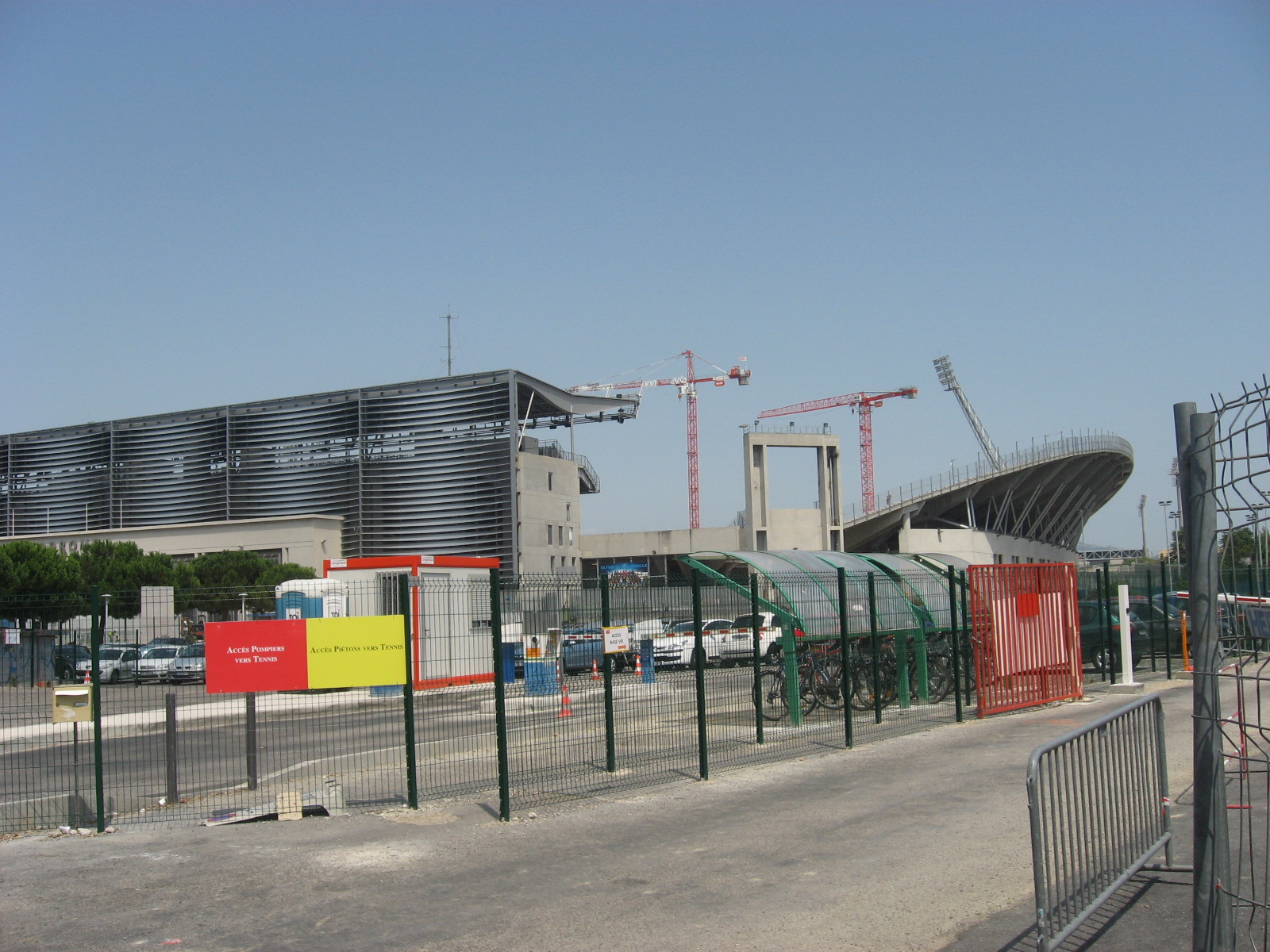
For the last 3 nights I went back to Marseille, where I had to catch the plane. I visited more museums, such as on the Marseillaise (yes, the song: anthem of the French revolution, and now French national anthem, some maybe can mum it). It was in French, but I got the main content more or less. Interesting were the different versions – and uses - of the song. The next day I went to the Museum of Contemporary Art. The latter was outside the centre and quite a walk (I knew buses went, but I walked), passing the modern Olimpique de Marseille football/soccer club stadium, the Velodrome.

I could have taken the bus and partly the subway/metro to the Museum of Contemporary Art, but I saw on the map exactly how to walk. I find that pleasing somehow: to find my own way. I had to walk the Rue Paradis out to the end (by itself a few kilometres), from the Charles de Gaulle square in the centre where I had breakfast (actually it was 12:30 hours, but hey..). I walked the Rue Paradis out. Near the end of it I wanted to sit down and sought in a side street a place to rest. In a residential street I sat down, I was somewhat surprised (though not too much), to find a drawing of Martin Luther King’s face on a wall.

After resting I walked on on the Rue Paradis. Martin Luther King, “Paradise” street: symbolic it seems. I still had a few kilometres to go. After the Rue Paradis it was not long until I saw the stadium, which appeared somewhat more modern to me than another one I saw recently (of Spanish football/soccer club F.C. Sevilla). Both Olimpique Marseille and Sevilla can be qualified as “big” clubs, playing often in European leagues. For a long time now France fares economically better than Spain, but that is not saying much: Real Madrid and Barcelona are the richest football clubs of Europe. That’s another issue, though.

The Velodrome stadium


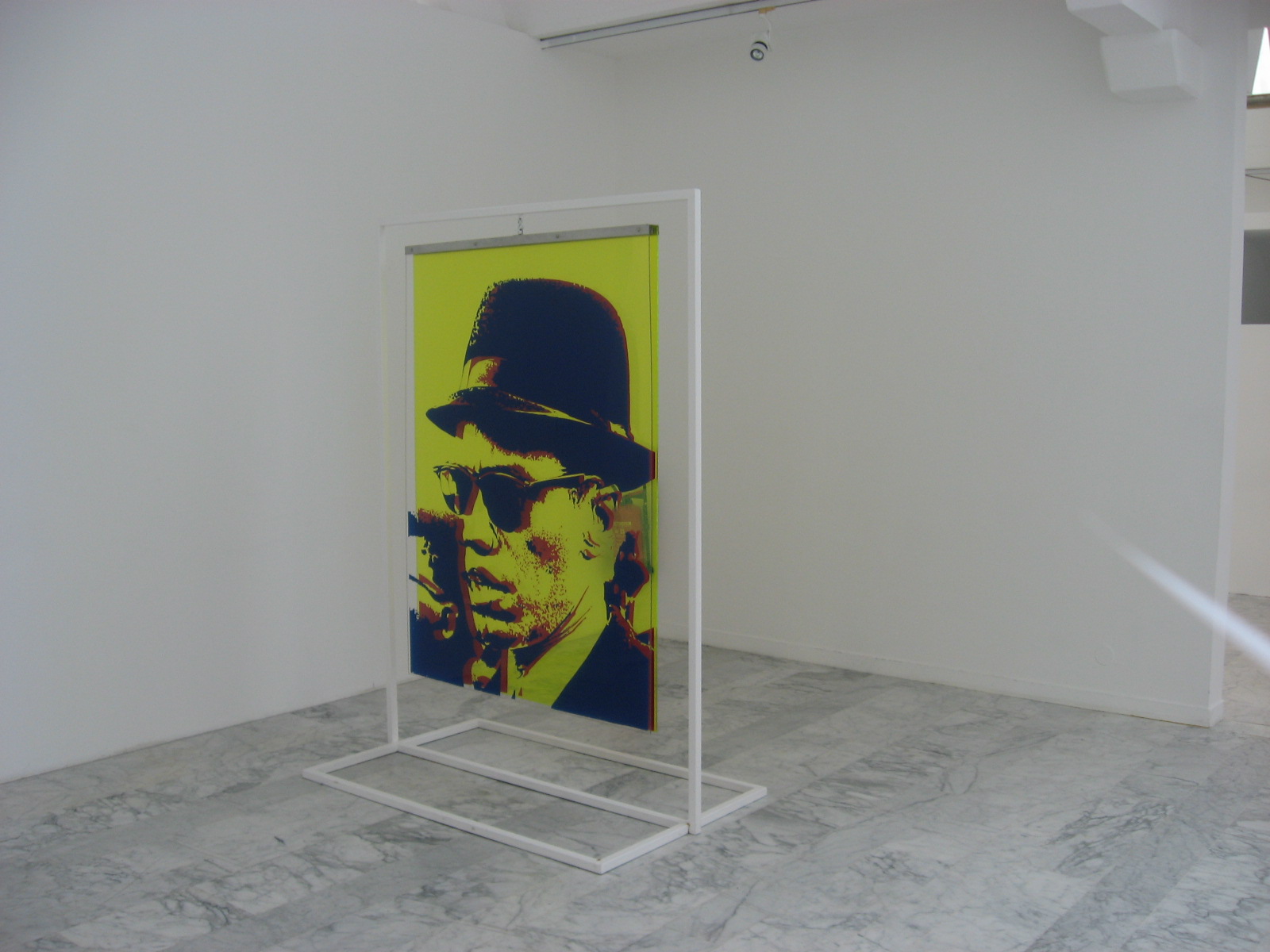
After the stadium I went to a quieter, greener part of Marseille, and after a few kilometres I found the Museum of Contemporary Art. It was very interesting and, some may find, comical. Like Andy Warhol and others many contemporary artists use modern-day objects (e.g. cardboard, tubes, car parts) and repackage them, or use other symbols, turning out seemingly “absurd”. Such as the art-work of a big stone “sleeping” in a (broke-down) bed. Contemporary art includes also photography. There were interesting photographs - such as of Dutch-Somali politician/activist Ayaan Hirsi Ali - alongside installations and paintings. Further, there was also a portrait in light (as installation) of Malcolm X from the 1960s.

Malcolm X in Marseille's Contempory Arts museum


Marcus Garvey, Martin Luther King, Malcolm X, (Paradise Street, maybe the Egypt exhibition), more symbolic clues! Added to this can be the interesting work ‘King of the Zulus’ by Jean-Michel Basquiat, the Contemporary Art museum held.

More symbols along with this: the evening before I had a tasty dinner at an Ethiopian restaurant, Axum, which was decorated with Ethiopian symbols. The Ethiopian lady who attended me (of the owning family) commented in French on my “Ethiopian” necklace, which included Haile Selassie I and Ethiopian flag colours. I saw this restaurant by chance - believe it or not - (I was looking for another restaurant that was closed). Add this as a symbolic, Rastafari connection to the ones I already mentioned. Mind you, most of these symbols I encountered by chance: I did not expect to see the Martin Luther King drawing in that street. I did not know what to expect in the Contemporary Art museum. I did not plan to go to the Ethiopian restaurant. Maybe I should have. Beyond symbols, were they signs?

View of Rue Paradis


How much did I walk to the Contemporary Art museum, about 5 kilometres? Still, I walked this distance back - past the stadium, Rue Paradis etc. - and did not take the bus. Back at my hotel I was a bit tired, but it was overall worth it, not just because of the symbols and/or signs, but they were part of it.

I strive mostly for rationality, and I think that symbols or signs are not always to be trusted, but here I appreciated the symbolic clues and signs. In the end, as language connects and gives meaning to (also visual) symbols, this can also be seen as a form of “word power”. A power which overcomes any language barrier.

Yet in practice, a language barrier remains annoying though, even alienating. Yet, signs and symbols guided me somehow.

zaterdag 2 juli 2011

Best reggae albums lists

I somewhat avoid giving something like “my personal top 5 or 10” of, for instance, reggae albums. Mainly because of the definitive character of it: personal tastes can change, not all that seems pleasing stands the test of time as well, and new artists and/or new albums appear. Another problem with such lists is that they almost can’t help but being somewhat simplistic, even if words like “my” or “my personal” accentuate subjectivity.

I therefore choose in this post to approach the theme I in itself consider interesting - favourite reggae albums of people - on a “meta” level. I analyse criteria, and do research on the Internet, such as through Google, combined with my personally acquired experience and knowledge as a reggae enthusiast/lover for over 20 years. Something of my personal taste might come through, but hopefully not that definitive.

First of all: how to define “best”? Music has for many mainly to do with emotions, passion, feelings, senses (e.g. of identity, or existentially). This is all too human and in itself not bad. It can be seen even as positive. An ideal picture is that black artists in a developing country make songs that appeal to the hearts and feelings of people of all races and backgrounds, all over the world. In a world of racial and social conflicts, war, and inequality this sounds as a beautiful promise for a better world.

But this may be too ideal a picture: it is not totally unrealistic, it occurs, but is at the same time not very common. Racism and opportunism combines when white rappers or reggae artists do indeed reach more white fans more easily, irrespective of the relative quality. Generally it seems to be the case that people search also in their adored artists ethnic and social similarity with themselves: Europeans often (not always) prefer European music, Africans African or Black music.
Such boundaries are evident but are not that rigid. Reggae’s popularity in Europe, for instance, crosses these boundaries.

Then there is a possible “rational” approach to judging albums, which is (quasi-) scientific and scholarly. Like the “canon” ideas in official academic circles. Though it seems too “cold” when delving into a phenomenon that appeals to emotion like music (as all art). At school we’ve learned the definition of art: “expressions evoking emotions” or “meant to evoke emotions”. This in mind, I still believe a certain rationality can be good when judging musical or artistic quality. Not just inherent quality of works, but also their wider social and cultural significance, their place in history. Also regarding reggae albums this can be very interesting.

CRITERIA

Looking at reggae’s history and sociocultural context an “as rational as possible” approach should include a set of thought-out criteria making sense. These relate to innovative artists and musicians, relative influence and reach, certain “periods”, and of course subgenres.

Reggae originated as such around 1968, following ska and rocksteady. Early reggae between 1968 and around 1972 was somewhat faster than later reggae (and even than some rocksteady). From around 1973 the “roots reggae” period set in, which remained the most popular in Jamaica itself until the early 1980s, representing a creative peak period. In the roots reggae period the Rastafari influence was relatively stronger. Roots reggae kept being made, but in the course of the 1980s the deejaying and “early dancehall” period set in with barer bass and drum riddims, as well as since the mid-1980s more “digital dancehall reggae”, Wayne Smith’s ‘Under Me Sleng Teng’ being known as the first instrumentally digital reggae song (in this case Casio-based). In the 1990s came “later” dancehall, with more digital (sometimes more minimal) riddims, alongside the reusing of older roots and reggae riddims, with deejays toasting or singers singing over them. This reusing of riddims/music of course remains in the present.

Within these general periods innovative and creative artists went their own way, pointing at a healthy individualism in Jamaican musical culture. Thus subgenres within subgenres developed, such as dub, harmony vocal groups, dub poetry, lovers rock and soul-influenced, or African and Jamaican folk-influenced stylings. All had a temporary and relative popularity in periods in Jamaica itself before they reached international popularity. Therefore they should all be included with representatives in any canonical or “best reggae albums” list.

For the sake of argument: let’s say that a “best reggae albums of all time” list includes 20 albums (more would probably be better, but still). A rough distinction would I think ideally be:

*two or three Early Reggae albums (e.g. Toots & The Maytals, Ethiopians) from between 1968 and 1971. One conveying US Black music influences, other of Jamaican folk music like mento, Burru or Pocomania.


*about 10 in total for the broad genre of Roots Reggae since 1973/1974. Further subdivided in:

-harmony vocal groups (Wailing Souls, Abyssinians, Mighty Diamonds, Israel Vibration)
-relatively innovative and influential vocalists (e.g. Dennis Brown, Hugh Mundell, Peter Tosh, Jacob Miller)
-influential, renewing producers: (e.g. Lee “Scratch” Perry, Augustus Pablo, Clement “Coxsone” Dodd and others)
-influential innovative musicians (e.g. Sly & Robbie)
-Rastafari lyrics, as it is often “message music”. Including different branches within Rastafari: Twelve Tribes (e.g. Israel Vibration, Ijahman Levi, Dennis Brown) or more recently influential Bobo Ashanti adherents (Sizzla, Capleton, Lutan Fyah)
-‘Rockers’ (a change within Roots Reggae starting around 1978, with a distinct drumming pattern, e.g. Mighty Diamonds album ‘Right Time’), and Steppers (another musical drum change)


-Dub: instrumental, remixed reggae songs, originated by King Tubby (e.g. Augustus Pablo)
-Dub Poetry (Mutabaruka, Linton Kwesi Johnson)
-Lovers Rock (e.g. Gregory Isaacs)

*Early Dancehall. Many artists in this period were in fact partly in Roots Reggae (also with Rastafari lyrics), (e.g. Half Pint, Barrington Levy, Ini Kamoze, Sugar Minott, Michael Prophet, further Tenor Saw, Yellowman, Charlie Chaplin, Eek-a-Mouse etcetera)

*Digital dancehall (early and new: e.g. Wayne Smith, Prince Jammy, Bobby Digital, Bounty Killer, Elephant Man, Vybz Kartel)


*New Roots on reused (non-digital) riddims, mostly Rastafari-inspired: deejaying/toasting (e.g. Capleton, Louie Culture, Jah Mason), singing (e.g. Luciano, Bushman, I-Wayne, Tarrus Riley, Jah Cure) ,or the in-between “singjay-ing” (e.g. Sizzla, Queen Ifrica, Junior Kelly, Lutan Fyah)

As one may note: this way a list of 20 albums is reached easily, even leaving too many valuable albums out.

Having my criteria set, let’s go to the Internet

RESEARCH

Doing my Internet research on “best reggae albums” lists I encounter several of these lists. Some admit to be subjective personal favourites, and some are very succinct (without explaining stories or anecdotes). Some add such explanations or stories: “it was in the time when I used to go to a club etcetera”. Some more, let’s say ”self-assured” (I’m not saying arrogant) people refrain from everything that points to subjectivity. This can be a sort of authoritarian way of hiding one’s insecurity or lack of knowledge, but can also be – more positive? – their passion or enthusiasm taking the better of them.

A quasi-rational approach is what characterizes this list on this (British-based) website of “top” reggae albums, said to be aimed at “newbies”. I note however a pro-“British reggae” bias.

http://uk.music.ign.com/articles/765/765610p6.html

Since I’m not a newbie to reggae anymore it is maybe difficult for me to judge but I do not agree entirely with the list. Not that these albums are not interesting somehow, but are all these 25 really among the best? Only some artists or albums are in my opinion rightly included, according to my criteria, and from the “defining” point of view: Sly & Robbie, Burning Spear’s ‘Marcus Garvey’, Horace Andy, Mutabaruka, and Lee “Scratch” Perry. I can at least understand these being in a “best of” list.

They are influential, although there are better, historical examples of specific albums. But Daddy Freddy?, Super Cat? Maybe fun, but the top? Or crossover acts like Shaggy or Shinehead? Dubious. Let alone UB40’s ‘Labour of Love’. Really, the best? (the songs on that album are even covers, of which some I consider mediocre cover versions of better originals). Very roughly, subgenres and periods of my criteria are included. Desmond Dekker and Jimmy Cliff represent Early Reggae for instance. Roots, dub and toasting/dancehall is there. Yet, in my opinion not the most representative albums or names. Again, due to a pro-British bias.

In comparison, the journal Mojo’s list of greatest reggae albums makes – I find – more sense.

http://www.rocklistmusic.co.uk/mojo.html

Again, Burning Spear’s ‘Marcus Garvey’, but also rightly included are: Culture, Black Uhuru, Dennis Brown, The Mighty Diamonds ‘Right Time’, Abyssinians...now we’re talking. Good examples of harmony vocals, as well as musically “early rockers” (Right Time), by “early” Sly & Robbie and “later”, modernizing Sly & Robbie (Black Uhuru), dub (Augusts Pablo), and the somewhat underrated classic “Truth & Rights” by Johnny Osbourne.

There are still some head-scratchers on the admittedly more extensive list. Some notable omissions as well: where are Alton Ellis, the Ethiopians, Israel Vibration, Peter Tosh, Little Roy, Mutabaruka, or the Wailing Souls? Still, it comes closer to true reggae, beyond crossover acts.

Then there is:

http://www.amazon.com/Top-Reggae-CDs-All-Time/lm/LS94YDTK9Q78

This Amazon-based list is more subjective, although the inclusion of Jacob Miller is a plus (another notable omission in the former lists), as well as of Bunny Wailer.

Another subjective list has some arguably odd choices which relate to personal taste.

http://www.mademan.com/mm/10-best-reggae-albums-ever.html

Interesting artists and albums, maybe, but not the most representative or original. It lacks some of the periods and subgenres of my criteria.
Then there is this one:

http://www.digitaldreamdoor.com/pages/best_albums-reggae.html

This list is “safely” extensive, but includes, in my opinion justly, names not on the other lists: Hugh Mundell, Itals, Half Pint, and, there they are, the Ethiopians and Alton Ellis. Ijahman Levi and Israel Vibration are on the other hand wrongly left out, I think. Somewhat strange according to me is the choice of albums by some artists. No list seems perfect, I guess. Personally, I prefer Bob Marley’s ‘Uprising’ over ‘Catch A Fire’ but that is my taste. Largely, this list makes sense, according to my, aforementioned criteria.

Mark H. Harris of the Reggae Reviews website (still online but no longer updated: I contributed some guest reviews to this site in the past) has this interesting reggae album list for starters (or “newbies”).

http://www.reggae-reviews.com/4starters.html

Having read many of his reviews I noted that his taste within reggae is comparable, though not totally similar, to mine, but he is without a doubt knowledgeable on the genre. I agree with several of his choices, though it has a slight US-based or US Virgin Islands bias. US Virgin Island-based Dezarie and others are talented artists, no doubt about that. Some non-Jamaican artists can of course be included and the mentioned Chilean band Gondwana’s album ‘Together’ is indeed very nice Spanish-language reggae.

I agree with most album choices, but of the Twinkle Brothers I enjoyed their groovy album ‘Rasta Pon Top’ more than ‘Countrymen’, but that is personal and probably related to my life stage then (“because I used to go to this club where..”..just kidding). Of Bushman I enjoyed the almost-classic album ‘Signs’ more than ‘Nyah Man Chant’ (which still had nice songs), but that’s nitpicking. It’s a good list with maybe only a bias toward the US-based reggae (where the author lives), and toward Roots Reggae, which I admittedly have too, but some more Dancehall or New Roots – like Richie Spice - examples could have been given (they are there in the compilations of course). In Roots there still are some notable omissions, such as Mutabaruka and Culture, which I probably would have included. As I would have Misty In Roots.

Yet overall: if my collection ever got – Jah forbid - lost or stolen this list would be a good starting point for replacing it...

Interesting is the following list from, what I gather, is the Argentina-based version of Rolling Stone magazine of best “international reggae albums”:

http://www.rollingstone.com.ar/1180755

This combines sensible, just, as well as odd choices. The latter include too commercial acts, but even acts that are not really reggae (albeit reggae-influenced): Massive Attack, Police, The Clash, and Taj Mahal. Still, the inclusion of the Mighty Diamonds, Culture, Black Uhuru, Burning Spear, Dennis Brown, even Alton Ellis and Ini Kamoze is good and just, as well as the chosen albums, although of Israel Vibration I would have chosen another album. Also the inclusions of Alpha Blondy, toasting “originator” U-Roy, and the (internationally!) very popular band Midnite (from St Croix/US Virgin Islands) are defendable.

Somewhat mistaken in my opinion is the choice for Gentleman, while Sizzla and Richie Spice are absent, but it is a list of international reggae albums. British reggae band Matumbi was also more commercial than my favourite British reggae act Misty In Roots.

Dancehall, however, is largely absent in this list, but maybe a distinction is made between Reggae and Dancehall. A distinction also found in Jamaica itself nowadays, in charts for instance.

The following shorter list is okay – not perfect – but includes some explanations, lacking from other lists.

http://social.zune.net/music/hub/greatestreggaealbums?culture=en-us

From New Zealand comes the following list:

http://www.stuff.co.nz/entertainment/blogs/blog-on-the-tracks/4803024/10-important-reggae-albums

I consider this list mediocre at best. This is especially problematic, because it is called “important reggae albums”, suggesting objectivity. It includes some representative names that deserve to be included, but even for a short list wrong choices were made. Apparently, vocal harmony from the roots era (Abyssinians, Mighty Diamonds) are not the list maker’s “thing”. The list further shows a bias in favour of Dub and Early Reggae, and somewhat against “not Wailers-related” Roots Reggae, which may be due to a lack of knowledge.

From Germany comes this album list. It is better and more representative than the previous list, but also, perhaps ironically, presented as more subjective (“Meine” is German for “My””).

http://www.amazon.de/Meine-Top-25-Reggae-Alben/lm/2NLB62PQY7THQ

The author is apparently a Black Uhuru as well as Gregory Isaacs fan, and likes Roots Reggae more than (later) Dancehall. However, justly included – even from a more objective point of view - are names like Burning Spear, Ini Kamoze, Wailing Souls, Dennis Brown, and yes also Gregory Isaacs, and Black Uhuru. Also good that it includes the beautiful album ‘Africa’ by Ijahman Levi. Good reggae travels internationally, although since the 1970s Germany already has a quite extensive reggae fan base.


CONCLUSION

Interestingly, specific albums recur most. The most recurrent in the sources I found was Burning Spear’s ‘Marcus Garvey’. Justly so, I think. A good example of original vocalists, Rastafari and Garvey-ite lyrics, and even of harmony vocals as Winston Rodney still combined then with two other male vocalists. These left afterward.


Recurring are Lee ‘Scratch’ Perry’s/the Upsetters ‘Super Ape’ and Dennis Brown’s ‘Words Of Wisdom’. Also justly, I think. The innovating genius of Scratch has been documented enough, and Dennis Brown was a great, original vocalist, as well as a talented songwriter. His vocal style even influenced a whole “school” of later Jamaican reggae singers. This school includes Luciano, Bushman, Natty King and more. Some of these artists also say that Dennis Brown was one of their influences. They still remained original though.


Somewhat less consistently some other albums do recur as well: the Mighty Diamonds’ ‘Right Time’, Culture’s ‘Two Sevens Clash’, the Congos’ ‘Heart of the Congos’, and the Abyssinians ‘Satta Massagana’. Justly so: classic Roots Reggae with strong Rastafari influence, and great harmony vocals. Also, from a bit later historically, Black Uhuru recurs, especially albums when Michael Rose was lead singer. Justly: Michael Rose influenced another vocal “school” in Jamaican reggae, including Junior Reid and Yami Bolo.
Further recurring, a bit less often, is Peter Tosh’s ‘Equal Rights’, the Gladiators ‘Trench Town Mix Up’, and Horace Andy’s ‘Skylarking’. I can understand this as well.

Less recurring – and in my opinion wrongly – are the Wailing Souls, Hugh Mundell, Little Roy, and Ini Kamoze, having put out a few classic albums, I think. Israel Vibration could recur a bit more as well, I think.

Even more rare, Mutabaruka and Misty In Roots. Also unjust, I think. Mutabaruka’s ‘Check It!’ is for instance a great album, plus representative of Dub Poetry. Misty In Roots’ ‘Jah See Jah Know’ is a sincere, strong album. One of the best Roots examples from Britain. Ijahman Levi is another talented artist that could be mentioned more in such lists. The same applies to the unique vocals of Don Carlos. The Ethiopians and Alton Ellis, both skilfully bridging ska, rocksteady, and reggae, are also mentioned too rarely in my opinion.


Finally, New Roots receives not much attention in the lists. Maybe, people think that it is too new to judge if it is lasting, influential talent. This in some cases is reasonable. Yet not in all. The appeal of Sizzla is proven, as is of Richie Spice, Bushman, and Luciano. I-Wayne is not very prolific, but his album ‘Lava Ground’ is almost a classic.

Too much recurring were in my opinion UB40, maybe Bob Marley’s specific album ‘Catch A Fire’, Jimmy Cliff, or Steel Pulse.

This all inspired me somehow: to listen again to some of these artists, sometimes from albums mentioned in lists. I was even stimulated to make such a list of “top reggae albums” myself. I formulated criteria for it, didn’t I? I almost wanted to “answer” these lists with my own. Almost...

maandag 6 juni 2011

Bristol Rock

For the first time in my life I recently went to Bristol, the biggest city in south western England. I visited Bristol - and surroundings – mainly out of a sort of curiosity. Of England I mainly visited London (a few times) and parts of Kent, and I wanted to see also other cities and parts. Plus, near to Bristol was Bath where Haile Selassie I lived when forced in exile after Mussolini’s invasion of Ethiopia.
I combined this trip further with a trip to Cardiff, neither too far from Bristol. Again out of curiosity.
Combined with a somewhat vague curiosity for an English harbour city there was the music scene that I heard of, including not always uninteresting (I know, a moderate complement) acts like Massive Attack and Tricky.

A variety of reasons, you might say. Regarding my favorite musical genre, reggae, - readers of this blog may have noticed this - I knew of the good song Juvenile Delinquent by Bristol-based roots reggae band Black Roots. Worth checking out! Like other British cities, Bristol has a Caribbean (mainly Jamaican) migrant population, I also knew.


As a quite typical port town Bristol of course had a lot of water, canals, bridges, and boats, set in a general North-Western European cultural context and atmosphere. This atmosphere is present in the weather, but also in the architecture and darker colours grey or brown for buildings and streets (or sometimes even interiors). The cultural context is present in its Protestant history, (historically tainted) Germanic/Teutonic traits (in England called Anglo-Saxon or Saxon), and in, for instance, the importance of beer. It is on the other hand also internationally influenced, partly because it is a port.


Water/river view in central Bristol


Some vague similarities were therefore certainly there with similar historical port cities in the Netherlands (where I live), such as Amsterdam or Rotterdam. There were also differences. In architecture, more accidented streets, and socioculturally. I went as said with a general curiosity: it was not - not specifically at least - a “reggae trip” or something like that. Yet still I naturally paid attention to reggae: in clubs, stores, people etcetera, as I went along.

Like other places in former colonizing countries, Bristol’s history is tainted. There is a burden of shame, as since the late 17th c. and especially in the 18th c. the Bristol port was strongly involved in the slave trade. Ships sailed from Bristol to Africa to “load up” Africans as slaves, and carry them to British colonies in the Caribbean. This was part of the so-called triangular trade. For a period Bristol was the main port of England in this slave trade, along with London. Later this role was taken over by Liverpool. African human-beings were treated largely as chattel. Before this whites, especially undesirable ones, were also shipped as servants from Bristol to British colonies in not too good conditions, as Eric Williams describes chronologically in his seminal work ‘Capitalism and Slavery’.

With this past in mind I, while striving for my own mental health to rationality, felt there were bad, demonic spirits hanging over tainted Bristol somehow. Ultimately this could depress me. This feeling did not become too dominant though. Mainly because Bristol is a modern, international, and multicultural city characterized by variety in several ways. It seems even to a degree a hospitable place, open to visitors. It is less touristic – in numbers – than my hometown Amsterdam, yet seemed to accomodate some tourism, or maybe it seemed so because it had a cosmopolitan air.


(Upper) Park street, another (western) part of central Bristol


DEMOGRAPHICS AND RACE

Bristol is multicultural, including an Indian and Pakistani population, relatively many Somali immigrants, West Africans, relatively many from the Yoruba parts of Nigeria, as well as a historically somewhat older West Indian/Afro-Caribbean population. Jamaican and other Caribbean migrants especially came to Britain already since the 1950s.

I found out, e.g. by reading in the Bristol central library, that the West Indian/Caribbean population of Bristol is substantial (slightly above the British national average), though small compared with other British cities. The total of Bristolians called black or black British (including later African migrants, I suppose) is 2,9 % of its (the city) around 433.000 inhabitants. The black population was relatively concentrated in the city’s central St Paul area.
By comparison, Birmingam has a population of 6,7 % black or black British inhabitants. More than double. Manchester about 5,2%. Also the Dutch capital Amsterdam has a relatively high proportion of black (defined as of sub-Saharan origin) inhabitants – including Creole Surinamese, West African immigrants and others - even surpassing proportionally London or Paris.

Despite these figures, Bristol has a relatively important place in black British history. Not only due to the slave trade history, but also in relation to more recent racial tensions and struggles. One of the earliest riots in Britain in the 1980s against racial discrimination by blacks was in Bristol, as well as other protests and appeals against racial discrimination that was quite present in Bristol, such as in housing and job-hiring practices.

On a side note, also the Welsh capital Cardiff, which I also visited one day, has a quite substantial black population. It has even one of the oldest black communities of Britain, also – as in English cities - with historical discrimination and segregation problems.
This background seemed relevant to me as I focussed also on the reggae scene. Reggae “gone international” and to a degree multiracial and multiracial – of course – but is still relatively more popular among blacks in general and maybe more so among people of Jamaican and Caribbean descent. For obvious reasons, you may say. It is and remains Afro-Caribbean music.

BRISTOL AND REGGAE

The focus was further stimulated by a music album I came across and purchased in Bristol, based on the Bristol roots reggae scene: ‘The Bristol reggae explosion : 1978-1983’, a compilation released in 2011. Apparently there had been such an “explosion”, with several recording and performing musical groups of black Bristolians – or racially mixed groups - and an active reggae scene in Bristol itself. According to the sleeve notes that scene diminished after the covered 1978-1983 period. Of the 3 “reggae-minded” clubs in Bristol in that period, for instance, only one presently remains. The period of the album’s songs was by the way one with racial tensions, giving it a social dimension.

I already mentioned the group Black Roots: it is justly included in this compilation, including the song Juvenile Delinquent. This great song seems to me an adequate “calling card” for Bristol-based roots reggae. Other artists and bands include Talisman – quite well-known (also by me) -, Joshua Moses, Restriction and others.

Reggae outside Jamaica, or specifically in Britain, is in my opinion a hit-or-miss affair. My favourite British-based reggae band has always been the roots band Misty In Roots, as I like most of their work, whereas of Aswad and Steel Pulse I only like some of their work. Linton Kwesi Johnson and Mad Professor are further both interesting in their own way. Other British reggae, however, I often find too cross-over or inauthentic to my taste, though not always.

In this light, how do I review this Bristol (roots) reggae compilation? It has a distinctive sound that seems to tipify British reggae (as opposed to Jamaican reggae), but if the songs are good that shouldn’t determine all. The opener Bristol Rock by Black Roots has that sound and a seeming similarity to the “brethren” Steel Pulse from Birmingham. At the same time it does sound to a degree authentically “rootsy” as far as reggae is concerned, and not too bland. The same can be said of the other Black Roots songs on this compilation, which are also catchy and “kept real”.
Joshua Moses sounds quite rootsy as well, ressembling Jamaican roots songs, and having catchy songs. I don’t know if Joshua Moses is still musically active (or alive) after all these years, but he shows talent in his catchy songs on this compilation.

Talisman sounds somewhat more “British”, especially in instrumentation, with songs that seem less catchy and chaotic. It is more difficult to judge as most their included songs are live versions.
Restriction has a British-Jamaican style of toasting vocals that is a matter of taste. It is not too bad, but neither seems too impressive or original (now?).

More “mellow” (lovers rock-ish) songs by the female singer Sharon Bengamin and by Buggs Durrant are not bad and quite catchy.
In fact, almost all songs on this compilation are at least okay, making it not a bad album. Some songs stand out, some I find nice, or just okay, not inaudible, but neither always very spectacular or impressive.

On a side note, I would consider a similar compilation on the Amsterdam reggae scene (also already longer active), historical or present, also very interesting to hear. I know of several Amsterdam-based (roots) reggae artists and bands that are/were active. You never know, maybe it will appear some day...


TRACK LIST:

1. Bristol Rock (Black Roots)
2. Africa (Is Our Land) (Joshua Moses)
3. Run Come Girl (Live) (Talisman)
4. Four Point Plan (Restriction)
5. Tribal War (12'' Mix) (Black Roots)
6. Restriction (Restriction)
7. Pretty Girl (Joshua Moses)
8. Wicked Dem (Live) (Talisman)
9. Nights of Passion (The Radicals)
10. Mr Guy (Sharon Bengamin)
11. Juvenile Delinquent (Black Roots)
12. Baby Come Back (Buggs Durrant)
13. Riot (3-D Production)
14. Dole Age (12'' Mix) (Talisman)

zaterdag 7 mei 2011

Reggae biography time

Several biographies have appeared on Bob Marley by now. The recent work titled ‘I & I : the Natural Mystics: Marley, Tosh and Wailer’ (2011) by Colin Grant, is partly another one, moving thus on a well-trodden path. Yet it is more than that, and is more original.
Actually, it’s a biography of the Wailers, all three original Wailers: including Bunny Wailer and Peter Tosh - to an equal degree - elaborating on the developing relationships between Bunny, Bob and Peter, as well as of these three with other influential persons in Jamaican music and society, such as studio owner Coxsone Dodd, Rasta ”leader” Mortimmo Planno, Joe Higgs, Chris Blackwell and others.

Thus, you get the combined life stories of the three original Wailers who met in the ghetto of Trench Town in Kingston, Jamaica, up to international stardom of Bob and later careers (and lives) of Peter and Bunny. The author, Colin Grant, knows how to write. He has the ability to write engagingly, humourously and at the same time educationally. I noticed this already with one of my favourite books, also by Grant: ‘Negro With a Hat : Rise and Fall of Marcus Garvey’ (2008), a biography of Marcus Garvey.

A difference with the book on Garvey is that in ‘I & I’ Grant interchanges information and stories on the Wailers’ lives with his personal travel experiences in Jamaica. A great skill of Grant is further the way he elucidates the essence of human relationships, in such a way that all dilemmas and complexities of human beings come to the fore in an insightful manner. Jah knows that all three Wailers are/were interesting, strong personalities.

He furthermore places these personal stories in the context of Jamaican history, culture, and Rastafari’s development in Jamaica, including in Trench Town. Rastafari is mostly discussed socially and less spiritually. How the three Wailers “converted” to Rastafari gets attention, but less why. That is a criticism I can give to an otherwise outstanding work.
Bunny Wailer’s and Peter Tosh’s fathers were both ministers of local (Protestant Christian) churches, and were generally raised in a Christian context, as was Bob Marley. The social dilemmas of turning Rasta in conservative Jamaican society are well-described in the book. Rastas were often seen as undesirable outcasts, made to pay social prices for their alternative, rebellious thinking and way of life.

There are thus various threads in this work, skilfully intertwined and combined by Grant, and based on various sources, biographical, press, archival, strictly scholarly etcetera.

Especially on Bunny Wailer's and Peter Tosh's lives and backgrounds not much is widely known. The information on Bob Marley is more known to more experienced “reggae readers”, but is presented from another perspective.

I considered the most interesting parts the Wailers’ dealings with producers, such as Coxsone Dodd, the depictions of ghetto life in Trench Town around the 1960s, as well as the added background knowledge on Jamaican history and on cultural and social customs, such as the value placed on having many children or several women. Information on or anekdotes illustrating Bunny's, Peter's, or Bob’s personal character, attitude or temperament are very interesting to read as well, as are Grant’s memoirs while travelling. How growing up in the ghetto necessarily “roughened” the characters of the Wailers becomes clear, as do influences from other life experiences, such as gaol time for Bunny Wailer (accused of ganja possession).

Rastafari reference in Trench Town, which I visited in 2008. Not far (around the corner) was the “yard” where Bob Marley lived

A well-written and insightful work that may be interesting for Marley “novices”, but also for those who know already more about the Wailers and reggae history.

Still, on a sidenote, a thought repeatedly came in my head, while and after reading this work: it is time for a biography on other “icons” of Jamaican musical history, equally well-written and insightful. I mean, more scholarly, and not superficial biographies. The names Dennis Brown, Gregory Isaacs, Joseph Hill of Culture, Mikey Dread, Lucky Dube, Alton Ellis, Yabbi You, Sugar Minott, Coxsone Dodd, I Roy, Garnett Silk, Augustus Pablo, Hugh Mundell, Jacob Miller, Junior Delgado - all unfortunately no longer among us - come to my mind.

The lack (largely) thereof may be explained by commercial/marketing reasons, problematic often also in academic circles. A market beyond (albeit international) reggae enthusiasts for a more thorough biography on, say, Mikey Dread or Hugh Mundell, should maybe not be exaggerated, but it’s the loss of that wider public. Jah knows that their lives in themselves are surely interesting and multidimensional enough for an insightful elaboration. Even, I think, for a monography/book and not just a shorter article. At least a combined biography (like Grant’s book) seems an option.

The sudden (natural and unnatural) deaths of many of these illustrate issues of their lives. In general, - as one of the world’s sad truths - the poor and hard-working die younger. Drugs (cocaine) or other habits may furthermore exert influence. The causes of these artists' mostly premature deaths ranged from cancer, other, suddenly fatal diseases (cardiovascular, lung-related or otherwise), as well as car accidents (Jacob Miller) or being shot (Hugh Mundell and Lucky Dube). One’s death often – though not always - says something about one’s life, while on the other hand these artists “live on I-tinually”, such as through their music. Well worth biographies!

Several of these deceased artists I mentioned grew up in Kingston ghettoes (Trench Town or other), though there are variations. Joseph Hill came from outside Kingston (Linstead, near Spanish Town I believe), Mikey Dread also (from Portland), while Augustus Pablo had exceptional middle-class ties and an equally exceptional Indian background. How they started in music, their developing career, how they grew up, family and other social relations, personal beliefs: all interesting.

Still, the biggest, international name of reggae remains Bob Marley, that is a fact also in 2011. The biggest and therefore most “marketable” name.
At the very least Colin Grant’s book, by discussing e.g. also Bunny Wailer’s and Peter Tosh’s post-Wailers work, treats Marley in a broader reggae and social context than other biographical works on Bob, adding to its quality, and, perhaps, necessity. Recommendable.


I & I : the Natural Mystics: Marley, Tosh and Wailer: Colin Grant . – 305 p. – London : Jonathan Cape, 2011. ISBN: 9780224086080