France therefore felt principally like (no disrespect intended) a larger hurdle to overcome. Our minds were not totally closed, and we looked around when we had to sojourn in France. As we usually crossed the border on the west-side, near Irun (Basque country), the “half-way stop” we chose mostly was in the broad south-western area of France: roughly between Poitiers and Bordeaux. I also remember us staying somewhat more to the south, in or near the French Basque country (in Spain itself we still had some way to go). I myself went a time alone to Spain by train, through France, but with the exception of a few hours in central Paris as a stopover, I spent little time in France: I went to see different parts of Spain, and France was a large country I had to pass through. Again, no disrespect for the French, but I had specific interests and connections I chose to focus on because of my background.
Regarding culture and society, France became in my mind the “other” Latin-speaking country. Culturally also between Northern Europe and Southern Europe. Different from the Spain of my maternal background, as well as from the Italy of my paternal background. French is a Latin/Romance language but not one I was very fluent in. Further, there were vague associations of a culture of food, perfume, certain art forms, and fashion I got through media about France.
Recently I chose France – for a change – as a travel destination. Again (see other posts), there is a reggae connection: I flew on Marseille and also wanted to go to Avignon. Nearby Avignon there was, in the village of Bagnols-sur-Cèze, the Garance reggae festival: one of the biggest of Europe. Interesting, big names like Burning Spear, Sly & Robbie, Clinton Fearon (former Gladiators), Midnite, Willie Williams, and others were scheduled to perform. This influenced my decision to go to that part of France. It did hardly define the whole trip, though. I went to travel and see another part of Europe I knew not too much about. Though it is and remains true that “I go where reggae is”, my travelling goals were in this case broader.
The Garance reggae festival is one of the biggest of Europe. It was held between 27 and 30 July in 2011, and roughly around that time I flew to Marseille: the biggest city of the Provence in South France, and the second-biggest in France, with more than a million inhabitants. The biggest port as well. It is historically the oldest French city, founded by Greeks.
Later I would go to inland Provence, to Avignon, nearer to the festival. Avignon itself was known for its theatre culture, and there was during most of July a theatre festival in the town of Avignon, which has about 90.000 inhabitants. I read in Dutch newspaper ‘de Volkskrant’ that this theatre festival’s origin dates back to 1947, then meant to revive post-war French art life.
LANGUAGE BARRIER
I (unfortunately) reencountered a phenomenon throughout all this that I almost forgot about for a time: the language barrier. I’m not fluent in French, had it at school until I was about 20, and learned some, but not extensively. I found out again how it is to not be able to talk freely and extensively, to having many options of speaking your mind, and expressing yourself with the locals. I spoke some French, and at times English, but it went a bit difficult, and remained necessarily too often superficial and practical.
You cannot deny the importance of language. It is related to what some Rastas call “word power”. More existentially, this means that speaking words in itself has the power to create. The Bible even seems to start with this premise: “In the beginning was the word, and the word was God”. As most Rastas find that Jah (or God) is within oneself, and is a living man, you could in some way argue that Jah “in I” is silenced, because of a language barrier. Limited as I life force. To a degree, of course. In any case, you get somewhat excluded from surrounding society and, well, people.
MARSEILLE
Marseille broadly seemed to respond to a northern Mediterranean atmosphere. It is hard to grasp the cultural tenets, though I got an idea. The French culture seems to pay much attention to “the refined”, to “form”, or “style” in the broad sense. This is evident in the French cuisine, as in other, daily customs. Courtesy is also valued high, however superficial. For instance in greeting when entering a store, “bonjour”, and the way how you say thank you. Arguably, in my experience, people in Spain seemed more “informal” in their overall demeanour and behaviour. This is not the same as being “rude”: Spanish seemed just as friendly and respectful, but in another way, maybe comparable to how you talk with your friends or team mates. In France, social customs seemed more distant and formal.
In other ways, Marseille is a modern, multicultural European city. A port-city like Bristol, which I discussed also on this blog. The specific colonial past of France comes to the fore in the type of non-European immigrants. Relatively many from Algeria and Morocco (geographically not too far of course), but also from sub-Saharan Africa, the Comoros Islands, and Vietnam (for a period a French colony as not everyone seems to know). Multicultural means in most cases not living among people of different backgrounds, but rather living quite apart from other ethnic groups, concentrated in specific quarters/neighbourhoods, dominated numerically by specific ethnicities/cultures (or religions). The same applies to other cities in Europe of course.
The area around the main train station St-Charles, not too far east of the Old Harbour and centre of Marseille, is largely inhabited by people originally from the Maghreb: Algerians and Moroccans, with Islam being an important religion.
The Old Harbour (Vieux Port) in Marseille’s centre has a different, more Mediterranean feel from the Harbour I saw in Bristol: lighter, yellow-ish, and less sombre colours than Bristol’s canals and harbours. The Old Harbour – however – is not used as a commercial, industrial port anymore. The modern, economic port is located more to the northern outskirts of Marseille.

A view on Marseille's Vieux Port (Old Harbour)
Architecture can be interesting, because it is the most obvious material sign of a culture and society. The Provence region of South France seems to be characterized by yellow-ish, pink-ish “light” colours: lighter and more southern/Mediterranean than, say, Bristol or Amsterdam. Yet, it is also different from Spanish cities. There were similarities with parts of Italy, but it was neither the same as, say, Pisa, where I have been.
I am however not so much an “architecture buff” as I am a “museum buff” (to use Lonely Planet-travel guide parlance). I like visiting different museums. I did it in Marseille and Avignon as well.
I’ve visited several interesting museums during the trip. In Marseille’s Le Panier quarter (the Montmartre of Marseilles, they say) there was an exhibition on Orientalism in French paintings: how especially French painters saw the Orient: the Middle East, North Africa.
It was very interesting. The term orientalism was of course by Edward Said, who was most probably an interesting and versatile, innovative thinker. One thing bothered me, though, from my perspective. Marcus Garvey – in time preceding Said – broadly pointed at some of the same things or principles as Said, only earlier: how the West saw the rest of the world from their cultural perspective and their (colonial) interests in mind. Garvey focused on the colonial project as it affected sub-Saharan Africa more than the Orient. Garvey receives overall nonetheless much less academic interest than Said. Unjustly, I think.
Furthermore, it is definitely not the case that the Orient was “ravaged” by European colonialism more than sub-Saharan Africa. On the contrary: let us think of the extensive slave trade alone affecting millions in black Africa, by both Europeans and Arabs.

A view on Marseille's Le Panier quarter
After a few days Marseille, I went to Avignon, about 80 kilometres north/inland, on the river Rhone.
AVIGNON
It was “theatre month”- as each July, in Avignon. This means that there are many performances in the several theatres in the town – which has normally about 90.000 inhabitants -, and many artists and performers on the street, most promoting their plays/pieces to be seen in the theatres.

Central Avignon, late July 2011
I found it fun and interesting to see so many street performances. These ranged from musically to visually artistic, the juggling, the acrobatic, the literary, and everything in between. Dancers, capoeira, street dance, a guy dancing with a silver, seemingly floating ball by his hand. Music from Amerindians, to African music - such as from the Senegambia region - , to traditional or classical French, pianists, Flamenco-like Spanish guitar players... Some of it sounded really good.
GARANCE
Then there was the other festival: the Garance reggae festival. Partly unconsciously I wanted to compare it with the other festival I went to in 2010 in Spain: the Rototom reggae festival in Eastern Spain, Benicassim, held in August, discussed also on my (this) blog. In both cases I heard the same: this is the biggest reggae festival of Europe. Of neither festival I went every single day, but having been there substantial parts of the festivals and knowing the programmes, I am quite sure that I can say this: Rototom in Spain (formerly Italy), is bigger than Garance in France. Rototom lasts more days (namely 6) and has more artists and concerts. Concerts that are even relatively long for festivals. Garance, in comparison, lasted 4 days, and the premises/terrain also opened later than in Benicassim/Rototom. There were at both festivals quite some reggae concerts of different artists, of course, which is more important than who is biggest. There were however also organizational differences.

The festival terrain
Another flaw, maybe, of the Garance festival is its somewhat isolated location. It is held in the town Bagnols-sur-Cèze, about 40 kilometers from Avignon. It does not have an own train station (Avignon being one of the nearest), and public transportation is too limited: like Rototom concerts tended to end close to 3 o’clock in the morning, but you cannot get out of Bagnols at that time (save by expensive taxi). That would not be a problem if the accommodation in Bagnols was extensive, but there was few when compared to Benicassim, laying on the much-visited Spanish Valencian coast. Besides this, the Garance festival had no debates or forums: it could have been more intellectual (with more word power?).
Nonetheless - I’m done complaining now - I eventually could go 2 out of the 4 days, and saw concerts of Burning Spear, a Studio One revue (Lone Ranger, Prince Jazzbo, Willie Williams, King Stitt and others). “Oldest living deejay” King Stitt was introduced as no less than “the first rapper in history” (Well, I think...no, that’s maybe a topic for another post). Unfortunately, these latter did not perform with a live band, but with a deejay playing Studio One riddims. The sound was good (though not perfect: I think e.g. the sound of the snare drum – not unimportant in reggae – could be better), and it was still fun to see these deejay-ing veterans.

King Stitt on stage
Burning Spear had a characteristically good show, good band (he tends to take his own band for concerts), and good sound. Winston Rodney is still very active and seems motivated. High points for me included some songs, including the song ‘Marcus Garvey’. I think this song’s “crucial” horns and strong riddim did it, along with its meaning/lyrics. About the Jamaican black leader who receives less attention than Edward Said.
The second day I went to Clinton Fearon (formerly of the Gladiators), rocksteady veteran Ken Boothe, British-based fusion/reggae artist Natty, Jimmy Cliff (I saw only part of it), Sly and Robbie and Junior Reid, and Midnite. Clinton Fearon had a great concert, Ken Boothe was nice, Natty had its moments (not all though), Sly & Robbie was mostly great, and somewhat shortly Junior Reid appeared on stage, which was a good, but later chaotic performance. I saw a large part of the late concert of Midnite (beginning after 1 o’clock at night).

Clinton Fearon on stage
Clinton Fearon and the first part of Sly & Robbie was of these concerts the most impressive to me. Midnite - from the US Virgin Islands - was nice, but they have a distinct, sobre style, which combines the experimental with the laid-back. An acquired taste, perhaps. This no-frills and “reasoning” sound is very much their own and in that sense unique. Yet, after about a half an hour it got somewhat monotonous. Plus it was late, by then.

Screen with main stage concert of Midnite
Furthermore, there were different stands, such as a good place for Ital - Rastafari, natural/vegetarian - food - where I had a great Ital meal with sweet potatoes, and a deejay, with mostly nice tunes and a good sound (Jamaican sound system-style: think high, piled up loud speakers, heavy bass).
Back in Avignon, I visited some museums (again), such as the extensive Curet museum of fine arts with also an interesting Egyptian exhibition along with paintings, and the former Papal palace (for a period Avignon apparently was a “second” Rome). Varied and cultural.
SYMBOLS AND/OR SIGNS?
For the last 3 nights I went back to Marseille, where I had to catch the plane. I visited more museums, such as on the Marseillaise (yes, the song: anthem of the French revolution, and now French national anthem, some maybe can mum it). It was in French, but I got the main content more or less. Interesting were the different versions – and uses - of the song. The next day I went to the Museum of Contemporary Art. The latter was outside the centre and quite a walk (I knew buses went, but I walked), passing the modern Olimpique de Marseille football/soccer club stadium, the Velodrome.
I could have taken the bus and partly the subway/metro to the Museum of Contemporary Art, but I saw on the map exactly how to walk. I find that pleasing somehow: to find my own way. I had to walk the Rue Paradis out to the end (by itself a few kilometres), from the Charles de Gaulle square in the centre where I had breakfast (actually it was 12:30 hours, but hey..). I walked the Rue Paradis out. Near the end of it I wanted to sit down and sought in a side street a place to rest. In a residential street I sat down, I was somewhat surprised (though not too much), to find a drawing of Martin Luther King’s face on a wall.
After resting I walked on on the Rue Paradis. Martin Luther King, “Paradise” street: symbolic it seems. I still had a few kilometres to go. After the Rue Paradis it was not long until I saw the stadium, which appeared somewhat more modern to me than another one I saw recently (of Spanish football/soccer club F.C. Sevilla). Both Olimpique Marseille and Sevilla can be qualified as “big” clubs, playing often in European leagues. For a long time now France fares economically better than Spain, but that is not saying much: Real Madrid and Barcelona are the richest football clubs of Europe. That’s another issue, though.
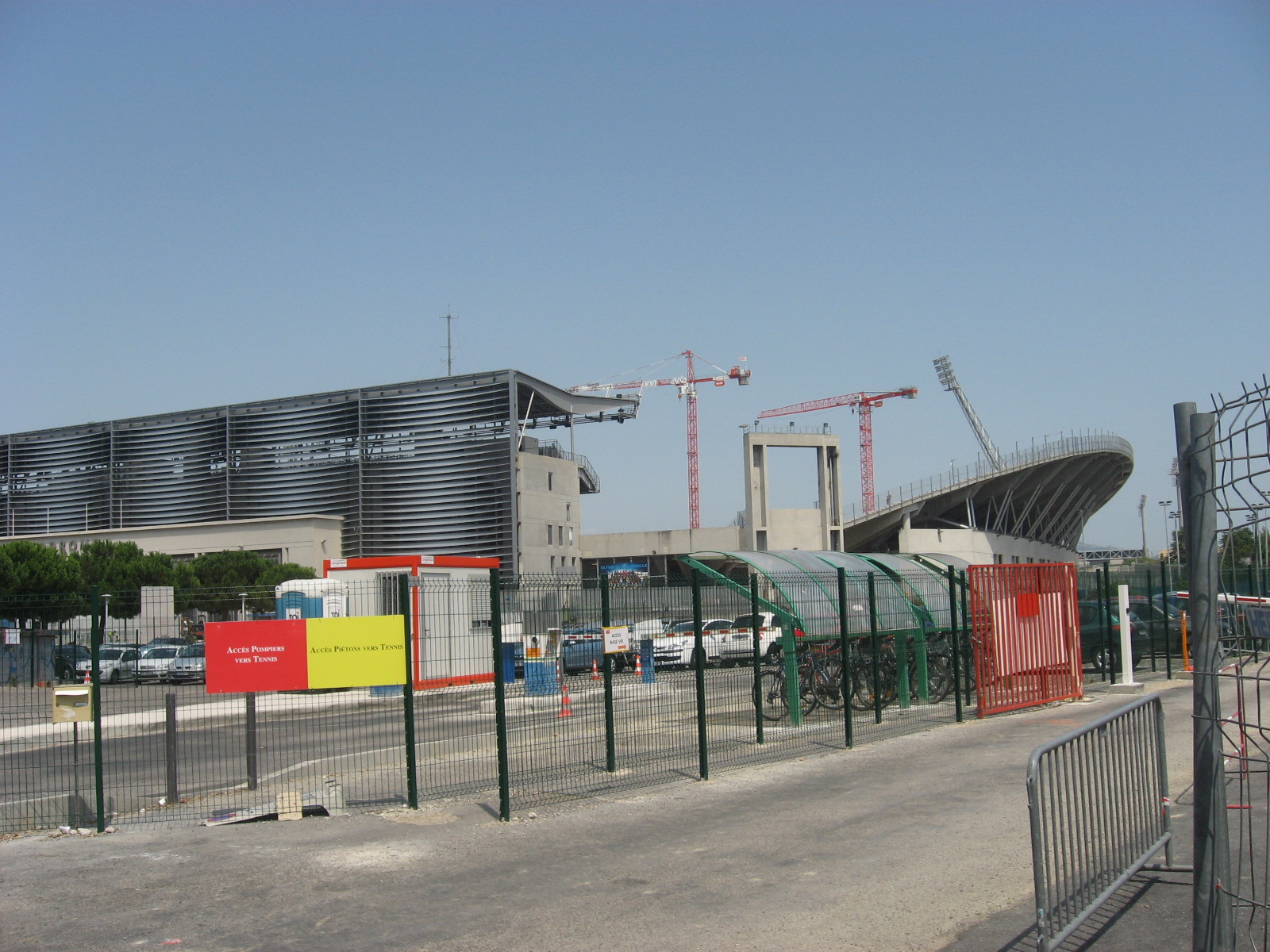
The Velodrome stadium
After the stadium I went to a quieter, greener part of Marseille, and after a few kilometres I found the Museum of Contemporary Art. It was very interesting and, some may find, comical. Like Andy Warhol and others many contemporary artists use modern-day objects (e.g. cardboard, tubes, car parts) and repackage them, or use other symbols, turning out seemingly “absurd”. Such as the art-work of a big stone “sleeping” in a (broke-down) bed. Contemporary art includes also photography. There were interesting photographs - such as of Dutch-Somali politician/activist Ayaan Hirsi Ali - alongside installations and paintings. Further, there was also a portrait in light (as installation) of Malcolm X from the 1960s.
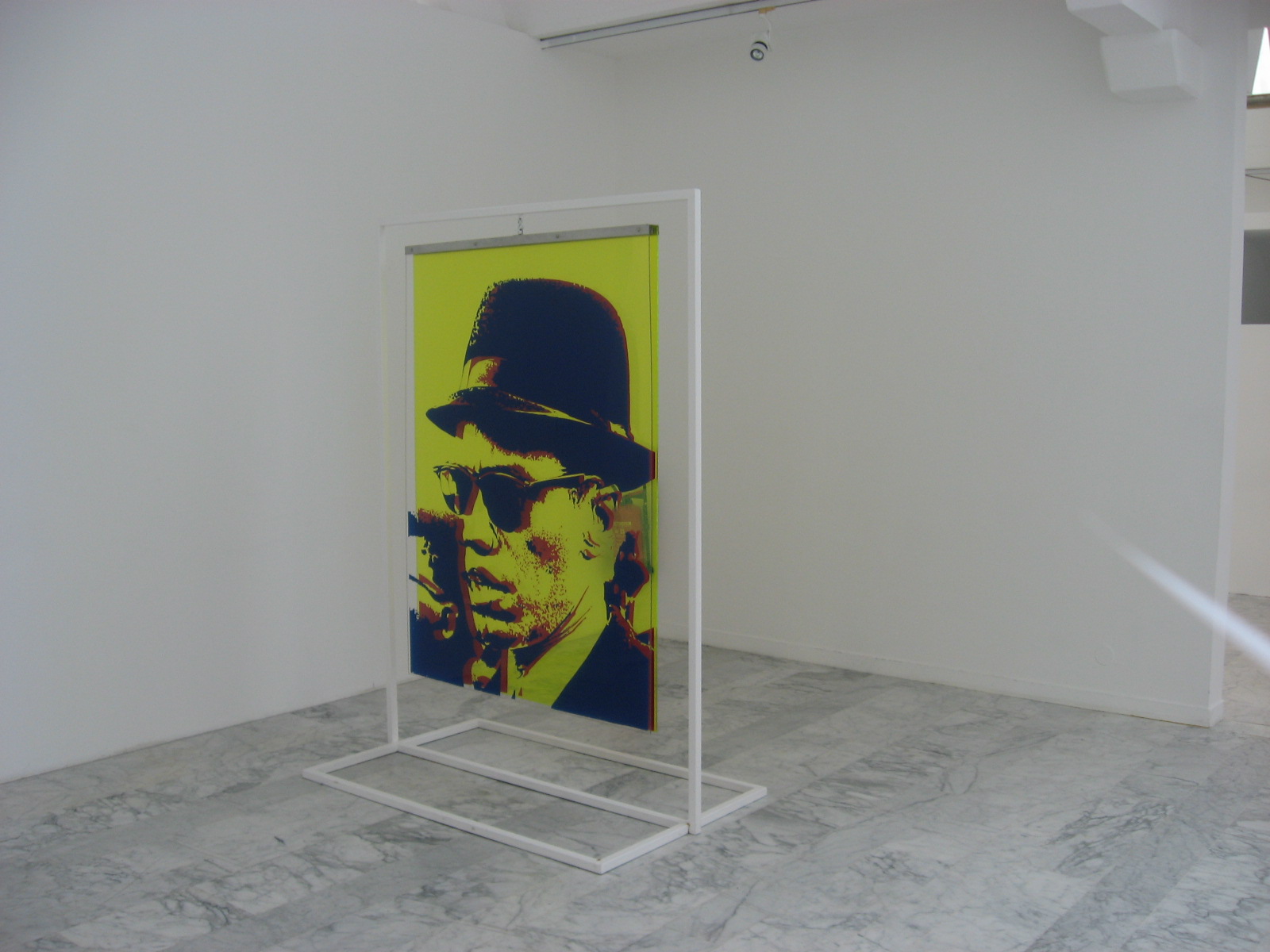
Malcolm X in Marseille's Contempory Arts museum
Marcus Garvey, Martin Luther King, Malcolm X, (Paradise Street, maybe the Egypt exhibition), more symbolic clues! Added to this can be the interesting work ‘King of the Zulus’ by Jean-Michel Basquiat, the Contemporary Art museum held.
More symbols along with this: the evening before I had a tasty dinner at an Ethiopian restaurant, Axum, which was decorated with Ethiopian symbols. The Ethiopian lady who attended me (of the owning family) commented in French on my “Ethiopian” necklace, which included Haile Selassie I and Ethiopian flag colours. I saw this restaurant by chance - believe it or not - (I was looking for another restaurant that was closed). Add this as a symbolic, Rastafari connection to the ones I already mentioned. Mind you, most of these symbols I encountered by chance: I did not expect to see the Martin Luther King drawing in that street. I did not know what to expect in the Contemporary Art museum. I did not plan to go to the Ethiopian restaurant. Maybe I should have. Beyond symbols, were they signs?

View of Rue Paradis
How much did I walk to the Contemporary Art museum, about 5 kilometres? Still, I walked this distance back - past the stadium, Rue Paradis etc. - and did not take the bus. Back at my hotel I was a bit tired, but it was overall worth it, not just because of the symbols and/or signs, but they were part of it.
I strive mostly for rationality, and I think that symbols or signs are not always to be trusted, but here I appreciated the symbolic clues and signs. In the end, as language connects and gives meaning to (also visual) symbols, this can also be seen as a form of “word power”. A power which overcomes any language barrier.
Yet in practice, a language barrier remains annoying though, even alienating. Yet, signs and symbols guided me somehow.