Posts tonen met het label festivals. Alle posts tonen

vrijdag 1 september 2017

Celebrating Africa

The Rototom Sunsplash festival - a Reggae festival - took place in Benicasim, Spain in August 2017 (so this year) again. For the seventh consecutive time after the Rototom festival moved from Northern Italy to Eastern Spain (Benicàssim in Valencian spelling, province of Castellón). I did not go this year but went the very first time it was held in Spain, in 2010. I wrote about it on this blog. It was a great experience for me then: music-wise and otherwise. The festival had a great line up in 2010, including Pablo Moses, Anthony B, Bushman, Bob Andy, the Abyssinians, Romain Virgo and others. “Older” and “newer” reggae artists combined. I stayed in a nice, relatively cheap hotel in the small town of Benicasim, avoiding thus my hesitation about “camping” among strangers. A hesitation that might have been exaggerated or unjustified, but I enjoyed the time in the comfortable hotel, with a nice fruit stand nearby. I only had to walk a bit more to the festival terrain than those on the camping. That it was in my maternal roots land (or “motherland”) of which I also spoke the language, was another nice detail.

Benicasim was furthermore located in a Mediterranean atmosphere and varied landscape, which I found pleasant. The festival terrain was orderly and well-organized, but with much open space, which one notices more as it was very hot (few trees for shade). Some days I walked to the festival terrain at 40 or 41 degrees celsius. Many of the visitors seemed to avoid the festival terrain with those temperatures. I was used to that from earlier vacations in Andalusia (including family visits), and maybe, who knows, somehow my Spanish genes (from the relatively warm South West of Spain), from my mother’s side, made me a bit more resilient. The visitors were as I remember okay, and the atmosphere was relaxed, even though groups seemed divided according to nationality. I imagined because of language barriers – or occasional disdain – between relatively numerous Italian and Spanish and others, like Northern European, visitors, but this showed more in distant rather than in aggressive behaviour.

THEME

Anyway, I remember great music concerts, the atmosphere, the stands, the heat, the natural surroundings, as well as debates at a Reggae University at the festival, interviews with artists.. I do not recall, though, if there was a “theme” of the festival. This latest, 2017 Rototom Sunsplash festival edition had, after all, a theme, namely “Celebrating Africa”. Possibly also because of the performing artists, including African artists like Seun Kuti (son of..), Youssou N’Dour, and other specific events or debates. "Celebrating Africa" seems a very interesting theme.

It also makes sense, and in what ways is what I aim to discuss in this post.

REGGAE AND AFRICA

The connections of Reggae with “Africa” are of course multifold. Reggae is created on Jamaica among people of African descent, under strong cultural African influences. That is self-evident. Reggae with its musical characteristics by itself celebrates Africa. The “celebrating” is thus a practical expression in culture, but soon became likewise manifested in Reggae’s lyrics, especially when the Rastafari movement influenced Reggae more since the early 1970s. With Marcus Garvey and Emperor Haile Selassie I of Ethiopia as central figures, and repatriation to Africa as goal, the Rastafari movement certainly focussed on Africa. Afrocentric also in the most literal sense.

IRONIES?

Yet.. there are some contradictions and issues here. Or “ironies”. The fact that one of the biggest Reggae festivals in “Europe” celebrates Africa is the least of these. Reggae is Afro-Jamaican music - created by descendants of slaves - that has “gone international” for a long time, being earlier successful in Britain. Both Britain and Spain have colonial and/or slavery pasts, as do France, the Netherlands, or other countries with Reggae festivals. Though of a 100% Italian (Genoese) background, Christopher Columbus started the whole colonial enterprise in the name of Spain, and became a naturalized Spaniard for his claimed efforts (“discovering” – not really, people already lived there -, but really “claiming” territories in the Americas for Spain). Some Caribbean schools taught that Columbus was a Spaniard (a Man from Spain), but he was as said not originally (but from Genoa, now Italy), and lived before Spain years in Portugal (according to some sources enslaving in that period Africans with the Portuguese on ships).

Of course, Columbus is criticized in Reggae lyrics as an early and wicked, Babylonian enslaver and colonizer. Yet, if a Reggae Festival in Spain is ironic, it also would be in Britain (building its wealth and cities largely on slavery and its empire, and more economically effective than Spain, where colonial wealth remained more within certain families), or Italy, whose Fascist leader also Mussolini invaded Ethiopia in the 1930s, when Selassie was in power, accompanied by racist propaganda. We are well beyond this irony by now, and times have largely changed. Reggae has fans throughout and among different races and on different continents, including Europe, with Britain, France, Germany, and Italy being especially large reggae markets there.

Reggae at least broadened the consciousness about Africa, and Black people’s struggles, among white reggae fans in Europe. This as part of it spreading Rastafari messages. Organic, something which the beauty of art facilitates, more easily and accessible than an academic study. That is true.

LYRICS AND RASTAFARI

A difficulty with this is, however, that Africa functions often mainly symbolically in Reggae lyrics; as the homeland, the Zion one should return to, escaping the oppression and poverty in Western Babylon (Jamaica, Europe, US a.o.). The desired homeland – the promised land - in its stead is specifically Ethiopia, but in many Reggae lyrics broadened to Africa in general. Actual knowledge about the African continent in the present, recent political and economic developments for instance, is not ignored, but at times take second place to the symbolic, the spiritual, and the “promise”. That is understandable and human. Perhaps even necessary, for a tree cannot live without its roots.

Politics and economics are corrupted and artificial, mostly Western-influenced, aspects in Africa. The Rastafari adherents can therefore be forgiven when they do not pay too much attention to that, although some do. The question whether, say, democracy can increase in present-day African societies seems outside the realm of a spiritual movement, although several Rastafari thinkers have discussed this socio-political matter (Mutabaruka, and in several Reggae lyrics).

A bit more contradictory is the approach toward African culture as such, at least within much of the Rastafari movement. Not just Rastafari, but also other Black Power movements in the West have this problem. The Nation of Islam associated the Islam with Africa, yet does not plea for repatriation to the motherland, neither has Africa the same symbolic function as it has for Rastafari. Islam is of course no more African than Christianity, but Christianity is of course used by European colonialism and enslavement against Africans.

Rastafari is more Christian and Biblical influenced, more specifically Protestant influenced, which is simply neither African. The Bible is known as Middle Eastern and, probably, relatively more African than European, and Rastafari “reread” it from an African perspective, but still..

CHRISTIANITY, ISLAM, AND AFRICA

What is lost largely in all this is the original African folk culture. Spirit beliefs apparently lacked the “sense of purpose” for some Black Power and Pride movements, instead drawing in their own way from main world religions or even other ideologies (e.g. Marxist influences some suppose on the Black Panther Movement).

Christianity in its later European form (Catholicism and Protestantism) was and is mostly a negative, invasive force in Africa, as is the Islam. The latter a bit more subtly and gradually. As the Islam spread from Arabia since the 7th c. AD, it soon reached Northern Africa and after that territories South of it. It also reached large parts of Spain and Portugal, where locals also converted. While Islam was in all these cases an invading force (Africa, Iberia, Asia) many local inhabitants chose to convert, at least in part. Some scholars relate this to the ease of conversion (clear, practical rituals), also for illiterates, when compared to e.g. (real) Christianity. Islam spread, anyway, throughout parts of Africa.

Within Africa, the Sahel and Mande-speaking areas (Guinea, Mali, Senegambia, Northern Ivory Coast a.a.) in time converted to Islam, as did Somalia and parts of Ethiopia, Tanzania and Kenya. Ethiopia had an older, indigenous (non-European!) Christian tradition before this, along with some Animist traditions. Such Animist or “spirit belief” traditions were prevalent elsewhere in Africa too where Islam came, often replacing it, but partly also mixing with it, resulting in an own, distinctly African interpretation of the Islam in Mali, Guinea, and Senegal. In a book I recently read, the author pointed also at the different practicing of the Islam in Ethiopia and Eritrea (practiced freer), differing from its stricter interpretation in Arab-influenced Sudan, where Islamic fundamentalism has risen, increasing tensions between Islamic Sudan and neighbouring Eritrea and Ethiopia, that also have a largely Christian population, besides Muslims.

The Arab slave trade historically affected many Black Africans, since the Islam came to Africa after the 7th c. AD. Many, many Black Africans: over millions, became enslaved by (Arab and Berber) Muslims, legitimized by an upheld rule that non-Muslims could be enslaved by Muslims. Many of these sub-Saharan Africans were women and men, brought to the Middle East and Northern Africa (and European areas under Islamic rule like Spain, Portugal or Sicily). More women than men, historians point out, and part of the men were (castrated) eunuchs, guarding harems. Dehumanization, racism, and cruelty.

In Islamic-ruled areas in the Middle East and South Asia (Turkey, Iran, Iraq, India) there are as a result now minorities of partly African descent, such as the little known group the “Afro-Turks”. Mostly the result of Arab and Islamic slave trade – including also many deaths on the way -, predating the more organized European ones. Some historians even claim that the presence of Black African slaves among the Moors in Spain and Portugal, gave the Portuguese and Spaniards the idea of the later Atlantic slave trade. This is not a popular statement, as the Moorish period in Spain was also relatively “advanced”. It also contradicts the simplistic idea among some so-called Afrocentric thinkers that the Moors were Africans teaching medieval Europeans civilization.

In light of all this, “celebrating” Africa through the Islam is nonsense. Christianity has a longer history in Ethiopia than most of Europe, and the Rastafari’s use of it can perhaps be seen as a “reclaiming”, beyond European wicked lies and historical falsification with colonialism, that also knew dehumanization, racism, and cruelty only more intense and concentrated in time (millions were enslaved and brought to the Americas, or died as part of it).

There are still some difficulties with this, though. “Animist” aspects from traditional African spirit possession beliefs, that most slaves brought to the Americas, have been eschewed by early Rastas, claiming these to be “devilish”. A clear Protestant, European influence. White and other missionaries from evangelical and other Protestant groups active in Africa right now, do the same with present-day spirit cults in Africa. That is not “celebrating” Africa, that is destroying its original culture. This is then replaced by a European-minded Christianity.

Elsewhere Black Africans are indoctrinated nowadays more and more by an Arab-minded Islam, such as among the Hausa in Nigeria, Senegal and elsewhere, and also in Sudan. South Sudan is a new country, mainly Christian, made up of Black African people, but the remaining Islamic country Sudan has a population that is actually mixed African and Arab, yet sees itself as Arab. A type of racism connected to a religious sense of superiority. The same occurs in Egypt, where it occurs that people deny their African roots – even if having certain physical features reminding of it (Black African instead of Arab-Mediterranean, let’s say). Former Egyptian president Anwar Sadat (1970-1981) had to continue this denial, as racist Arabs attacked his African features. That is also the opposite of celebrating Africa.

REGGAE

Reggae, though, is mostly influenced by Rastafari. Not all Reggae artists are Rastafari-adherents of course, and not all Rastafari adherents are connected to Reggae. They are separate domains, yet the influence and connection is there. Many Reggae lyrics still point at African spirit possession lyrics, and mostly in a negative light (Obeah and Vodou are portrayed often as trickery by wicked and bad-minded people), although the Yoruba deity Shango – found in spirit possession traditions comparable to Vodou, such as Santería in Cuba - has a positive meaning among some. As a sign of African strength. Shango is a nickname of Rastafari-adhering Reggae artist Capleton. One of these contradictions.

BACK TO ROTOTOM

The 2017 edition of the Rototom Reggae Sundance festival included as said African artists, and many bigger and smaller events (also films, workshops) focussed on Africa. Too much to mention, but the Rototom website gives a total overview here (https://rototomsunsplash.com/line-up/). Acts/concerts on the main stage included Seun Kuti (son of Fela), Alpha Blondy, Nkulee Dubé (daughter of South African reggae artist Lucky Dubé, who is now deceased), and Youssou N’Dour, so stepping also outside of a strictly reggae focus.

Besides this, the line-up included mostly Reggae artists, mostly from Jamaica, as is after all the focus of Rototom Sundance. I do not get the considerations determining why some go on the “main” stage, while equally great artists to the “lion stage” (with live band, or not?), but that is another issue.

INNA DE YARD

Interestingly, there was this year an acoustic set, based on the Jamaican Inna de Yard series, with Nyabinghi-based, percussive songs by Rastafari-adhering Roots Reggae artists, now in a Nyabinghi, acoustic style. I saw the stream of Inna de Yard this year on the Internet and I loved it a lot. I really wished I was there. People who I spoke later, and actually went, confirmed that it was indeed great and magical at that concert, including Roots Reggae veterans like Cedric Myton, Kiddus I, and Winston McAnuff. Real, spiritual music.

The presenter – herself from Africa (Equatorial Guinea, Nguni/Kombe-speaking), and Spanish-speaking – introducing this concert, pointed out that Inna De Yard’s Nyabinghi-influenced music came closer to African folk music, such as from where she is from. That is true.

NYABINGHI

Again, there are some difficulties here, without wanting to nitpick. I know something about Nyabinghi (sometimes spelled as Nyahbinghi), and even played it with a group several times. Besides this I am also a broader percussionist, with interest in African and Afro-Cuban music. From what I learned and can deduce, Nyabinghi is indeed African-based folk music, practically in all its principles, drawing on Afro-Jamaican percussion traditions, notably Burru and Kumina, while later the music of Babatunde Olatunji (an internationally known Yoruba Nigerian musician and percussionist) influenced some Nyabinghi players.

Nyabinghi patterns indeed are strictly African in origin: including the role of the “heart beat” (one-two) bass drum, and the varying, higher-pitched drum patterns (on the “repeater” drum) crossing it.

Yet, due to the rejection of spirit possession by perhaps not all, but many early Rastas, this drum-based music obtained another function within Rastafari that is nonetheless spiritual and aimed at “grounding” . The singing/chanting with the drumming is for many just as important. The lyrics of these Rastafari songs often show a Biblical influence, and some songs are even melodically derived from Church or Gospel songs in Christian traditions, albeit with lyrical alterations.

Nyabinghi is thus somehow a “spiritual gathering”, with even perhaps magical qualities, but the singing and drumming patterns are not meant to invoke spirits “mounting” and taking over persons. This is the case in traditions like Vodou, Santería, Winti, Kumina, Shango in Trinidad in Jamaica itself, all directly derived from spirit cults for a long traditional in Africa among the Yoruba, Fon, Congo, Coromantee and other peoples. Each “spirit” has own characteristics and purposes, and therefore own rhythmic structures to invoke them. Thus a complex structure of rhythms developed in e.g. Vodou and Santería.

By comparison, Nyabinghi is rhythmically “simplified”, also in the musical “polyrythmic” sense. Much of traditional sub-Saharan music (spiritual or not) is characterized by multiple (more than two) rhythms played at the same time (thus: polyrhythms), interestingly interlocking around an implicit or explicit key (clave) pattern.

This call-and-answer principle, and polyrhythm as such, is certainly also there in Nyabinghi, mostly through the repeater drum “crossing” the heart beat base rhythm with varying, free patterns, but more limited.

Still, Nyabinghi is so much based on African musical principles – if simplified - that it is true that it “celebrates Africa”, not just through its Rastafari-inspired, Africa-focussed lyrics, but also musically. In addition, it is more pan-African than other traditions (more confined to specific ethnic groups, e.g. the Yoruba), as it combines percussive traditions from different parts of Africa: the kete drums are from Ghanaian/Fante-speaking-influenced Burru, while the “heart beat” comes from Congo-based Kumina, while there are also other (Yoruba) influences. The Afro-Jamaican and Rastafari Nyabinghi therefore certainly fitted the Rototom Festival’s 2017 theme very well.

The other acts – popular music with more modern, Western influences – still played Reggae, a Black music genre with evident African musical characteristics, combined with a European “chord” or harmony structure. African music knows “harmony” too, only not through chord schemes as such. Africa is still there defining the music and making it what it is. This was in that sense also celebrated.

For that reason, I found “celebrating Africa” to be a well-chosen theme for the festival, even if partly self-evident. Not just that it fits, but it takes a positive moral stance (“celebrating”) about a continent, that is still largely ignored and abused in these times: Africa. Media attention to Africa is still limited when compared to other parts of the world. When there is attention in current media, it is often limited and biased, with few complex nuances.

WORLD AND MEDIA ATTENTION

This creates the odd situation that even self-proclaimed (Black!) Rastafari-adherents object more about Palestina, US Middle Eastern policies, or Donald Trump, than about what happens in Africa, even if even more people die and suffer. Many Rastas might not know much about the world’s newest country South Sudan, or other conflicts, such as in the Central African Republic (some do).

Apartheid in South Africa made Reggae artists also justly focus on it periodically, but that was one part of Africa, and just for a period.

Not all Rastas can be blamed too much for this, though. That is how it is in the present-day world. This relates to recent Islamic Fundamentalism and terrorism, getting media and political attention world-wide. Many countries after the US jumped on that “Islam danger” bandwagon.

Do not get me wrong, there are tendencies that I call “Fascist” within Islam, especially its Fundamentalist, politicized and terrorist off-shoots. The line of reasoning among Osama Bin Laden and IS reminds me of the rise of Benito Mussolini or Adolf Hitler to power: violence, intimidation, denying rights, dehumanization, celebrating death and killing, machismo, intolerance of digression, collectivism..

On a side note: when I compared some interpretations of Islam as Fascist, some of my friends (with close Muslim friends, but maybe I have these too, what do they know) objected: Islam is peace, IS has been invented by the FBI, etcetera. A bit too simplistic in my opinion, but I only referred to specific “interpretations” of the Islam. Besides, I think I know what Fascism is: my Italian father was a child during the late chaotic stage of Fascism in (Northern) Italy but heard stories from his older family members. The term “fascism” is invented in Italy, by Benito Mussolini.

On the other hand, my Spanish mother lived – according to herself: “suffered under” – a Fascist(-like) regime in Spain, that of General Franco, reigning until 1975. Especially when she wanted to have fun and explore life as a youth, and in her late teens, when she had to look for a job to support (as one of the older siblings) her large and poor family, she felt the oppression and dehumanization herself (employers could exploit and abuse – or fire - workers quite freely in Spain back then), and noticed other flaws in Spanish society shaped by the unfreedom of dictatorship, denied rights, gender and class inequality, censorship, poor education, and poverty. Cynically, the Catholic Church was a conservative force largely siding with this semi-Fascist regime of Franco (my mother called it Fascist, not just semi-Fascist, haha).

Despite similar - and in my opinion comparable - tendencies also within Islam, I of course know that many Muslims, however, just find solace and direction in Islam for themselves, a perhaps conservative but in itself now peaceful religion, like other ones. Some even do good with their faith, helping less fortunate people, like some Christians, e.g. Catholic family members of mine giving food away - spontaneously - to even poorer families in the village. Some Muslims do that too, caring for their fellow human beings. Some misuse a religion like Islam for other, wicked goals: just like Christopher Columbus called himself a Catholic.

Anyway, all this attention to Islam takes attention away from poorer parts of the world, including in Africa. The average television watcher in Europe, Asia, and the Americas knows more about what goes on in Syria right now (or even in now non-war areas in the Middle East, like Afghanistan or Iran) than about what is happening in South Sudan, Mali, Sierra Leone, Kenya, or the Central African Republic. It’s a pity.

17th OF AUGUST

While the Rototom Festival was still going on in 2017, some wicked murderers, or Islamic terrorists as you can also consider them, killed and wounded dozens of people in the city of Barcelona, Spain. This was exactly on the 17th of August: which should be known only as Marcus Garvey Day (born on that date), in reggae and Rastafari circles, or even among all Black people. Marcus Garvey was a Black Power pioneer, influencing in time Martin Luther King and Malcolm X, as well as African independence fighters like Kwame Nkrumah.

Barcelona is not too far from Benicasim, about 267 kilometers to the north. Benicasim is however closer 86 km away) to the city of Valencia - with about 800.000 inhabitants - in Spain (in a region named after this city, and not in Catalonia, that borders to the north).. The perpetrators in Barcelona were Spain-residing Moroccans, who knew they would get media attention, and most international media fulfilled their wish, with predictable background news items with “life stories” of the young terrorists: how they grew up, where.. etcetera etcetera. Killing people apparently makes one more fascinating, or so it seems.. The victims apparently are too boring, on the other hand. They had no “action” and therefore get less attention, hereby almost copying Mussolini’s Fascist world-view.

Unfortunately, the Barcelona attacks by Islamic terrorists, the 17th of August of 2017, has become on a smaller scale exemplary of a recurring pattern: Islamic terror stole and steals lives away – always sad – but at the same time also attention away from Africa and Africans.

Therefore, let’s indeed remember and “celebrate Africa”, but also learn about it..

zaterdag 6 augustus 2011

Word Power

I have a somewhat odd relationship with the country France. Mainly, during my life, I got to see it as the country “in-between”. Purely practical that is. Being half-Spanish and living in the Netherlands, we (I and family) often went to Spain, at first for years by car or bus, and had to go through France, of course a much bigger country than Belgium.

France therefore felt principally like (no disrespect intended) a larger hurdle to overcome. Our minds were not totally closed, and we looked around when we had to sojourn in France. As we usually crossed the border on the west-side, near Irun (Basque country), the “half-way stop” we chose mostly was in the broad south-western area of France: roughly between Poitiers and Bordeaux. I also remember us staying somewhat more to the south, in or near the French Basque country (in Spain itself we still had some way to go). I myself went a time alone to Spain by train, through France, but with the exception of a few hours in central Paris as a stopover, I spent little time in France: I went to see different parts of Spain, and France was a large country I had to pass through. Again, no disrespect for the French, but I had specific interests and connections I chose to focus on because of my background.

Regarding culture and society, France became in my mind the “other” Latin-speaking country. Culturally also between Northern Europe and Southern Europe. Different from the Spain of my maternal background, as well as from the Italy of my paternal background. French is a Latin/Romance language but not one I was very fluent in. Further, there were vague associations of a culture of food, perfume, certain art forms, and fashion I got through media about France.

Recently I chose France – for a change – as a travel destination. Again (see other posts), there is a reggae connection: I flew on Marseille and also wanted to go to Avignon. Nearby Avignon there was, in the village of Bagnols-sur-Cèze, the Garance reggae festival: one of the biggest of Europe. Interesting, big names like Burning Spear, Sly & Robbie, Clinton Fearon (former Gladiators), Midnite, Willie Williams, and others were scheduled to perform. This influenced my decision to go to that part of France. It did hardly define the whole trip, though. I went to travel and see another part of Europe I knew not too much about. Though it is and remains true that “I go where reggae is”, my travelling goals were in this case broader.

The Garance reggae festival is one of the biggest of Europe. It was held between 27 and 30 July in 2011, and roughly around that time I flew to Marseille: the biggest city of the Provence in South France, and the second-biggest in France, with more than a million inhabitants. The biggest port as well. It is historically the oldest French city, founded by Greeks.

Later I would go to inland Provence, to Avignon, nearer to the festival. Avignon itself was known for its theatre culture, and there was during most of July a theatre festival in the town of Avignon, which has about 90.000 inhabitants. I read in Dutch newspaper ‘de Volkskrant’ that this theatre festival’s origin dates back to 1947, then meant to revive post-war French art life.

LANGUAGE BARRIER

I (unfortunately) reencountered a phenomenon throughout all this that I almost forgot about for a time: the language barrier. I’m not fluent in French, had it at school until I was about 20, and learned some, but not extensively. I found out again how it is to not be able to talk freely and extensively, to having many options of speaking your mind, and expressing yourself with the locals. I spoke some French, and at times English, but it went a bit difficult, and remained necessarily too often superficial and practical.

You cannot deny the importance of language. It is related to what some Rastas call “word power”. More existentially, this means that speaking words in itself has the power to create. The Bible even seems to start with this premise: “In the beginning was the word, and the word was God”. As most Rastas find that Jah (or God) is within oneself, and is a living man, you could in some way argue that Jah “in I” is silenced, because of a language barrier. Limited as I life force. To a degree, of course. In any case, you get somewhat excluded from surrounding society and, well, people.

MARSEILLE

Marseille broadly seemed to respond to a northern Mediterranean atmosphere. It is hard to grasp the cultural tenets, though I got an idea. The French culture seems to pay much attention to “the refined”, to “form”, or “style” in the broad sense. This is evident in the French cuisine, as in other, daily customs. Courtesy is also valued high, however superficial. For instance in greeting when entering a store, “bonjour”, and the way how you say thank you. Arguably, in my experience, people in Spain seemed more “informal” in their overall demeanour and behaviour. This is not the same as being “rude”: Spanish seemed just as friendly and respectful, but in another way, maybe comparable to how you talk with your friends or team mates. In France, social customs seemed more distant and formal.

In other ways, Marseille is a modern, multicultural European city. A port-city like Bristol, which I discussed also on this blog. The specific colonial past of France comes to the fore in the type of non-European immigrants. Relatively many from Algeria and Morocco (geographically not too far of course), but also from sub-Saharan Africa, the Comoros Islands, and Vietnam (for a period a French colony as not everyone seems to know). Multicultural means in most cases not living among people of different backgrounds, but rather living quite apart from other ethnic groups, concentrated in specific quarters/neighbourhoods, dominated numerically by specific ethnicities/cultures (or religions). The same applies to other cities in Europe of course.

The area around the main train station St-Charles, not too far east of the Old Harbour and centre of Marseille, is largely inhabited by people originally from the Maghreb: Algerians and Moroccans, with Islam being an important religion.

The Old Harbour (Vieux Port) in Marseille’s centre has a different, more Mediterranean feel from the Harbour I saw in Bristol: lighter, yellow-ish, and less sombre colours than Bristol’s canals and harbours. The Old Harbour – however – is not used as a commercial, industrial port anymore. The modern, economic port is located more to the northern outskirts of Marseille.

A view on Marseille's Vieux Port (Old Harbour)


Architecture can be interesting, because it is the most obvious material sign of a culture and society. The Provence region of South France seems to be characterized by yellow-ish, pink-ish “light” colours: lighter and more southern/Mediterranean than, say, Bristol or Amsterdam. Yet, it is also different from Spanish cities. There were similarities with parts of Italy, but it was neither the same as, say, Pisa, where I have been.

I am however not so much an “architecture buff” as I am a “museum buff” (to use Lonely Planet-travel guide parlance). I like visiting different museums. I did it in Marseille and Avignon as well.

I’ve visited several interesting museums during the trip. In Marseille’s Le Panier quarter (the Montmartre of Marseilles, they say) there was an exhibition on Orientalism in French paintings: how especially French painters saw the Orient: the Middle East, North Africa.

It was very interesting. The term orientalism was of course by Edward Said, who was most probably an interesting and versatile, innovative thinker. One thing bothered me, though, from my perspective. Marcus Garvey – in time preceding Said – broadly pointed at some of the same things or principles as Said, only earlier: how the West saw the rest of the world from their cultural perspective and their (colonial) interests in mind. Garvey focused on the colonial project as it affected sub-Saharan Africa more than the Orient. Garvey receives overall nonetheless much less academic interest than Said. Unjustly, I think.

Furthermore, it is definitely not the case that the Orient was “ravaged” by European colonialism more than sub-Saharan Africa. On the contrary: let us think of the extensive slave trade alone affecting millions in black Africa, by both Europeans and Arabs.

A view on Marseille's Le Panier quarter


After a few days Marseille, I went to Avignon, about 80 kilometres north/inland, on the river Rhone.

AVIGNON

It was “theatre month”- as each July, in Avignon. This means that there are many performances in the several theatres in the town – which has normally about 90.000 inhabitants -, and many artists and performers on the street, most promoting their plays/pieces to be seen in the theatres.

Central Avignon, late July 2011


I found it fun and interesting to see so many street performances. These ranged from musically to visually artistic, the juggling, the acrobatic, the literary, and everything in between. Dancers, capoeira, street dance, a guy dancing with a silver, seemingly floating ball by his hand. Music from Amerindians, to African music - such as from the Senegambia region - , to traditional or classical French, pianists, Flamenco-like Spanish guitar players... Some of it sounded really good.

GARANCE

Then there was the other festival: the Garance reggae festival. Partly unconsciously I wanted to compare it with the other festival I went to in 2010 in Spain: the Rototom reggae festival in Eastern Spain, Benicassim, held in August, discussed also on my (this) blog. In both cases I heard the same: this is the biggest reggae festival of Europe. Of neither festival I went every single day, but having been there substantial parts of the festivals and knowing the programmes, I am quite sure that I can say this: Rototom in Spain (formerly Italy), is bigger than Garance in France. Rototom lasts more days (namely 6) and has more artists and concerts. Concerts that are even relatively long for festivals. Garance, in comparison, lasted 4 days, and the premises/terrain also opened later than in Benicassim/Rototom. There were at both festivals quite some reggae concerts of different artists, of course, which is more important than who is biggest. There were however also organizational differences.

The festival terrain


Another flaw, maybe, of the Garance festival is its somewhat isolated location. It is held in the town Bagnols-sur-Cèze, about 40 kilometers from Avignon. It does not have an own train station (Avignon being one of the nearest), and public transportation is too limited: like Rototom concerts tended to end close to 3 o’clock in the morning, but you cannot get out of Bagnols at that time (save by expensive taxi). That would not be a problem if the accommodation in Bagnols was extensive, but there was few when compared to Benicassim, laying on the much-visited Spanish Valencian coast. Besides this, the Garance festival had no debates or forums: it could have been more intellectual (with more word power?).

Nonetheless - I’m done complaining now - I eventually could go 2 out of the 4 days, and saw concerts of Burning Spear, a Studio One revue (Lone Ranger, Prince Jazzbo, Willie Williams, King Stitt and others). “Oldest living deejay” King Stitt was introduced as no less than “the first rapper in history” (Well, I think...no, that’s maybe a topic for another post). Unfortunately, these latter did not perform with a live band, but with a deejay playing Studio One riddims. The sound was good (though not perfect: I think e.g. the sound of the snare drum – not unimportant in reggae – could be better), and it was still fun to see these deejay-ing veterans.

King Stitt on stage


Burning Spear had a characteristically good show, good band (he tends to take his own band for concerts), and good sound. Winston Rodney is still very active and seems motivated. High points for me included some songs, including the song ‘Marcus Garvey’. I think this song’s “crucial” horns and strong riddim did it, along with its meaning/lyrics. About the Jamaican black leader who receives less attention than Edward Said.


The second day I went to Clinton Fearon (formerly of the Gladiators), rocksteady veteran Ken Boothe, British-based fusion/reggae artist Natty, Jimmy Cliff (I saw only part of it), Sly and Robbie and Junior Reid, and Midnite. Clinton Fearon had a great concert, Ken Boothe was nice, Natty had its moments (not all though), Sly & Robbie was mostly great, and somewhat shortly Junior Reid appeared on stage, which was a good, but later chaotic performance. I saw a large part of the late concert of Midnite (beginning after 1 o’clock at night).

Clinton Fearon on stage


Clinton Fearon and the first part of Sly & Robbie was of these concerts the most impressive to me. Midnite - from the US Virgin Islands - was nice, but they have a distinct, sobre style, which combines the experimental with the laid-back. An acquired taste, perhaps. This no-frills and “reasoning” sound is very much their own and in that sense unique. Yet, after about a half an hour it got somewhat monotonous. Plus it was late, by then.

Screen with main stage concert of Midnite


Furthermore, there were different stands, such as a good place for Ital - Rastafari, natural/vegetarian - food - where I had a great Ital meal with sweet potatoes, and a deejay, with mostly nice tunes and a good sound (Jamaican sound system-style: think high, piled up loud speakers, heavy bass).

Back in Avignon, I visited some museums (again), such as the extensive Curet museum of fine arts with also an interesting Egyptian exhibition along with paintings, and the former Papal palace (for a period Avignon apparently was a “second” Rome). Varied and cultural.

SYMBOLS AND/OR SIGNS?

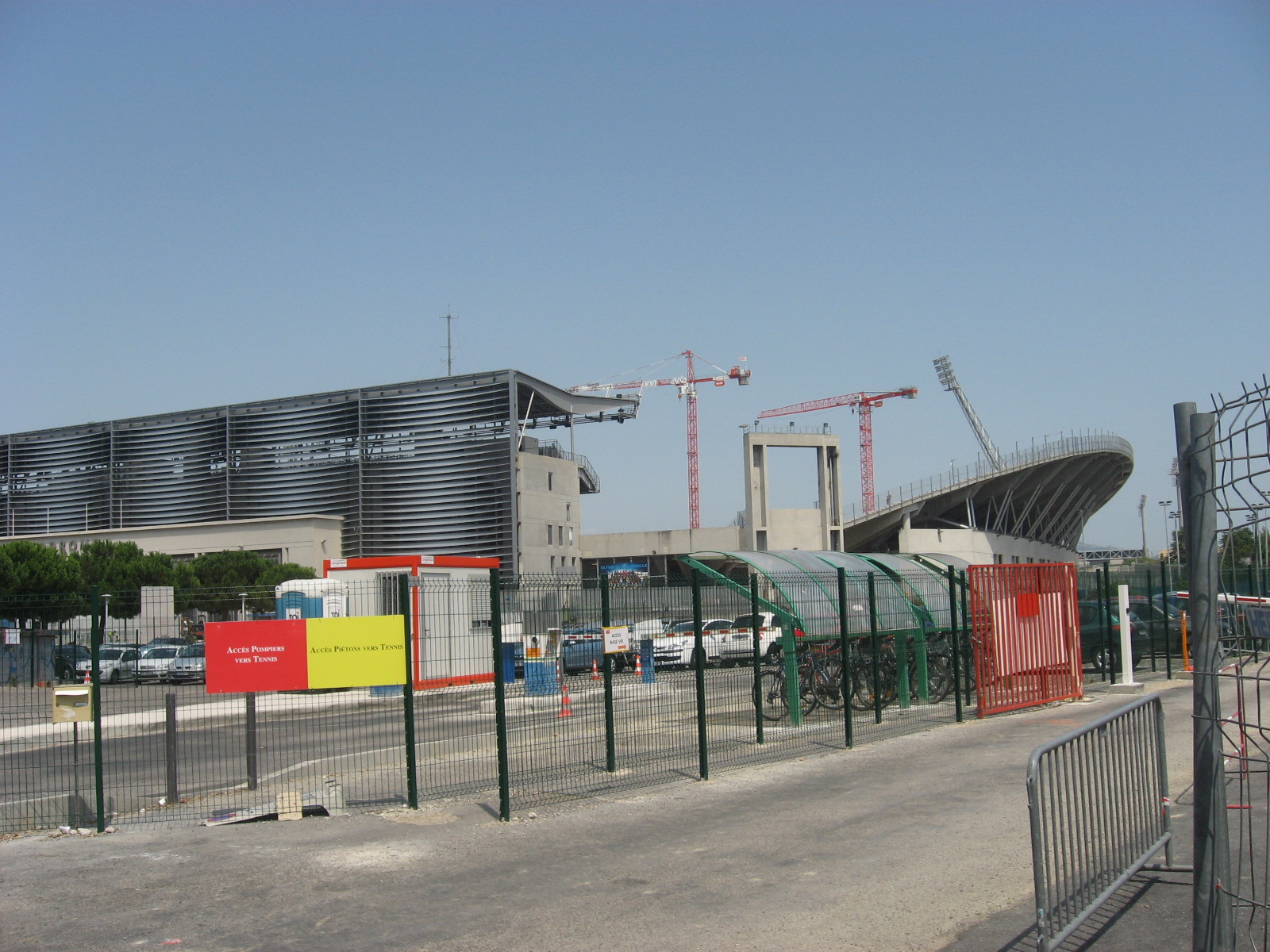
For the last 3 nights I went back to Marseille, where I had to catch the plane. I visited more museums, such as on the Marseillaise (yes, the song: anthem of the French revolution, and now French national anthem, some maybe can mum it). It was in French, but I got the main content more or less. Interesting were the different versions – and uses - of the song. The next day I went to the Museum of Contemporary Art. The latter was outside the centre and quite a walk (I knew buses went, but I walked), passing the modern Olimpique de Marseille football/soccer club stadium, the Velodrome.

I could have taken the bus and partly the subway/metro to the Museum of Contemporary Art, but I saw on the map exactly how to walk. I find that pleasing somehow: to find my own way. I had to walk the Rue Paradis out to the end (by itself a few kilometres), from the Charles de Gaulle square in the centre where I had breakfast (actually it was 12:30 hours, but hey..). I walked the Rue Paradis out. Near the end of it I wanted to sit down and sought in a side street a place to rest. In a residential street I sat down, I was somewhat surprised (though not too much), to find a drawing of Martin Luther King’s face on a wall.

After resting I walked on on the Rue Paradis. Martin Luther King, “Paradise” street: symbolic it seems. I still had a few kilometres to go. After the Rue Paradis it was not long until I saw the stadium, which appeared somewhat more modern to me than another one I saw recently (of Spanish football/soccer club F.C. Sevilla). Both Olimpique Marseille and Sevilla can be qualified as “big” clubs, playing often in European leagues. For a long time now France fares economically better than Spain, but that is not saying much: Real Madrid and Barcelona are the richest football clubs of Europe. That’s another issue, though.

The Velodrome stadium


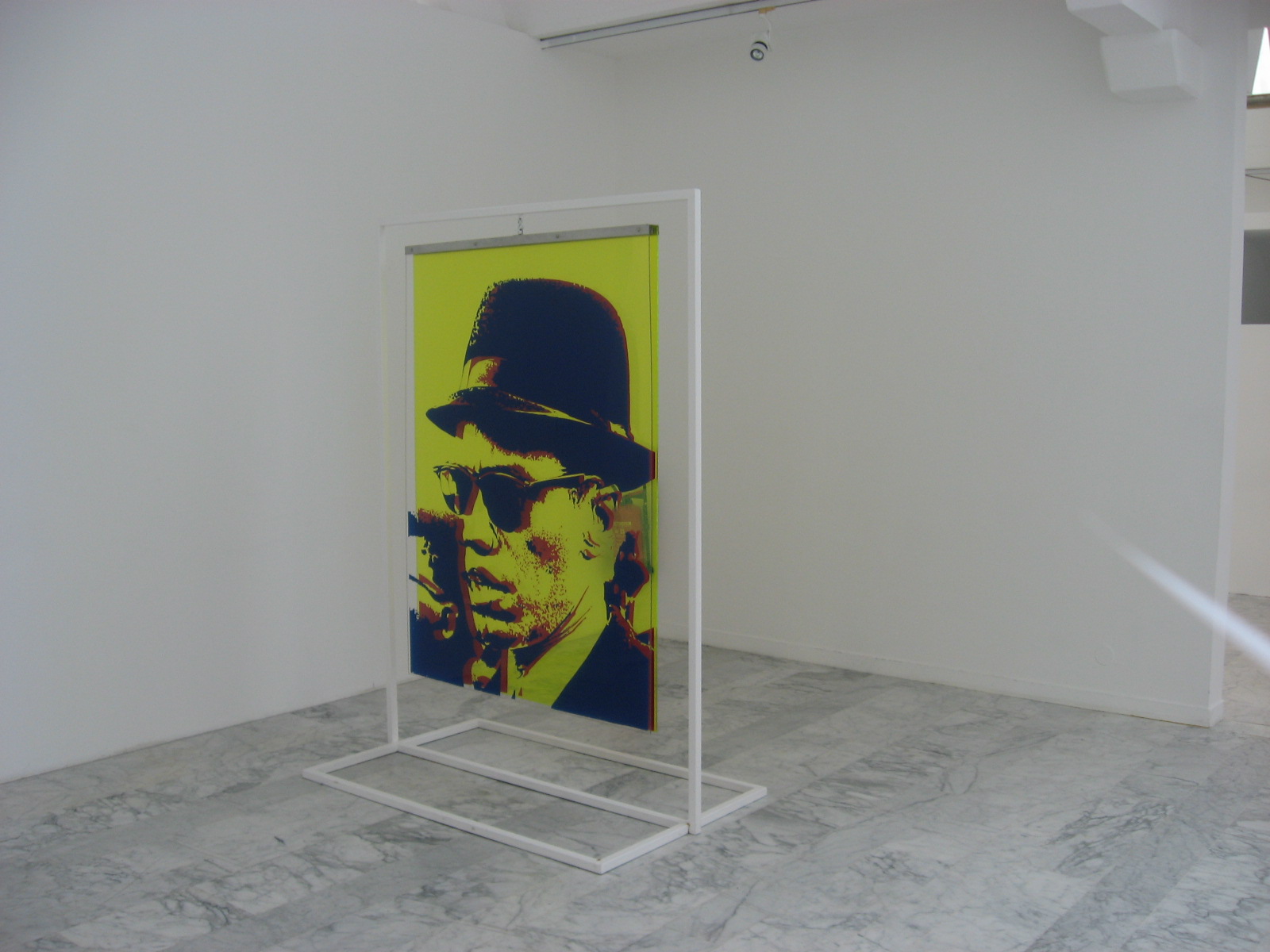
After the stadium I went to a quieter, greener part of Marseille, and after a few kilometres I found the Museum of Contemporary Art. It was very interesting and, some may find, comical. Like Andy Warhol and others many contemporary artists use modern-day objects (e.g. cardboard, tubes, car parts) and repackage them, or use other symbols, turning out seemingly “absurd”. Such as the art-work of a big stone “sleeping” in a (broke-down) bed. Contemporary art includes also photography. There were interesting photographs - such as of Dutch-Somali politician/activist Ayaan Hirsi Ali - alongside installations and paintings. Further, there was also a portrait in light (as installation) of Malcolm X from the 1960s.

Malcolm X in Marseille's Contempory Arts museum


Marcus Garvey, Martin Luther King, Malcolm X, (Paradise Street, maybe the Egypt exhibition), more symbolic clues! Added to this can be the interesting work ‘King of the Zulus’ by Jean-Michel Basquiat, the Contemporary Art museum held.

More symbols along with this: the evening before I had a tasty dinner at an Ethiopian restaurant, Axum, which was decorated with Ethiopian symbols. The Ethiopian lady who attended me (of the owning family) commented in French on my “Ethiopian” necklace, which included Haile Selassie I and Ethiopian flag colours. I saw this restaurant by chance - believe it or not - (I was looking for another restaurant that was closed). Add this as a symbolic, Rastafari connection to the ones I already mentioned. Mind you, most of these symbols I encountered by chance: I did not expect to see the Martin Luther King drawing in that street. I did not know what to expect in the Contemporary Art museum. I did not plan to go to the Ethiopian restaurant. Maybe I should have. Beyond symbols, were they signs?

View of Rue Paradis


How much did I walk to the Contemporary Art museum, about 5 kilometres? Still, I walked this distance back - past the stadium, Rue Paradis etc. - and did not take the bus. Back at my hotel I was a bit tired, but it was overall worth it, not just because of the symbols and/or signs, but they were part of it.

I strive mostly for rationality, and I think that symbols or signs are not always to be trusted, but here I appreciated the symbolic clues and signs. In the end, as language connects and gives meaning to (also visual) symbols, this can also be seen as a form of “word power”. A power which overcomes any language barrier.

Yet in practice, a language barrier remains annoying though, even alienating. Yet, signs and symbols guided me somehow.

woensdag 1 september 2010

Rototom 2010

For the first time in my life I went to the Rototom Sunsplash reggae festival, one of the biggest reggae festivals in the world, and the biggest of Europe. The 2010 edition was held in Benicassim, on the Spanish eastern coast somewhat north of Valencia city (province Castellón). From the 21th to the 28th of August.
This was the 17th time it was held, but the place it has been held – the 16 times before it – used to be in northeastern Italy, near Udine, on the foot of the Alpine mountains. The reason for the location change seems to relate to recently more repressive Berlusconian policies against (among other things?) the overt marijuana smoking on the festival.
Now the setting changed to the Spanish Mediterranean coast, but the main ingredients of the festival remained more or less the same. These are 8 days of concerts on larger and smaller stages, debates, sound systems, films, stands, shops, workshops, food…you done know.
The common theme: reggae of course, and related aspects. Rastafari(anism) got understandable attention, but also progressive social movements, such as related to various developing countries, and, well, also marijuana and the desirability of its legalization.
The line-up of artists performing, especially on the main stage, were (mainly Jamaican) reggae artists of note: Anthony B, Bob Andy, Bushman, Marcia Griffiths, the Abyssinians, Pablo Moses, the Mighty Diamonds, Etana, Jah Mason, Fantan Mojah, Max Romeo, Alpha Blondy, Glen Washington, Chuck Fenda, Wayne Wonder, and Busy Signal (and others). Overall to my opinion an adequate mix of old and new roots reggae, as well as dancehall singers and deejays.


I’ve been to many of these concerts and enjoyed most of them. I rocked my body line! Personally I enjoyed most the Abyssinians’ show (on the final day), as well as earlier in the festival Anthony B, Bushman, Pablo Moses, Bob Andy, and Etana. I have for instance never seen Pablo Moses or Bob Andy (photo left/above) live before, so that’s an extra.

On the smaller stages and venues mostly European reggae or ska bands performed, relatively often Spanish and Italian bands, but further from various countries (there was even an European reggae band contest). Some weren’t even that bad. I especially enjoyed the sound of a regional Valencian band, and of 2 Andalusian sisters (named the Real Sisters) who stayed truer to the reggae roots, unlike vague, party vibe bands mixing reggae-like music not always effectively with other genres like salsa or ska.

My primary reason for visiting was my love for reggae music. As an Amsterdam resident finding a place to freely smoke marijuana - if that were my wish - is not that spectacular to me. I don’t judge people who find that important, though. I draw the line at cocaine or excessive strong drink use, both hard drugs in my opinion.
Apart from the music, which had more than enough to offer that I surely liked and loved, I also experienced the vibe, the general atmosphere, observed other visitors, the debates, and the entire organization. Let’s start with the main thing for me, the music. Then comes the rest.

MUSIC

I am more into roots reggae than dancehall, but can enjoy some inventive or well-written dancehall. Especially when it’s not too fast. The concerts I enjoyed most were thus roots, or roots dancehall. Even when accompanied largely by European, white reggae musicians (seemingly making it less authentic), such as from
Switzerland or France, the concerts were outstanding by Bushman and Pablo Moses (photo left). My compliments for the French (from Toulon) musicians of the band No More Babylon for keeping up with real reggae. Anthony B, Bob Andy, Marcia Griffiths, Etana, and the Abyssinians had Jamaican musicians accompanying them, so it’s not all cheapness of the organization, luckily. Anthony B was fire (or: fya)!
The Abyssinians (photo left under) with the Jamaican Live Wya band, had one of the best concerts: good sound, good songs, good vocals, good musicianship. Good show, all in all. I am more or less an Abyssinians fan so I could sing all songs along, while rocking along.

The Mighty Diamonds concert was fine, but main singer, with a beautiful singing voice, Donald Shaw (Tabby Diamond), could not make it (due to “Babylon visa problems”), leaving the performance to the mostly backing singers, Fitzroy Simpson and Lloyd Ferguson. Still, the strength of the songs of the Mighty Diamonds (their main strength I think) shone through. The main songwriter was present, that is Fitzroy Simpson, for me a legend in his own right. Further, Etana also showed to be a talented lady singer.

On the dancehall/deejaying side of things my experiences were varying. I guess jump-up sessions are not my thing, and I find them monotonous. I enjoy dancing more to one-drop or rockers reggae. Others in the audience seemed to like the jump-up sessions: chaqu’un son gout. (or since it was in Spain: cada uno su gusto).
Fantan Mojah and Chuck Fenda had for that reason – and for too much interruptions – mediocre performances. While Wayne Wonder (photo left/above) also had a dancehall vibe, but to my opinion a nicer (singing, soulful) one. Busy Signal is “digital” heavy dancehall. Let’s just say that this is not my cup of tea. Glen Washington was nice but not spectacular, maybe due to lesser (in this case European) musicians, as well as Jah Mason.

Other concerts (I’ve seen so many) were also solid, such as of Big Youth (though it began somewhat late: about 02.00 at night), Marcia Griffiths (photo left), and newcomer Romain Virgo.
I did not see Italian/Sicilian reggae artist Alborosie, because that was on the only day of the festival I did not go (not even only at evening), so others may judge that.

Like I mentioned there were some interesting European reggae bands, while several sound systems (mostly European) played here and there, but I attended only a few. I guess I focused on the main stage

FESTIVAL

I noticed different remarkable things on the festival terrain. First, there were so many shops and stands.
More than I thought there would be. You can consider this commercial, but some had interesting Rastafari-inspired items or clothes I seldom find elsewhere.

Another thing: I have never seen so many white people with dreadlocks in one place before in my life! Visitors were relatively often Italians (I would say about half, due to the festival’s organizers and former venue), so these white dreads were often Italians, though I encountered quite some Spanish dreads, as well as from France, Germany or elsewhere. Black dreads, be it African or Caribbean, were not absent (apart from genuine artists), but were not too numerous.
Note that I use the word “dreads” for dreadlocked persons, and not Rastas, because Rasta is a mental thing, which goes of course beyond the superficiality of a hairdo. Even if the locks reach to one’s middle or are well-maintained: that does not mean a thing. You have to know a person to know whether he/she is a true, “conscious” Rastaman or Rastawoman.
The audience was not really unified and tended to be divided in separate sections. Friends with friends, Italians with Italians etcetera. This was a pity, but maybe it’s in part because of the language barrier. I hoped for interesting discussions on relative preferences within reggae, how other people came to reggae, such as I have had in the Netherlands, but these remained unfortunately limited.

Maybe the festival context was not the right occasion for that. Many went to party, smoke a lot of weed, and listen to reggae, of which they often even didn’t know too much beyond a few Bob Marley songs, and maybe Max Romeo’s Chase The Devil (a good song, I don’t contest it). But that differs, I think, from person to person, or from age to age maybe, and I must respect differences. Some dreadlocked persons (with also Rasta-like clothing) even did not seem to care what occurred on/came from the stage, even during the outstanding roots concerts, but I’m not in their head. Maybe they were tired, or smoked too much mediocre bush weed.
Maybe they were also annoyed by the hot weather (about 35 degrees Celsius by day), and found it difficult to adapt to after (near to) Alpine Northern Italy.

There was also a Reggae University, which I visited on some occasions. Debates on social movements in Latin America, other developing countries, Berlusconi, activities of NGOs, poverty, press freedom, showing the “reggae scene” as in a sense related to a left-wing, progressive border-crossing alliance.
There were also debates on reggae and reggae history in the strict sense, however, such as on early deejaying in Jamaica, with artists like Big Youth attending, sound systems, dancehall culture and dancing in present-day Jamaica, Rastafari and reggae, with members of the Abyssinians and the Mighty Diamonds participating. I found these discussions interesting, especially the one with the Abyssinians and Mighty Diamonds (photo left above). I did not know that Mighty Diamonds member Lloyd Ferguson was a founding member of the Twelve Tribes group within Rastafari (back in 1968). Abyssinians member Donald Manning explained what Rastafari meant to him, and argued justly that Rastafari is about knowledge, and not just about hair. Veteran deejay Big Youth explained how he was early in starting to deejay about “conscious” Rastafari themes, and related about the Jamaican music scene, e.g. how many producers (“criminals”) tricked artists like him.

There were also movies shown at the House of Rastafari, some of which I’ve seen already, or at the cultural centre.

All in all the debates and other things I attended added to an overall enjoyable experience for me at the festival, along with going to several great concerts.

(See also my YouTube page - http://www.youtube.nl/MichelConci - for video fragments I recorded of concerts)